
Signs You're Paying Too Much for Routine Service
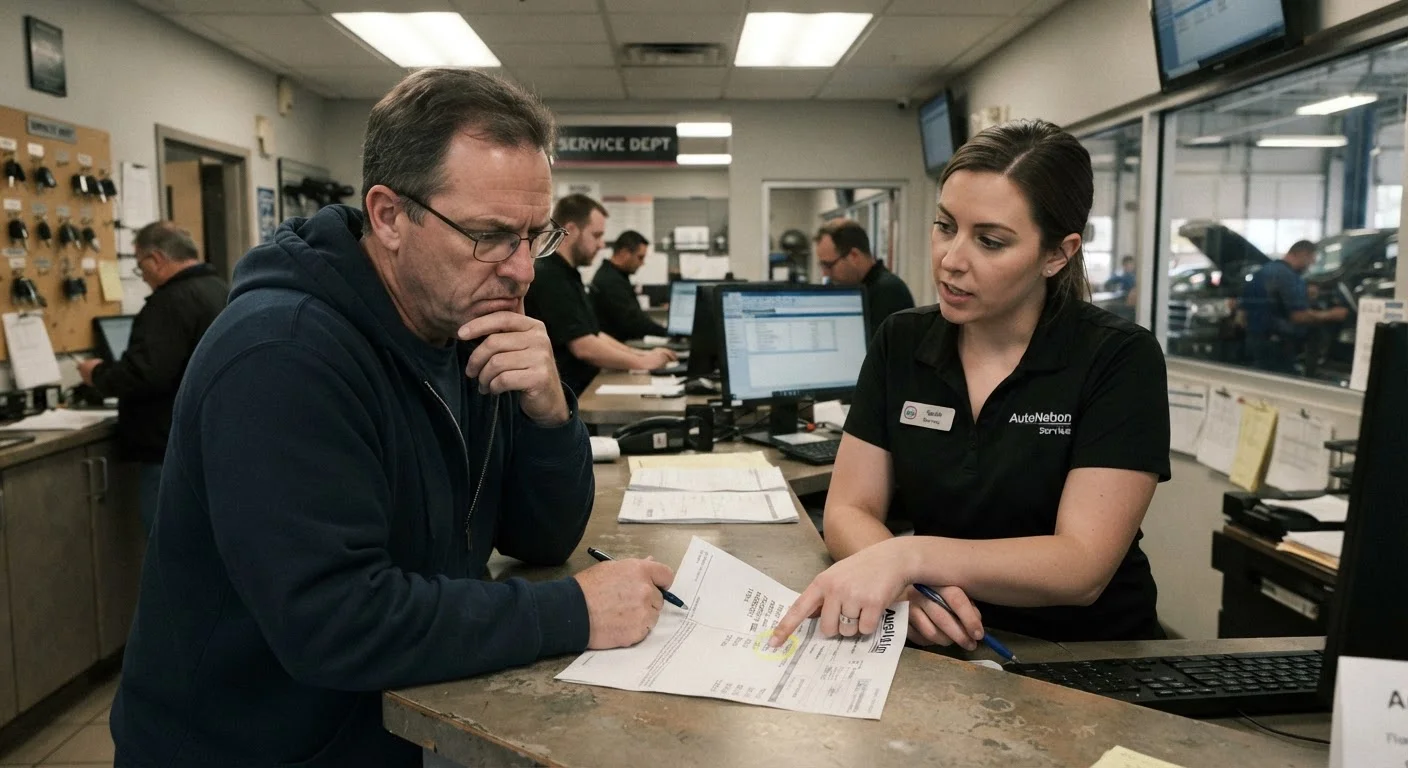
Photo credit: SnippetColumns.com | Easy Search, Reliable Information
In this article
Some upsells are legitimate; others aren't. Here's how to recognize unnecessary add-ons and have informed conversations at the service counter.
Key Takeaways
- Your owner's manual is the most reliable guide for what services your vehicle actually needs and when.
- Upsells pitched at oil change visits are often unnecessary or can wait until the manufacturer recommends them.
- Comparing labor rates and getting a written estimate before authorizing work protects your wallet.
- Asking questions at the service counter is not just acceptable - it's your right as a paying customer.
Why routine service can quietly drain your budget
Routine car maintenance is genuinely necessary - skipping oil changes, ignoring worn brake pads, or neglecting coolant levels can turn small problems into expensive repairs. But there's a meaningful difference between needed maintenance and upsells that benefit the shop more than your vehicle. Learning to tell them apart doesn't require mechanical expertise; it requires knowing what questions to ask and where to look for reliable answers.
The service counter is a sales environment. That doesn't make every advisor dishonest - most are doing their jobs in good faith - but it does mean the incentives aren't always aligned with your budget. Understanding the most common signs that you're paying more than necessary puts you back in the driver's seat. For a broader look at how small recurring costs compound, see smarter spending habits that apply across everyday purchases.
The shop's schedule doesn't match your owner's manual
Your vehicle's owner's manual contains the manufacturer-recommended service intervals for oil changes, transmission fluid, coolant flushes, and more. These intervals are based on engineering data specific to your engine and drivetrain - not on what's profitable for a service center.
If a shop consistently pushes services sooner than the manual specifies, that's a meaningful red flag. A common example: many modern vehicles now call for oil changes every 7,500 to 10,000 miles under normal driving conditions, yet some quick-lube locations still recommend every 3,000 miles as a blanket rule - an interval that may be appropriate for older vehicles or severe driving conditions, but not for most current models.
Pull out your manual (or find it in your automaker's app or website) and use it as your baseline, not the service advisor's suggestion.
Your owner's manual, not the shop's upsell pitch, defines what your car actually needs.
Services are bundled without explanation
"Fuel system service," "engine flush," "throttle body cleaning" - these items frequently appear on service menus bundled together under a package price. Some of them have legitimate use cases; others are performed far more often than most vehicles require.
Before authorizing any bundled service, ask the advisor to explain what each item does, why your vehicle needs it now, and what symptom or mileage indicator triggered the recommendation. A credible shop will answer clearly. Vague responses like "it's just good preventive maintenance" without a specific rationale should prompt more questions.
See how to read a mechanic's estimate for guidance on spotting vague line items before you sign off.
Ask what each bundled service does and why your specific vehicle needs it right now.
Labor rates are never discussed upfront
Labor is often the largest cost on a repair or maintenance invoice, and shops are not always forthcoming about their hourly rate unless asked directly. Rates vary considerably - sometimes by $50 or more per hour - between dealer service centers and independent shops, and even between shops in the same city.
Asking for the shop's labor rate before any work begins is entirely reasonable. Pair that with a written estimate so you know how many labor hours are being billed. If a shop declines to provide a written estimate for routine work, that's worth taking seriously. The trade-offs between dealer and independent shops cover both cost and quality considerations worth understanding.
Always ask the labor rate and request a written estimate before authorizing any service.
You're repeatedly told parts need replacing based on time, not condition
Some parts wear out on predictable schedules - brake pads, for instance, wear based on use, not calendar time. Others, like cabin air filters or wiper blades, depend heavily on your environment and driving habits. When a service advisor recommends a replacement purely because "it's been a year" or "you're at 30,000 miles," ask to see the part.
Reputable shops will show you a worn air filter, measure brake pad depth, or demonstrate a failing belt. If a visual or measurement-based explanation isn't offered, it's fair to ask for one. For brake-specific guidance, understanding normal brake wear vs. warning signs helps you interpret what the shop tells you.
Ask to see any part being replaced - wear should be visible or measurable, not just assumed.
Small add-ons appear on the invoice you didn't approve
A tire rotation here, a "multi-point inspection fee" there - individually small charges can quietly inflate an invoice. Some of these are legitimate services; others are standard procedures that certain shops include at no additional charge as part of an oil change visit.
Review your invoice line by line before paying. If a charge appears that wasn't discussed beforehand, ask what it covers. In many states, shops are legally required to get authorization before performing non-emergency work - so unauthorized add-ons aren't just annoying, they may also be contestable. Routine service spending is the kind of expense that adds up faster than most people realize when left unchecked.
Review every line on the invoice before paying - unauthorized charges may be contestable.
You feel pressured to decide on the spot
Legitimate maintenance needs rarely require an immediate same-day decision unless you're already in a safety-critical situation - a brake failure, a cracked serpentine belt, or a coolant leak on a long trip. Most "recommended" services can wait a week or two while you research the issue, get a second opinion, or compare prices.
A shop that creates urgency around a non-emergency service - implying your car will fail if you don't act today - is using pressure rather than information. Take the written estimate, go home, check your manual, and consult a trusted resource. The ability to pause and evaluate is one of the most cost-effective habits you can build. For broader perspective on maintaining your car on a tight budget, prioritizing urgent vs. deferrable work is a core skill.
Most non-emergency services can wait - pressure to decide on the spot is a sales tactic, not a safety necessity.
Staying informed without becoming a mechanic
None of the above requires you to diagnose your own vehicle or distrust every shop you visit. The goal is informed consent - understanding what you're paying for and why before you authorize work. A good service relationship is built on transparency, and shops that welcome questions tend to be the ones worth returning to.
Keep a simple service log
Recording the date, mileage, and work performed at each visit takes two minutes and pays dividends. When a shop recommends a service you had done recently, you'll have documentation to push back - and over time, you'll see exactly what your car costs to maintain annually. A notes app or a small notebook in the glove box both work well.
If you're unsure whether a recommendation is legitimate, a second opinion from another shop - or even a quick cross-check against your owner's manual - is always reasonable. The everyday money tips mindset applies here: small decisions, made consistently and thoughtfully, have a larger cumulative impact than any single transaction.
Severe vs. Normal Driving Conditions
Owner's manuals typically list two maintenance schedules: one for "normal" conditions and one for "severe" conditions. Severe conditions include frequent short trips under five miles, towing, extreme temperature driving, or heavy stop-and-go traffic. If your commute is mostly highway miles in a moderate climate, normal intervals likely apply to you. Ask your shop which schedule they're using and why.
This article is for general informational purposes only and does not constitute mechanical or financial advice. Service needs vary by vehicle, driving conditions, and region. Consult a qualified mechanic for guidance specific to your vehicle.

Author
Autos & Driving Editorial Team
Autos & Driving Editorial Team is the collective byline for our editorial team and contributor network. Articles published under this byline or an editorial pen name are researched, written, and reviewed according to our editorial standards for clarity, consistency, and independence before publication.
View all articles →