
Budgeting Terms Every American Should Know
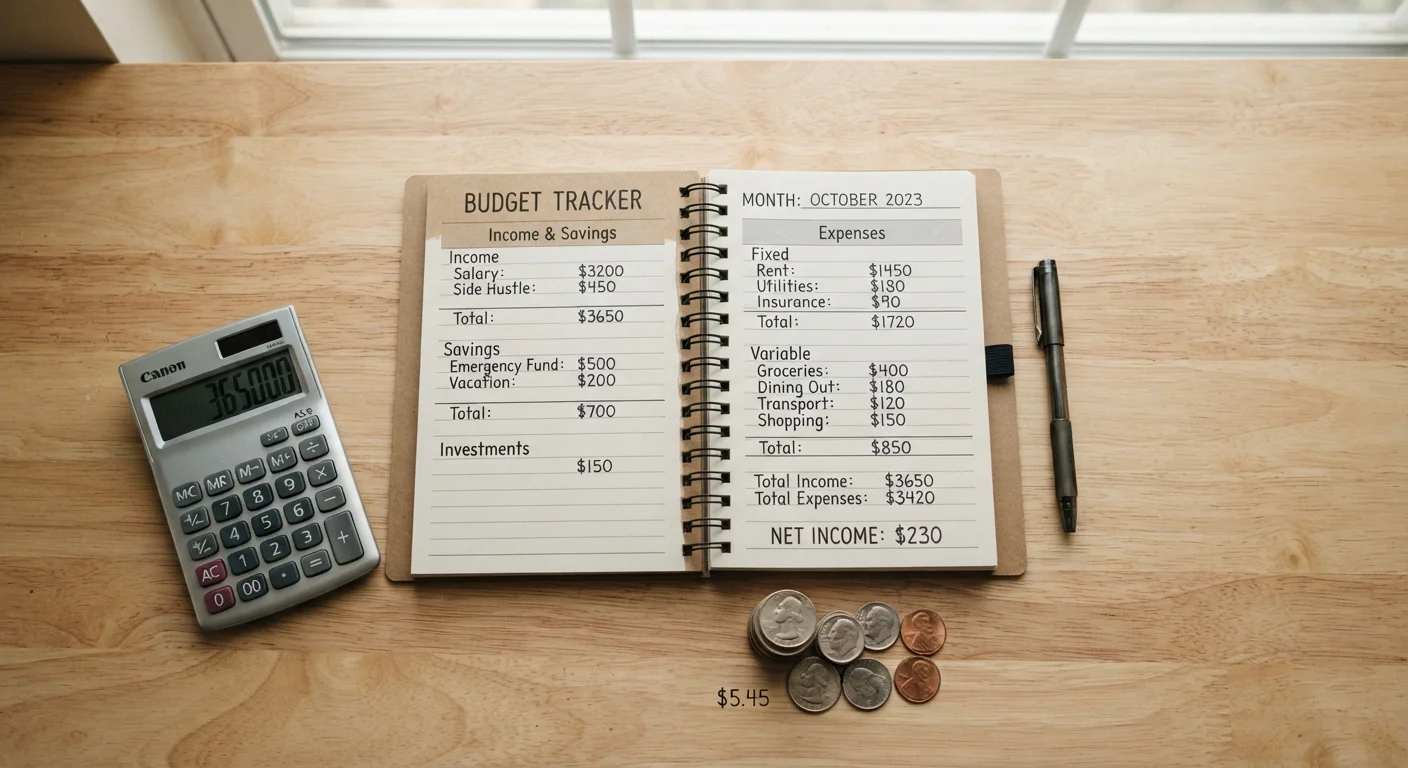
Photo credit: SnippetColumns.com | Easy Search, Reliable Information
In this article
A plain-language reference guide to common budgeting vocabulary—from net income and discretionary spending to sinking funds.
Why Budgeting Vocabulary Matters
Budgeting doesn't have to feel like decoding a financial textbook. But if terms like discretionary spending or sinking fund make your eyes glaze over, you're not alone — and that unfamiliarity can quietly get in the way of making confident money decisions.
This reference guide cuts through the jargon. Whether you're building a budget for the first time or refining what you already have, knowing these core terms gives you a clearer picture of where your money goes and why. For a broader vocabulary reference, see the everyday personal finance glossary covering terms from APR to zero-based budgeting.
| Starting point for any budget | Net (take-home) income |
| Two main expense types | Fixed and variable |
| Purpose of a sinking fund | Save gradually for known future costs |
| Popular simple budgeting framework | 50/30/20 rule (needs/wants/savings) |
| Budget variance tells you | Planned vs. actual spending difference |
| Emergency fund general guidance | 3–6 months of essential expenses (varies by situation) (Consumer Financial Protection Bureau general guidance) |
Core Budgeting Terms Defined
The terms below represent the building blocks of any solid budget. Familiarize yourself with them and you'll find most budgeting conversations — and tools — far less intimidating.
Net Income
The amount of money you actually take home after taxes, Social Security, and any other payroll deductions are removed from your gross pay. This is the figure your budget should be based on — not your pre-tax salary.
Gross Income
Your total earnings before any deductions — including federal and state taxes, health insurance premiums, or retirement contributions. Gross income is often listed on a job offer but is not what lands in your bank account.
Fixed Expenses
Regular costs that stay the same amount each month, such as rent or mortgage payments, car payments, or subscription services. Because they don't change, they're the easiest category to plan for.
Variable Expenses
Costs that fluctuate from month to month, like groceries, gas, utility bills, and dining out. These require active tracking because they can easily drift beyond what you planned.
Discretionary Spending
Money spent on non-essential wants — entertainment, hobbies, restaurants, clothing beyond necessities. Discretionary spending isn't inherently bad; it's the category most people adjust first when cutting back.
Sinking Fund
A savings pool built gradually for a known future expense — such as a car repair, vacation, or annual insurance premium. Instead of scrambling when the bill arrives, you set aside a small amount each month in advance.
Budget Variance
The difference between what you planned to spend in a category and what you actually spent. A positive variance means you came in under budget; a negative variance means you overspent.
Emergency Fund
A dedicated savings reserve set aside specifically for unexpected financial shocks — job loss, medical bills, major home repairs. It acts as a financial buffer so unplanned costs don't derail the rest of your budget.
Cash Flow
The net movement of money into and out of your household over a given period. Positive cash flow means more is coming in than going out; negative cash flow means the reverse — a warning sign for most budgets.
Zero-Based Budget
A budgeting method where every dollar of income is assigned a specific purpose — expenses, savings, or debt repayment — so that income minus outflows equals zero. Every dollar has a job before the month begins.
Pay Yourself First
A savings strategy where contributions to savings or investments are made immediately when income arrives, before any other spending. The idea is to treat saving as a non-negotiable expense rather than an afterthought.
50/30/20 Rule
A simple budgeting guideline suggesting roughly 50% of net income goes to needs, 30% to wants, and 20% to savings and debt repayment. It's a framework, not a rule — individual circumstances vary widely.
Once you're comfortable with these definitions, you're better positioned to choose a method that suits your life. The comprehensive guide to personal budgeting walks through popular methods and how to put these concepts into practice.
Putting the Terms to Work
Knowing the vocabulary is only useful when you connect it to real decisions. Here's how these terms interact in a typical monthly budget:
- Start with net income. This is your actual take-home pay — the number your budget must be built around, not your gross salary.
- Separate fixed from variable expenses. Fixed costs are predictable and easier to plan. Variable costs require closer tracking because they shift month to month.
- Identify discretionary spending. This is where most budgets have room to breathe — or where overspending quietly happens.
- Build sinking funds for irregular expenses. Car registration, annual subscriptions, holiday gifts — these aren't surprises if you're saving for them incrementally.
- Track budget variance regularly. If your actuals regularly exceed your plan, that's a signal to revisit the plan — not just your willpower.
If you've heard that budgeting means giving up everything you enjoy, that's a myth worth examining. The common budgeting misconceptions article addresses that and other beliefs that prevent people from starting.
For those ready to go deeper, zero-based budgeting and the pay-yourself-first approach are two methods worth understanding — each uses these core terms differently but builds on the same foundation.
This article is for general informational and educational purposes only and does not constitute personalized financial advice. For guidance tailored to your situation, consult a qualified financial professional.

Author
Money & Finance Editorial Team
Money & Finance Editorial Team is the collective byline for our editorial team and contributor network. Articles published under this byline or an editorial pen name are researched, written, and reviewed according to our editorial standards for clarity, consistency, and independence before publication.
View all articles →