
Clothing Labels Decoded: What Those Care Symbols Actually Mean
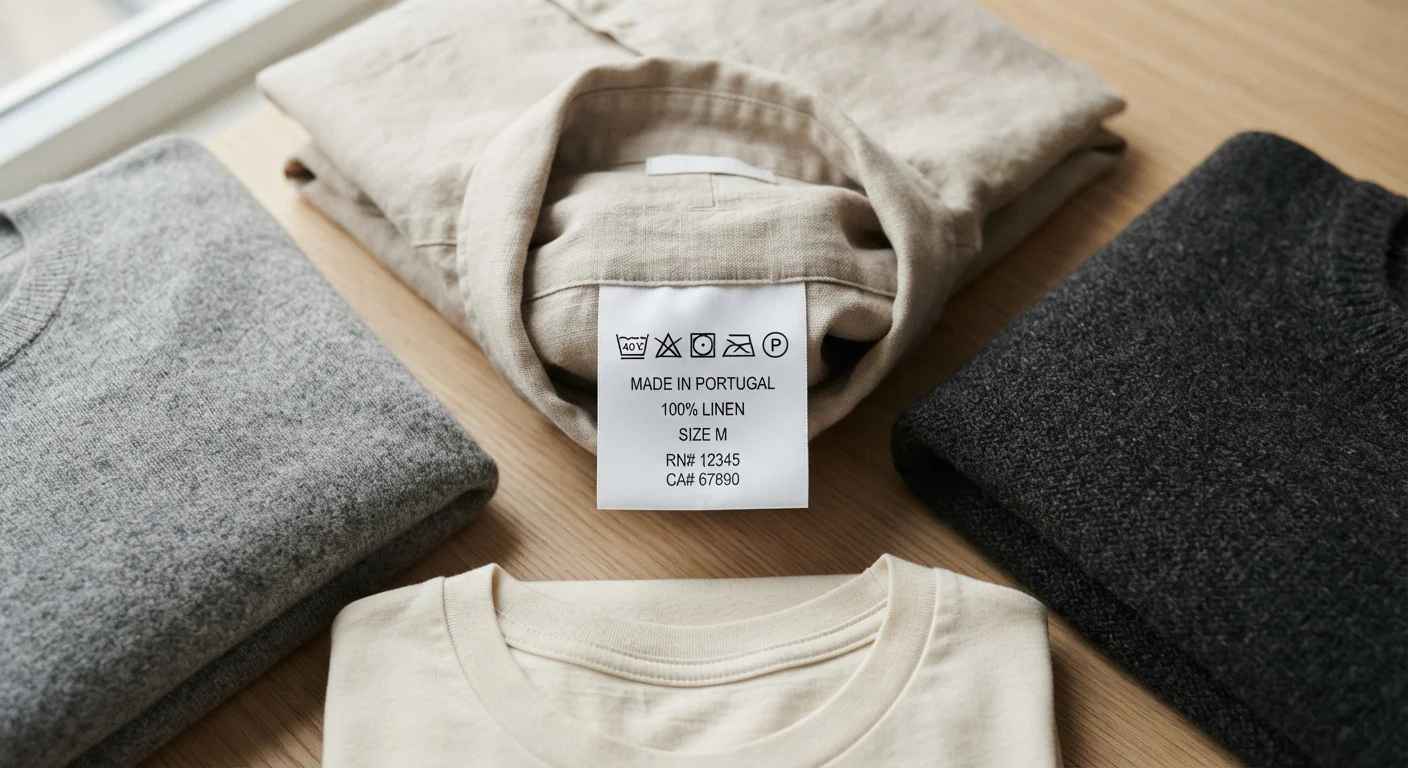
Photo credit: SnippetColumns.com | Easy Search, Reliable Information
In this article
Those tiny icons on garment labels carry real instructions. This quick-reference guide explains what each symbol means before you ruin another shirt.
Why Care Labels Exist — and Why They Matter
That strip of fabric sewn into the seam of your shirt isn't just an afterthought. In the United States, the Federal Trade Commission (FTC) requires most textile garments to carry a permanent care label with specific handling instructions. These labels use a standardized set of symbols developed by GINETEX, the international textile care labeling association, and adopted for American use by ASTM International.
Ignoring them is one of the most common — and costly — laundry mistakes people make. A shrunken cashmere sweater or a faded blouse usually traces back to a misread symbol. Once you understand the five core symbol categories, you'll be equipped to handle almost any garment with confidence. For a parallel look at how labels communicate on other products, see how to decode product labels like a pro.
| Governing body (U.S.) | Federal Trade Commission (FTC) (FTC Care Labeling Rule) |
| Symbol standard | ASTM International (based on GINETEX) |
| Number of core symbol categories | 5 |
| Temperature unit on labels | Celsius (°C) (International standard; U.S. machines often display Fahrenheit) |
| What an X through a symbol means | Do not perform that care action |
| Dot count in iron/dryer symbols | 1 dot = low heat, 2 dots = medium, 3 dots = high |
The Five Core Symbol Categories
Every care label draws from five symbol families. Learn these shapes and you'll read any label at a glance.
1. Washing (Basin Symbol)
A simple tub of water represents machine or hand washing. Numbers inside the tub indicate the maximum water temperature in Celsius (e.g., 30°C, 40°C). A hand dipping into the basin means hand wash only. An X through the tub means do not wash — the garment requires dry cleaning or spot treatment only.
2. Bleaching (Triangle Symbol)
An empty triangle means any bleach is acceptable. A triangle with two diagonal lines inside means non-chlorine bleach only. An X through the triangle means do not bleach under any circumstances.
3. Drying (Square Symbol)
A square represents drying method. A circle inside the square signals tumble drying is safe — dots inside the circle indicate heat level (one dot = low, two dots = medium, three dots = high). A square with a horizontal line through the center means dry flat. Three vertical lines mean drip dry. A curved line at the top of the square means line dry. An X through any drying symbol means that method should be avoided.
4. Ironing (Iron Symbol)
An iron icon with dots indicates heat setting: one dot = low (synthetics), two dots = medium (wool), three dots = high (linen and cotton). An X through the iron means do not iron. An X through steam lines beneath the iron means do not steam.
5. Dry Cleaning (Circle Symbol)
A plain circle means the garment is dry-clean safe. Letters inside (P, F, W) indicate which solvents are permitted — this is primarily information for the dry cleaner, not the consumer. An X through the circle means do not dry clean.
GINETEX
The international association responsible for developing the standardized textile care labeling system used across more than 90 countries, including through its American equivalent adopted by ASTM International.
Care Symbol
A pictographic icon on a garment label that communicates a specific handling instruction — such as wash temperature, drying method, or whether bleaching is safe.
Dry Clean Only
A care instruction indicating the garment should only be processed using professional dry-cleaning solvents, not water-based washing at home.
Dry Flat
A drying instruction meaning the garment should be laid horizontally on a surface to retain its shape while drying, rather than hung or tumble-dried.
Non-Chlorine Bleach
A gentler bleach alternative — typically oxygen-based — that is safe for garments where standard chlorine bleach would cause color loss or fiber damage.
Tumble Dry
Machine drying in a clothes dryer using rotating heat. Dot symbols inside the dryer circle indicate the appropriate heat level for the fabric.
Common Mistakes — and How to Avoid Them
Even experienced home launderers misread symbols regularly. Here are the patterns that cause the most damage:
- Confusing temperature numbers: Most U.S. machines display Fahrenheit while care labels use Celsius. 30°C is roughly 86°F (cold cycle), 40°C is roughly 104°F (warm cycle), and 60°C is roughly 140°F (hot cycle). Washing a delicate at 60°C when it calls for 30°C can cause significant shrinkage.
- Ignoring the drying symbol entirely: Many people follow washing instructions carefully but throw everything into a hot dryer regardless. The drying symbol is equally important — especially for wool, silk, and structured garments.
- Mistaking "dry flat" for "line dry": Hanging a wet knit garment distorts its shape under its own weight. Dry flat means lay it horizontally on a clean towel or drying rack.
- Assuming "dry clean" means "dry clean only": A circle without an X simply means the garment can be dry cleaned — it may also tolerate gentle hand washing. Check for additional symbols to confirm.
When the Label Has Worn Away
If a garment's label is faded or missing, check the fabric content — often printed on a separate inner label. Natural fibers like silk and wool generally require cooler, gentler care; most synthetic blends tolerate warm machine washing. When in doubt, hand wash in cool water and air dry.
Just like decoding ingredient lists on skincare products, reading garment labels rewards a few minutes of upfront attention. See our guide on skincare ingredients decoded for a similar approach applied to your beauty routine.

Author
Style & Beauty Editorial Team
Style & Beauty Editorial Team is the collective byline for our editorial team and contributor network. Articles published under this byline or an editorial pen name are researched, written, and reviewed according to our editorial standards for clarity, consistency, and independence before publication.
View all articles →