
The Quality Signals Hiding in Plain Sight on Every Product Label
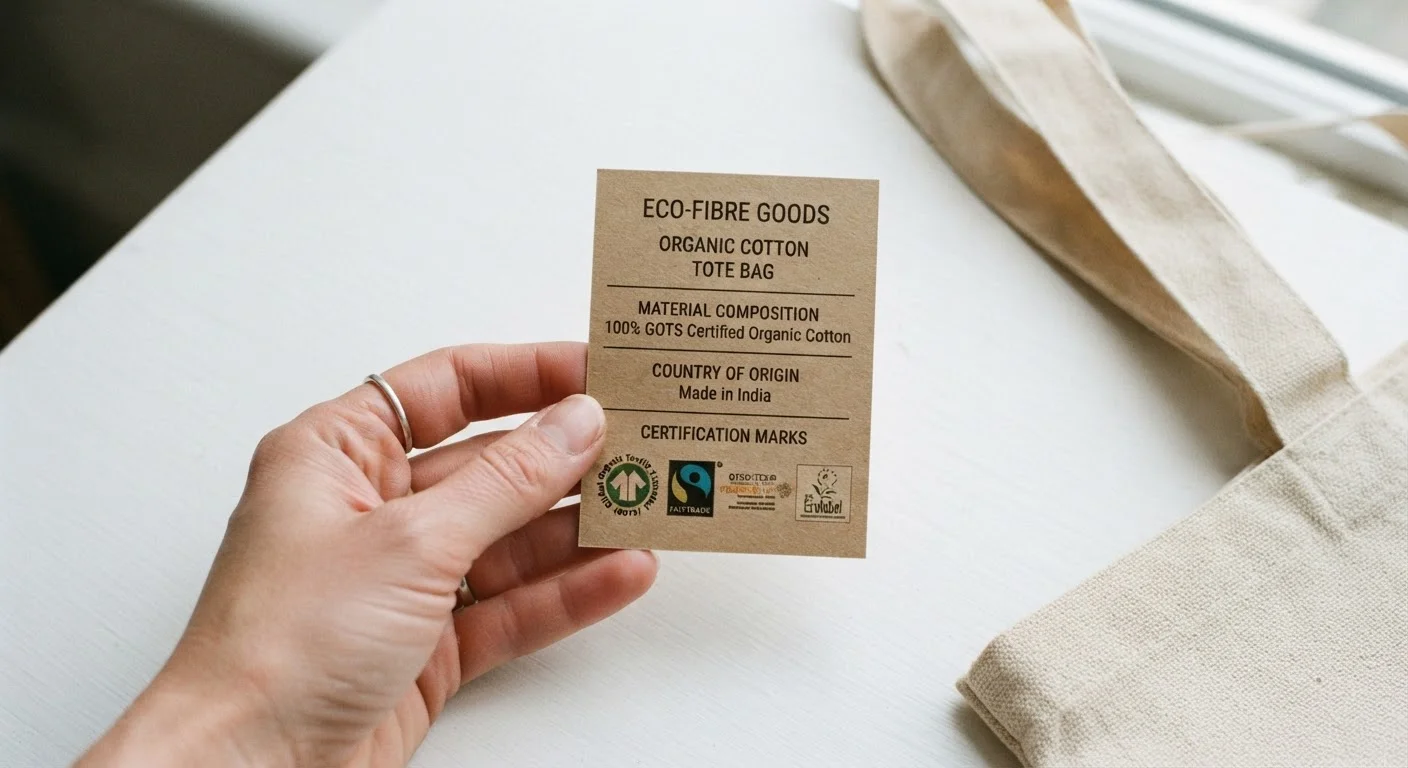
Photo credit: SnippetColumns.com | Easy Search, Reliable Information
In this article
Certifications, material disclosures, and country-of-origin marks all tell a story. Learn how to decode product labels like a pro.
Why Labels Deserve More Than a Glance
Most shoppers scan a label for price and maybe a brand name, then move on. That habit leaves a surprising amount of useful information untouched. Every consumer product label is, at minimum, a legal document — manufacturers are required by federal and state regulations to disclose specific facts about what they're selling. Those disclosures, read correctly, can tell you far more about quality than any marketing tagline on the front of the package.
The challenge is that labels mix mandatory disclosures with voluntary marketing claims, and the two look identical at a glance. Learning to tell them apart is one of the most practical skills in a shopper's toolkit. For a broader framework on evaluating what you buy, see building your own quality evaluation framework.
The Four Label Zones That Signal Quality
1. Material and Ingredient Disclosures
Regulated industries — textiles, food, personal care, dietary supplements — require manufacturers to list what a product contains. In textiles, fiber content must be listed by percentage in descending order. In food and personal care, ingredients appear by weight, heaviest first. This ordering rule is powerful: if a premium-sounding ingredient appears near the end of a long list, it is present in trace quantities. Don't let front-of-pack marketing override what the ingredient list actually says. For apparel-specific label reading, clothing label symbols decoded offers a practical companion guide.
2. Third-Party Certification Marks
A certification mark from an independent testing body indicates that a product or its manufacturing process has been evaluated against a defined standard — not merely claimed to meet one. Marks such as UL, NSF International, OEKO-TEX, and ENERGY STAR each test for specific attributes. None of them is a blanket endorsement of overall quality, but each narrows uncertainty in its domain. Understanding exactly what each mark tests for is covered in depth in our guide to third-party testing bodies and certification marks.
3. Country of Origin
Country-of-origin marks are federally required on most consumer goods. They don't determine quality on their own — manufacturing standards vary widely within any country — but they provide useful context when combined with material disclosures and certifications. A garment assembled in one country from fabric woven in another may carry a more nuanced origin statement; reading that fine print reveals supply-chain complexity that affects quality control.
4. Regulatory Compliance Statements
Phrases like "meets ASTM F963" (toy safety) or "complies with 16 CFR Part 1633" (mattress flammability) signal that a product has been tested against a measurable federal or industry standard. These statements carry real weight because they expose manufacturers to liability if false. They are distinct from vague claims like "safety-tested" or "quality-assured," which have no regulatory definition. Marketing traps that fool careful shoppers explores how those lookalike phrases can mislead.
Mandatory disclosure
Information that federal or state law requires manufacturers to print on a product label, such as ingredient lists or fiber content percentages. Unlike marketing claims, these disclosures carry legal accountability.
Third-party certification
A mark awarded by an independent organization after testing a product or process against a specific, published standard. It is distinct from self-certification, where the manufacturer makes the claim without external verification.
Country of origin
A required disclosure indicating where a product was manufactured, assembled, or substantially transformed. On some goods, it may specify where components originate separately from where assembly occurred.
PAO symbol
Period After Opening — a small open-jar icon on cosmetic and personal care products that shows the number of months the product remains safe to use after the seal is broken.
AAFCO statement
A nutritional adequacy statement from the Association of American Feed Control Officials indicating whether a pet food meets established nutrient profiles or was validated through animal feeding trials.
Compliance statement
A label declaration that a product has been tested against a specific, numbered regulatory or industry standard. It carries more legal weight than general marketing phrases like 'safety-tested.'
Applying Label Literacy Across Product Categories
Label signals shift in meaning depending on the product category. Electronics carry IP ratings that define water and dust resistance under precise laboratory conditions — not real-world guarantees — as explained in our guide to what waterproof IP ratings actually promise. Beauty products include PAO (period-after-opening) symbols that indicate shelf life once opened, a safety signal that's easy to overlook; expiration dates in beauty products explains how to read them. Pet food labels use a guaranteed analysis panel and AAFCO nutritional adequacy statements that tell you whether a formula was tested in feeding trials or formulated to meet a nutrient profile — a meaningful quality distinction covered in detail at what pet food labels are actually telling you.
63%
Shoppers who misread certification marks
A consumer research survey found that a majority of shoppers believed a certification mark was a general quality endorsement rather than a test of a specific attribute.
1st
Ingredient list position of heaviest component
U.S. FDA and FTC regulations require that ingredients and fibers appear in descending order by weight, making position a direct quality signal.
Label literacy pairs naturally with physical inspection. Once you've read what a product claims to be made of, you can verify it by touch and look — a discipline covered in reading materials, stitching, and finish. Together, these two habits — reading the label and examining the object — form a reliable baseline for quality judgment that doesn't depend on price or brand recognition alone. Building this into your smarter spending habits over time shifts your purchasing decisions from reactive to informed.
This article is for general informational purposes only. Regulatory requirements vary by product category, jurisdiction, and date of manufacture. Always consult official agency guidance or a qualified professional for product compliance questions.

Author
Smart Shopping Editorial Team
Smart Shopping Editorial Team is the collective byline for our editorial team and contributor network. Articles published under this byline or an editorial pen name are researched, written, and reviewed according to our editorial standards for clarity, consistency, and independence before publication.
View all articles →