
Understanding IP Ratings: What Waterproof Labels Really Promise
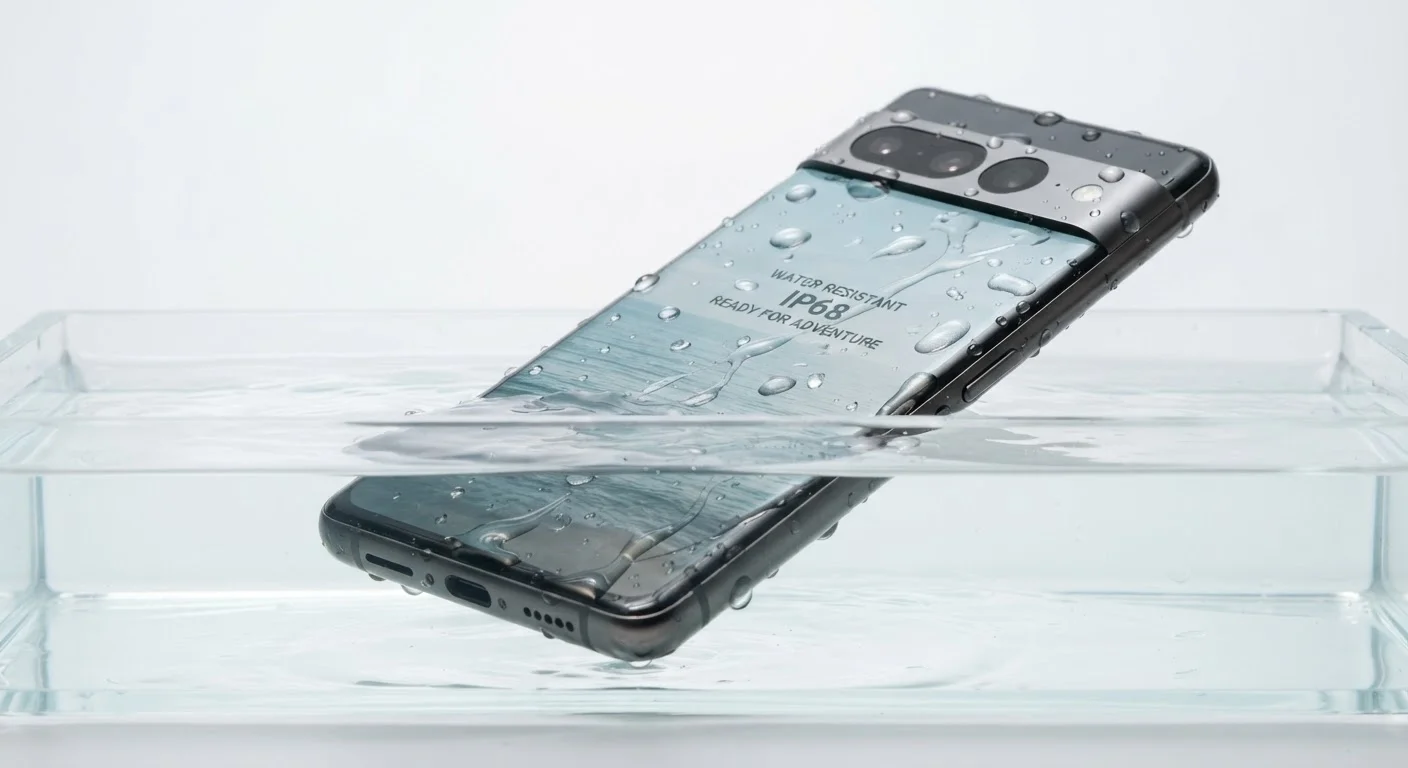
Photo credit: SnippetColumns.com | Easy Search, Reliable Information
In this article
IP67, IPX4, splash-resistant — what these ratings actually certify, what conditions they don't cover, and why it matters when accidents happen.
Key Takeaways
- IP ratings describe controlled lab test results — not real-world guarantees.
- The first digit rates dust protection (0–6); the second rates liquid protection (0–9).
- An 'X' in place of a digit means that category was not tested, not that it's unprotected.
- Water damage is usually excluded from manufacturer warranties, even on rated devices.
- Seals degrade over time, so an older rated device may offer less protection than new.
- Splash-resistant and waterproof are not the same thing — the number is what matters.
How to Read an IP Code
When you see 'IP67' or 'IPX4' on a gadget's box, you're looking at a two-character code from IEC 60529 — an international standard for enclosure protection. Breaking it down is straightforward once you know the pattern.
The first digit (0–6) describes protection against solid particles. A 6 means the device is fully dust-tight. A 0 means no protection at all. The second digit (0–9K) describes water resistance. Common values you'll see:
- 4 — splash-proof from any direction
- 7 — submersion up to 1 meter for 30 minutes
- 8 — deeper submersion, with conditions defined by the manufacturer
When you see an X instead of a digit — like IPX4 — it simply means that characteristic wasn't tested. It doesn't imply any protection level, nor does it imply zero protection. Manufacturers sometimes skip one test to save cost or because it's irrelevant to their product category.
For a broader glossary of tech label terminology, see The Everyday Gadget Buyer's Glossary.
IP68
Highest common consumer device water rating
IP68 is the rating most frequently advertised on flagship smartphones, but manufacturers set their own depth and duration thresholds — always check the fine print.
1 meter / 30 min
Standard IP67 submersion test conditions
Per IEC 60529, the IP7 test uses still, fresh water at 1 meter depth for 30 minutes — conditions that differ substantially from ocean swimming or shower use.
0–9K
Range of liquid ingress protection digits
The second digit in an IP code spans 0 (no protection) to 9K (high-pressure, high-temperature water jets), though consumer electronics rarely reach the top of that scale.
What the Lab Test Actually Simulates
IP ratings are earned in a controlled testing environment — and that environment doesn't look much like your daily life. The submersion test for a rating of 7, for example, uses still, fresh water at a precise depth with a stationary device. No waves, no chlorine, no soap, no movement.
This means several common real-world scenarios fall outside what the rating certifies:
- Running tap water or a showerhead creates pressure that exceeds the still-water test
- Pool water contains chlorine; ocean water contains salt — both can degrade seals faster than fresh water
- Dropping a phone into water creates impact forces the submersion test doesn't simulate
- Warm or hot water (like a bath) affects seal integrity differently than the cool water used in testing
Understanding this gap is similar to understanding that any certification mark tells you what a product passed in a specific test — not every condition it will ever face. What certification marks actually verify explores this dynamic across many product categories.
After Any Water Exposure: Do This First
Before charging a wet device, give it time to dry completely — particularly around port openings. Many modern devices include moisture detection that will alert you, but even without an alert, inserting a charging cable while water is present in the port can cause damage that no IP rating prevents.
Warranties, Wear, and Why the Rating Fades
Here's the part that catches most buyers off guard: water damage is excluded from the standard warranty on virtually every IP-rated consumer device, regardless of the rating. If liquid gets inside and damages the internals, the manufacturer's repair or replacement policy almost always classifies it as user-caused damage.
Beyond warranties, there's a physical reality to keep in mind. The seals, gaskets, and adhesives that earn a device its IP rating are consumable components. They degrade through:
- Repeated opening of ports or covers
- Everyday flexing and thermal expansion
- Minor drops and impacts that shift internal tolerances
- Prolonged UV exposure
An IP68-rated device that's two years old and has been dropped a handful of times may offer meaningfully less protection than it did on day one. There's no way to check the current state of those seals without specialized equipment.
IP ratings are one of several quality signals worth decoding before a purchase — quality signals hiding in plain sight on product labels covers the broader landscape of what label markings actually tell you. You can also explore the full evaluating product quality hub for more frameworks.
Using IP Ratings as One Input, Not the Final Answer
A device's IP rating is a useful, standardized data point — but it's one input among several, not a promise of safety in every wet situation. A practical way to use this information:
- Match the rating to your actual use case. If you want a fitness tracker that handles sweaty workouts and the occasional rain, IPX4 is probably sufficient. If you're a swimmer, you need a minimum of IP68 — and should verify the manufacturer's specific depth and duration specs.
- Factor in age and condition. A used or refurbished device with an IP rating should be treated with more caution than a new one, especially if its history of drops is unknown.
- Check whether ports are covered. Exposed charging ports are common weak points. A device rated IP67 with an open USB-C port is only protected when that port is free of debris and the seal is intact.
- Consider accidental damage coverage separately. Since water damage isn't covered by most standard warranties, a separate protection plan is the only way to have financial recourse if liquid damage occurs.
For gadgets where on-the-go power is part of the picture, portable charger label specs apply similar decoding logic to mAh and wattage claims. IP ratings and other spec-sheet numbers share the same lesson: the figure on the box describes a test, not a guarantee.
“A rating tells you what a product survived under specific, controlled conditions. It's evidence of a test result — not a warranty, and not a blanket promise for every environment a user might encounter.”
— IEC 60529 Technical Commentary, International standard on degrees of protection provided by enclosures
Frequently Asked Questions

Author
Tech & Gadgets Editorial Team
Tech & Gadgets Editorial Team is the collective byline for our editorial team and contributor network. Articles published under this byline or an editorial pen name are researched, written, and reviewed according to our editorial standards for clarity, consistency, and independence before publication.
View all articles →