
Portable Chargers: What the Numbers on the Label Actually Tell You
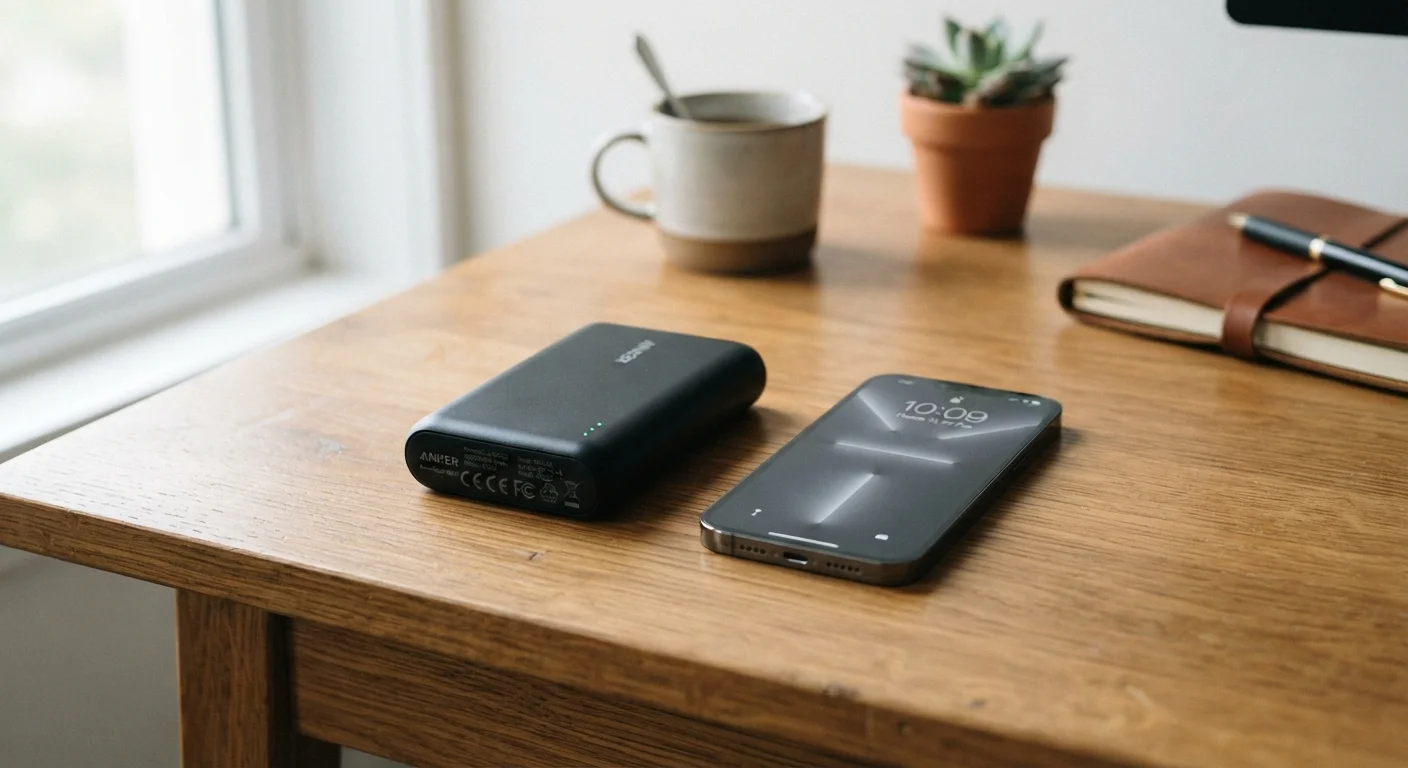
Photo credit: SnippetColumns.com | Easy Search, Reliable Information
In this article
mAh, wattage, pass-through charging — decode what portable charger specs mean for real-world battery top-ups.
Key Takeaways
- mAh tells you how much energy a charger stores, but real-world output is always lower due to conversion losses.
- Wattage determines charging speed — higher watts mean faster top-ups, if your device supports it.
- Voltage and amperage work together; mismatches can mean slower charging even with a capable charger.
- Pass-through charging lets you charge your devices while the power bank itself recharges, with caveats.
- The number of output ports affects how much power each connected device actually receives.
mAh: The Capacity Number Everyone Sees First
The largest number on any portable charger label is almost always the milliampere-hour (mAh) rating — 10,000 mAh, 20,000 mAh, and so on. It measures how much electrical charge the battery inside the power bank can hold. Think of it like the size of a water tank: a bigger tank holds more water, but that doesn't tell you how fast water flows out of the tap.
The catch most shoppers don't realize: you'll never get 100% of that rated capacity delivered to your phone. Energy is lost as heat during the conversion from the power bank's internal battery voltage to the voltage your phone needs. In practice, plan on receiving roughly 60–70% of the stated mAh as usable charge. A 10,000 mAh bank will realistically deliver around 6,000–7,000 mAh to your device.
For context on why your phone's own battery matters here, see our article on battery health and capacity — the charger's output interacts directly with what your phone can accept.
60–70%
Typical real-world usable capacity from rated mAh
Energy conversion losses during voltage step-down mean a power bank's actual deliverable charge is consistently below its label figure.
5W vs 20W
Standard vs. fast-charge output comparison
A 20W USB-PD charger can deliver a meaningful charge in roughly a quarter of the time a 5W charger would take for compatible devices.
45W+
Minimum wattage typically needed to charge a laptop
Most portable chargers marketed for phones top out well below this threshold, making laptop charging a separate consideration when reading specs.
Watts, Volts, and Amps: The Speed Equation
Capacity tells you how much energy is stored. Wattage tells you how fast it can flow. Watts (W) are calculated by multiplying volts (V) by amperes (A) — you'll sometimes see all three listed separately on the label.
A charger outputting 5W will take roughly four times as long to charge a device as one outputting 20W. Fast-charging standards like USB-PD and Quick Charge push higher wattage to compatible devices, dramatically cutting charge time. The key phrase is compatible devices — your charger and your phone both need to support the same protocol for the speed benefit to apply.
If you're new to USB-C specs and charging standards, the Everyday Gadget Buyer's Glossary breaks down those terms in plain language.
Check Both Input and Output Wattage
Many shoppers focus only on output wattage — how fast the bank charges your devices — but input wattage determines how quickly the bank itself refills. A high-capacity bank with low input wattage can take most of a day to recharge. Look for input ratings of 18W or higher on larger power banks if recharge time matters to you.
Pass-Through Charging and Port Count: The Fine Print
Pass-through charging is a feature that lets a power bank charge your devices at the same time it is being recharged from a wall outlet. Convenient in theory — but worth understanding the trade-off. Simultaneous charge-in and charge-out generates more heat inside the bank, and sustained heat is one of the main factors that ages lithium-ion cells faster. Some manufacturers explicitly advise against making pass-through a regular habit for this reason.
Port count also matters more than it looks. A power bank with two USB-A output ports and one USB-C port might split its available wattage across those ports when multiple devices are connected. Charging three devices at once could mean each receives a fraction of the maximum speed. Check whether the label specifies per-port wattage versus total shared output.
For broader habits around keeping your devices healthy long-term, extending the life of your everyday electronics is worth a read.
Reading the Label Like a Practical Buyer
When you're standing in a store or scrolling a product page, here's what to actually look for:
- Capacity (mAh or Wh): Match this to your device's battery size, then apply the 60–70% real-world rule.
- Output wattage: Higher is better if your devices support fast charging. Look for USB-PD or Quick Charge labeling.
- Input wattage: This tells you how fast the power bank itself recharges. A 10,000 mAh bank with only 5W input can take 10+ hours to refill.
- Number and type of ports: More ports are useful, but verify whether wattage is shared or dedicated per port.
- Weight and form factor: High capacity means heavier batteries. A 20,000 mAh bank can weigh close to a pound — relevant if you're packing light.
Those numbers, taken together, paint a much more honest picture than the mAh figure alone. Good phone charging habits compound the value you get from any charger, regardless of its specs.
Wh vs. mAh: Which Is More Accurate?
Watt-hours (Wh) is actually a more precise measure of stored energy than mAh, because it accounts for voltage directly. Some chargers — particularly those designed for international travel or airline carry-on compliance — list Wh instead of or alongside mAh. For airline carry-on rules, the TSA and individual airlines typically reference Wh limits, so knowing how to read that figure is practically useful.
Frequently Asked Questions

Author
Tech & Gadgets Editorial Team
Tech & Gadgets Editorial Team is the collective byline for our editorial team and contributor network. Articles published under this byline or an editorial pen name are researched, written, and reviewed according to our editorial standards for clarity, consistency, and independence before publication.
View all articles →