
The Everyday Gadget Buyer's Glossary
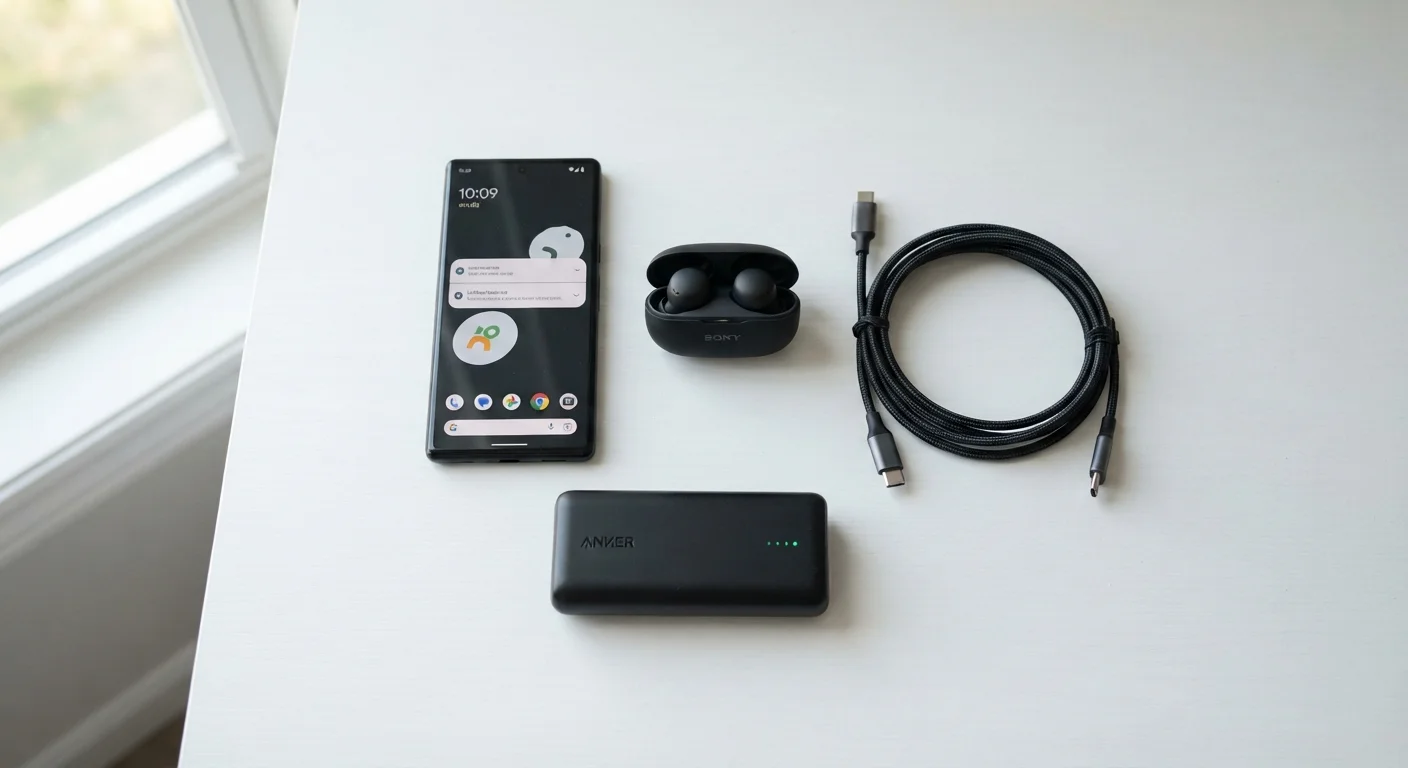
Photo credit: SnippetColumns.com | Easy Search, Reliable Information
In this article
Bluetooth versions, IP ratings, USB-C specs — plain-language definitions for the tech terms you keep seeing but rarely get explained.
Why These Terms Actually Matter
Gadget packaging is filled with abbreviations and ratings that sound technical but are actually straightforward once decoded. The problem isn't that the terms are complicated — it's that nobody bothers to explain them. Knowing what IP68 means before you buy a speaker tells you whether it can survive a poolside splash or just light rain. Understanding USB-C Power Delivery tells you if a charger will actually fast-charge your laptop or just trickle power into it.
This glossary covers the terms that show up most often on product listings, packaging, and spec sheets — focused entirely on what they mean for how you actually use the thing. For a deeper look at how specs can mislead, see common tech myths that don't hold up. And if you're still deciding whether a gadget is worth buying at all, this practical buying framework walks you through the full decision.
IP Rating
A two-digit code (e.g., IP67) indicating how well a device resists dust and water. The first digit is dust protection (0–6); the second is water protection (0–9). Higher numbers mean greater protection.
USB-C Power Delivery (PD)
A fast-charging standard that uses USB-C cables to deliver higher wattages than standard USB charging. Both the charger and the device must support PD for faster charging to work.
mAh
Milliampere-hours — a unit measuring battery capacity. A larger mAh number means more stored energy, though actual battery life also depends on how the device uses that energy.
Bluetooth Version
A number (e.g., 5.3) indicating which generation of Bluetooth wireless technology a device uses. Newer versions generally offer better range, connection stability, and energy efficiency.
Refresh Rate (Hz)
How many times per second a display redraws its image. Higher rates (90Hz, 120Hz) produce smoother motion, but the difference is most noticeable during fast scrolling or gaming.
HDR
High Dynamic Range — a display capability that expands the contrast and color range visible on screen. Multiple competing standards exist; the effect is only visible when the content itself is HDR-mastered.
NFC
Near Field Communication — a short-range wireless standard (works within a few centimeters) used for tap-to-pay, quick device pairing, and data transfer. Its short range is a security feature.
Wi-Fi Standard
A designation (e.g., Wi-Fi 6 / 802.11ax) indicating which generation of wireless networking a device supports. Newer standards handle more devices simultaneously and perform better in congested environments.
Codec (Audio)
The algorithm used to encode and decode audio transmitted wirelessly. Common Bluetooth codecs include SBC (universal), AAC (Apple-optimized), and aptX (Android-optimized). Matching codecs on both devices generally improves audio quality.
Pass-Through Charging
A feature on portable chargers that lets the device charge itself while simultaneously charging another device plugged into it. Not all power banks support this.
Latency
The delay between when a signal is sent and when it arrives. In wireless audio, high latency causes a noticeable lag between video and sound. Low-latency modes on earbuds are designed to reduce this.
ANC (Active Noise Cancellation)
A technology in headphones and earbuds that uses microphones to detect ambient sound and generates an opposing signal to cancel it out. Effectiveness varies by frequency — it works best on steady low-frequency noise like engines.
Connectivity and Wireless Terms
Wireless specs are among the most misunderstood — and the most relevant to everyday use.
| Bluetooth 5.0 range (open air) | Up to ~800 ft theoretical; 30–50 ft typical in real use (Bluetooth SIG specification) |
| Wi-Fi 6 vs. Wi-Fi 5 throughput | Up to 9.6 Gbps (Wi-Fi 6) vs. 3.5 Gbps (Wi-Fi 5) theoretical max (IEEE 802.11ax standard) |
| IP68 submersion depth (typical) | 1.5 meters for 30 minutes (varies by manufacturer) (IEC 60529 standard) |
| USB-C PD max wattage (current spec) | Up to 240W (USB PD 3.1) (USB Implementers Forum) |
| Standard display refresh rate | 60Hz — adequate for everyday tasks and video |
Bluetooth versions matter for range and audio quality, but only up to a point. A device listing Bluetooth 5.0 or higher generally offers a more stable connection over greater distance than older versions. For casual listening or peripherals, the version gap rarely causes noticeable problems in practice.
Wi-Fi standards use designations like Wi-Fi 5 (802.11ac) and Wi-Fi 6 (802.11ax). The newer the standard, the better performance in crowded environments — multiple devices streaming simultaneously, for instance. But your router also needs to support the same standard to see any benefit.
NFC (Near Field Communication) is the short-range wireless technology behind tap-to-pay and quick Bluetooth pairing. It works within a few centimeters, which is by design — proximity is what makes it secure. See phone and tablet tips for how NFC applies specifically to mobile devices.
Durability, Power, and Display Terms
IP ratings follow a two-digit format: the first digit covers dust resistance (0–6), the second covers water resistance (0–9). A rating of IP67 means fully dust-tight and can handle submersion up to one meter for 30 minutes. IP68 allows deeper or longer submersion. Neither guarantees saltwater or pressure-water survival — those aren't covered by standard IP testing.
mAh (milliampere-hours) measures battery capacity. A higher number means more stored energy, but real-world battery life also depends on screen size, processor efficiency, and how the device is used. Portable charger labels use mAh the same way, and that article explains what the number means for actual top-ups.
USB-C Power Delivery (PD) is a charging standard that allows higher wattages over a USB-C cable. Not every USB-C charger supports PD — check the wattage output on the adapter. A phone that supports 45W PD won't charge faster just because you use any USB-C cable; both the charger and cable need to support the standard.
Refresh rate (measured in Hz) describes how many times per second a screen updates its image. 60Hz is standard and perfectly adequate for most tasks. Higher rates (90Hz, 120Hz) make scrolling and motion look smoother, which some users find meaningful and others never notice. It draws more battery power when active.
HDR (High Dynamic Range) expands the range of brightness and color a display can show. There are multiple HDR standards (HDR10, Dolby Vision, HLG), and not all content is mastered in HDR — so the label on a screen doesn't guarantee you'll always see the difference.
Once you know what the labels mean, it becomes easier to get more out of what you already own. Features you're probably underusing is worth reading before you consider any new purchase. You may also find it useful to compare how other product categories use similar terminology — grooming product labels follow a comparable pattern of jargon that rarely gets defined.
IP67 vs IP68
What one digit of water resistance difference means
IP67 covers submersion to 1 meter for 30 minutes; IP68 allows deeper or longer submersion as specified by the manufacturer — a meaningful gap for active use cases.
240W
Maximum wattage supported by USB PD 3.1
The USB Implementers Forum's 2021 update to the Power Delivery standard extended the ceiling from 100W to 240W, enabling USB-C to power high-performance laptops.

Author
Tech & Gadgets Editorial Team
Tech & Gadgets Editorial Team is the collective byline for our editorial team and contributor network. Articles published under this byline or an editorial pen name are researched, written, and reviewed according to our editorial standards for clarity, consistency, and independence before publication.
View all articles →