
Grooming Products Glossary: Terms You'll Actually Encounter
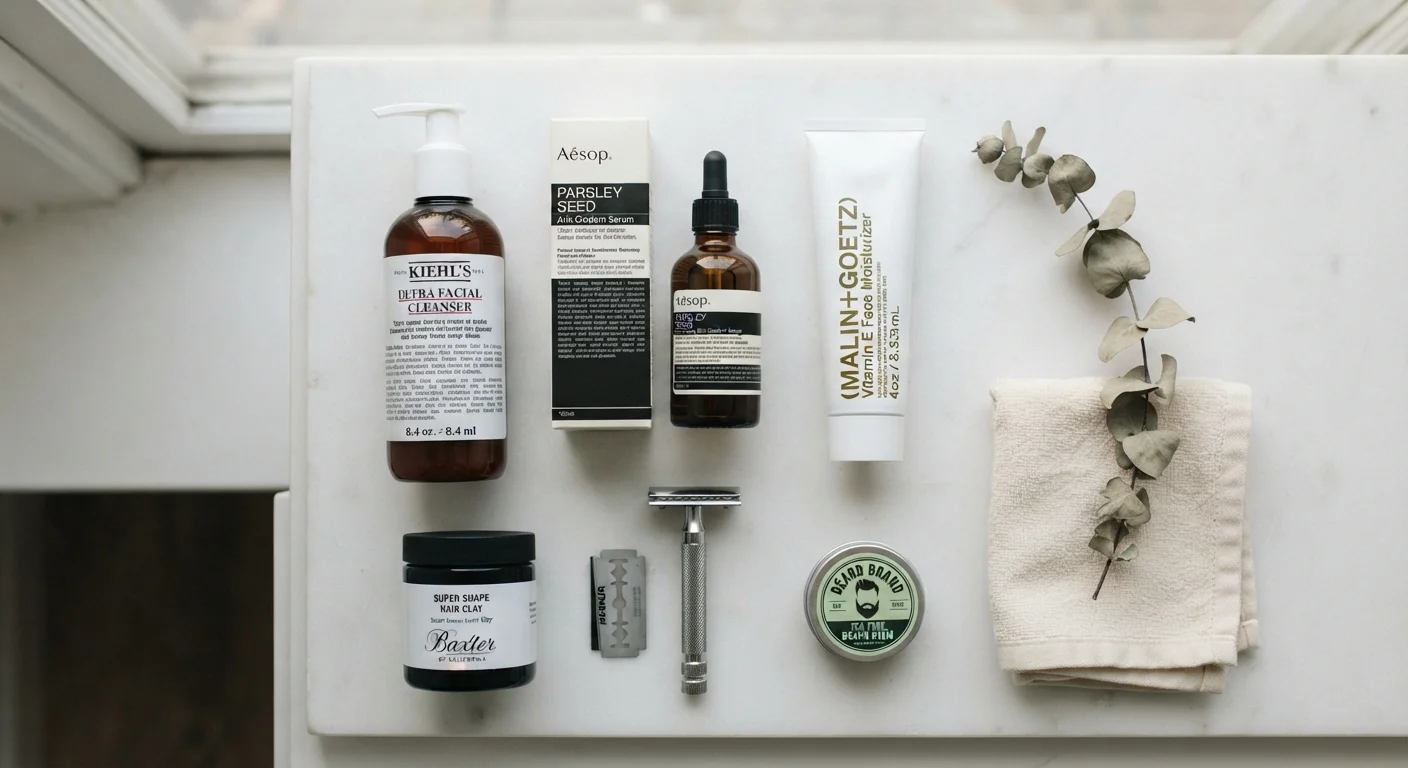
Photo credit: SnippetColumns.com | Easy Search, Reliable Information
In this article
Emollient, humectant, comedogenic — grooming labels use terms most people never look up. This reference demystifies the most common ones.
Why Grooming Labels Feel Like a Foreign Language
Flip over almost any grooming product and you'll find a wall of text — ingredient lists, marketing claims, and category terms that sound clinical or vague at the same time. Words like emollient, humectant, and non-comedogenic appear constantly, yet most people never stop to look them up. The result: decisions made on packaging aesthetics rather than actual product function.
This glossary covers the terms you're most likely to encounter across moisturizers, cleansers, serums, shaving products, and hair care. Understanding even a handful of them meaningfully changes how you shop and how you build a routine. For a broader look at how ingredients interact on a formulation level, see our skincare ingredients guide.
Emollient
An ingredient that softens and smooths skin by filling gaps between skin cells and reducing moisture loss. Common emollients include shea butter, jojoba oil, and fatty acids. They appear in moisturizers, shaving creams, and conditioners.
Humectant
A substance that draws water from the environment — or from deeper skin layers — into the outer layer of skin. Glycerin and hyaluronic acid are widely used humectants. They help skin feel hydrated without adding oil.
Occlusive
An ingredient that forms a physical barrier on the skin's surface to prevent moisture from evaporating. Petrolatum and dimethicone are classic occlusives. They're most effective applied over damp skin or after a humectant.
Non-comedogenic
A label indicating a product is formulated to be less likely to clog pores. It is an industry self-assessment, not a regulated or standardized claim, so individual responses can still vary depending on skin type.
Surfactant
A compound that lowers surface tension between oil and water, enabling cleansers and shampoos to lift dirt and sebum from skin or hair. Surfactants range from very mild to quite stripping — the strength level matters for your skin type.
Astringent
A substance that causes tissues to tighten or contract. In grooming, astringents are common in toners and aftershaves. They can temporarily reduce the appearance of pores but may be irritating for dry or sensitive skin.
Sebum
The natural oil produced by sebaceous glands in the skin. Sebum plays an important role in skin protection and hydration, but excess sebum production is associated with oily skin and some forms of acne.
Exfoliant
An ingredient or tool that removes dead skin cells from the surface. Chemical exfoliants (like AHAs and BHAs) dissolve the bonds holding dead cells together, while physical exfoliants use abrasion. Frequency of use matters — over-exfoliating can damage the skin barrier.
Hypoallergenic
A marketing term suggesting a product is less likely to cause allergic reactions. There is no universal regulatory standard for this claim in the U.S., so it does not guarantee a product is free from all potential irritants.
AHA / BHA
Alpha hydroxy acids (AHAs, e.g., glycolic acid) and beta hydroxy acids (BHAs, e.g., salicylic acid) are chemical exfoliants. AHAs work mainly on the skin's surface; BHAs are oil-soluble and can penetrate into pores, making them common in acne-focused products.
Preservative
An ingredient added to prevent bacterial or fungal growth in a product, extending its safe shelf life. Common preservatives include parabens, phenoxyethanol, and sodium benzoate. Without them, water-containing products would spoil quickly.
INCI Name
International Nomenclature of Cosmetic Ingredients — the standardized scientific naming system used on ingredient labels in the U.S. and many other countries. INCI names allow consumers to identify the same ingredient across different product labels and brand names.
Key Concepts Worth Knowing Before You Buy
A few terms come up so consistently across product categories that they deserve extra context beyond a simple definition.
| Skin's Natural pH Range | 4.5 – 5.5 (mildly acidic) (Widely cited in dermatology literature) |
| "Non-comedogenic" Regulation | No federal standard in the U.S. (U.S. Food and Drug Administration guidance) |
| Ingredient List Order | Highest concentration listed first (FDA cosmetic labeling requirements) |
| Common Humectants | Glycerin, hyaluronic acid, urea |
| "Fragrance" on Labels | Can represent dozens of undisclosed compounds (FDA cosmetic labeling trade secret exemption) |
| AHA Sun Sensitivity | AHAs increase UV sensitivity; use SPF (FDA advisory guidance on AHA products) |
Formulation Type vs. Skin Claim
Many grooming terms describe what a formula does mechanically — how it interacts with water, oil, or the skin's surface. Others describe an intended outcome or compatibility claim, like "hypoallergenic" or "non-comedogenic." Knowing which category a term falls into helps you evaluate whether it's a functional description or a marketing signal. Our guide on reading product labels without getting fooled goes deeper on how to tell the difference.
pH and Skin Barrier
Healthy skin maintains a slightly acidic pH, generally between 4.5 and 5.5. Products that disrupt this — particularly harsh cleansers with high pH — can compromise the skin's natural protective barrier, leading to dryness and sensitivity. When a product claims to be "pH-balanced," it means the formulation is designed to stay within a range compatible with skin's natural environment.
A Note on Patch Testing
Even products labeled 'hypoallergenic' or 'non-comedogenic' can cause reactions in some individuals. Dermatologists generally recommend patch testing any new product on a small area of skin before applying it broadly. If you experience persistent irritation, redness, or breakouts, consult a licensed dermatologist rather than switching products repeatedly on your own.
Once you're comfortable with the terminology, the next step is applying it to an actual routine. Our article on building a daily grooming routine walks through the practical sequencing of products. For habits that sustain results without overcomplicating things, see grooming habits that actually make a difference.

Author
Style & Beauty Editorial Team
Style & Beauty Editorial Team is the collective byline for our editorial team and contributor network. Articles published under this byline or an editorial pen name are researched, written, and reviewed according to our editorial standards for clarity, consistency, and independence before publication.
View all articles →