
Reading a Beauty Product Label Without Getting Fooled by Marketing
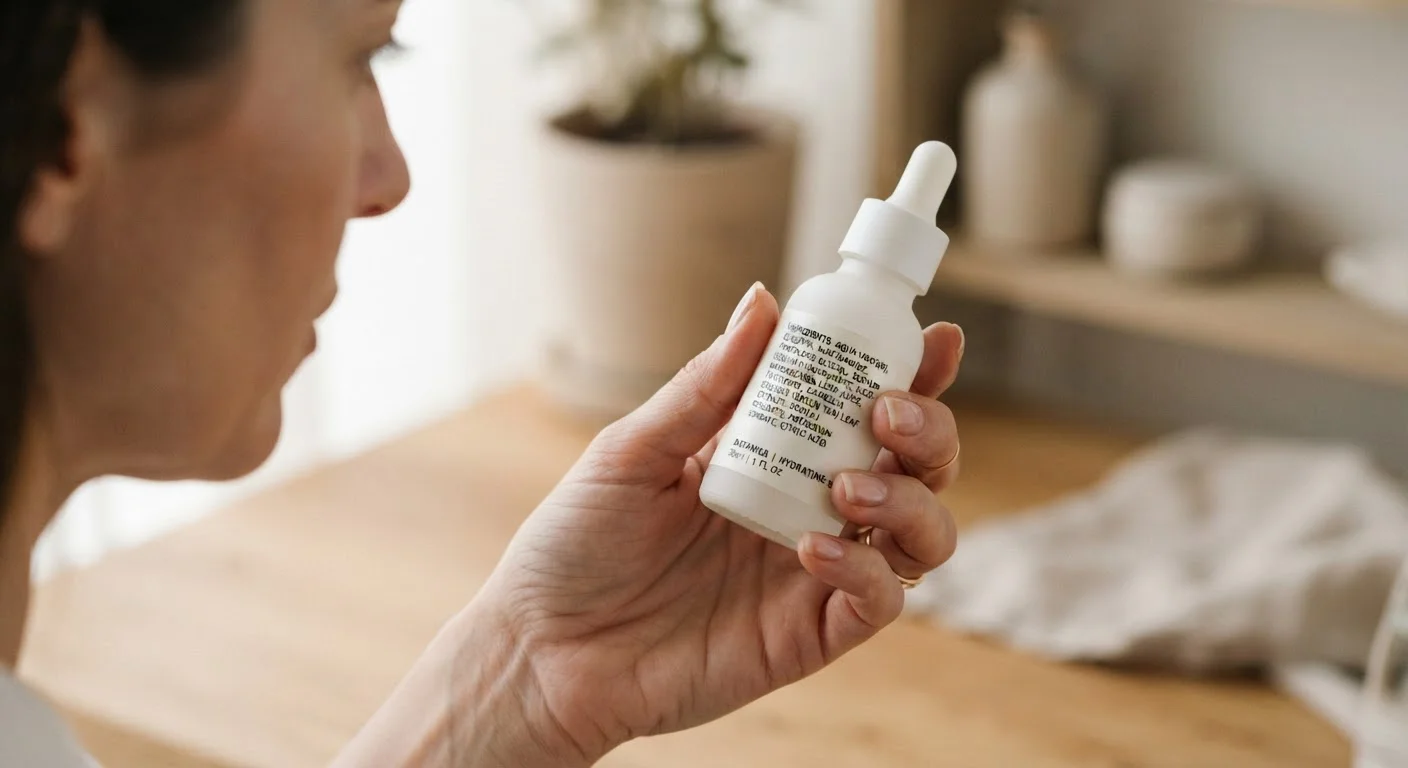
Photo credit: SnippetColumns.com | Easy Search, Reliable Information
In this article
Terms like 'clean,' 'natural,' and 'dermatologist-tested' have no universal legal definition. Here's what to actually look for.
Key Takeaways
- Terms like 'clean,' 'natural,' and 'dermatologist-tested' have no standardized legal definition in the U.S.
- Ingredients are listed in descending order by concentration — position on the list matters.
- Third-party certifications carry more weight than front-of-package marketing claims.
- Fragrance listed as a single ingredient may contain dozens of undisclosed compounds.
- The ingredient list and PAO symbol tell you far more than any front-label claim.
Why the Front of the Label Isn't the Whole Story
Beauty product packaging is designed to sell — and the front of the label is pure marketing real estate. Claims like 'clinically proven,' 'dermatologist-tested,' and 'hypoallergenic' are common, but none of them carry a universal legal definition under U.S. cosmetic regulations. A product can be 'dermatologist-tested' by a single paid consultant without any published results. 'Hypoallergenic' has no FDA-mandated standard at all.
The same logic applies to ingredient-focused buzzwords. 'Natural,' 'clean,' and 'non-toxic' are branding choices, not regulatory categories. As explored in common skincare myths that refuse to die, the idea that 'natural' automatically equals safe — or that 'synthetic' equals harmful — doesn't hold up to scrutiny.
These Terms Have No Legal Standard
In the United States, the FDA does not define or regulate terms like 'clean,' 'natural,' 'non-toxic,' or 'green' on cosmetic labels. Any brand can use them without meeting a specific standard. Treat them as marketing positioning, not verified claims — and focus your attention on the ingredient list instead.
Flipping to the back of the label is where objective evaluation begins. U.S. cosmetic regulations do require that ingredients be listed accurately, in descending order of concentration, using standardized International Nomenclature of Cosmetic Ingredients (INCI) names. That requirement is your most reliable tool.
How to Read a Beauty Label Step by Step
The following steps apply to any rinse-off or leave-on cosmetic product — moisturizers, shampoos, serums, cleansers, and more. For a deeper dive into specific active ingredients and what they do, see skincare ingredients decoded. For more on the PAO (period-after-opening) symbol and product shelf life, understanding expiration dates in beauty products covers that in detail.
What you will need
Ignore the front panel first
Turn the product over immediately. Front-of-package claims — 'brightening,' 'age-defying,' 'clean formula' — are unregulated marketing language. Acknowledge them only after you've reviewed the actual ingredient list. This prevents anchoring bias, where appealing claims color how you interpret the ingredients.
Read the ingredient list by position
Ingredients are listed in descending order of concentration. The first five to seven ingredients make up the bulk of the product. If a hero ingredient — say, hyaluronic acid or niacinamide — appears near the bottom of a long list, it is likely present in a very small amount. That's not automatically disqualifying, but it's useful context when comparing products or evaluating price-to-value.
Identify the functional ingredients
Scan for ingredients with established, documented functions: humectants (glycerin, hyaluronic acid), emollients (squalane, shea butter), occlusives (petrolatum, dimethicone), and actives (retinol, salicylic acid, niacinamide). These are the ingredients doing the actual work. If a product is priced as a treatment, confirm that at least one recognized active appears high enough in the list to be meaningful.
Check for 'fragrance' or 'parfum'
Find the word 'fragrance' or 'parfum' in the list. Under current U.S. regulations, this single term can represent an undisclosed blend of many compounds. For most people with normal skin, this is a minor consideration. For anyone with sensitive skin, contact dermatitis history, or known allergies, it's worth prioritizing products that either disclose individual fragrance components or carry a genuine fragrance-free designation confirmed in the ingredient list.
Evaluate any certifications against the claim
If the product displays a certification mark — USDA Organic, COSMOS, Leaping Bunny, NSF — look up what that specific body actually tests and verifies. Not all marks are equal: some certify ingredient sourcing, others verify manufacturing standards or cruelty-free practices. A legitimate certification is more informative than any self-declared label claim. Self-applied marks like 'Certified Natural by [Brand Name]' carry no independent weight.
Note the PAO symbol and batch code
The Period After Opening (PAO) symbol — a small open jar icon with a number followed by 'M' (e.g., 12M) — tells you how many months a product remains stable after opening. This is separate from the expiration or best-before date, which applies to unopened products. The batch code, usually printed near the bottom, can be entered into online batch decoders to find the manufacturing date if no expiration is printed. Both are relevant to product safety and efficacy.
"Fragrance" Can Hide Many Ingredients
U.S. regulations allow companies to list the word 'fragrance' (or 'parfum') as a single ingredient to protect trade secrets, even when it represents a blend of dozens of compounds. If you have sensitive skin or known allergies, look for products that disclose individual fragrance components or are labeled fragrance-free — not just 'unscented,' which may still contain masking fragrances.
Cross-Check Claims With Certifications
Independent third-party certifications — such as USDA Organic or COSMOS — require brands to meet documented standards to earn and keep the mark. These carry far more evidentiary weight than self-declared front-label language. See what certification marks actually verify to understand which ones are meaningful.
What Good Label Literacy Actually Gets You
Reading labels critically doesn't require a chemistry degree — it requires knowing where to look and what to discount. Once you separate marketing language from regulated information, comparisons between products become faster and more grounded. You stop paying a premium for buzzwords and start evaluating what's actually inside.
This skill transfers well beyond skincare. The same critical approach applies when reading a nutrition label or evaluating quality signals on any product label. For grooming-specific terminology you'll encounter across product categories, the grooming products glossary is a practical reference to bookmark.
For a closer look at the ingredient list itself — including how ingredient order reveals concentration and what to be cautious about — see reading a skincare label without getting lost in the ingredient list.

Author
Style & Beauty Editorial Team
Style & Beauty Editorial Team is the collective byline for our editorial team and contributor network. Articles published under this byline or an editorial pen name are researched, written, and reviewed according to our editorial standards for clarity, consistency, and independence before publication.
View all articles →