
Dry Kibble vs. Wet Food: Nutritional Trade-Offs for Dogs and Cats
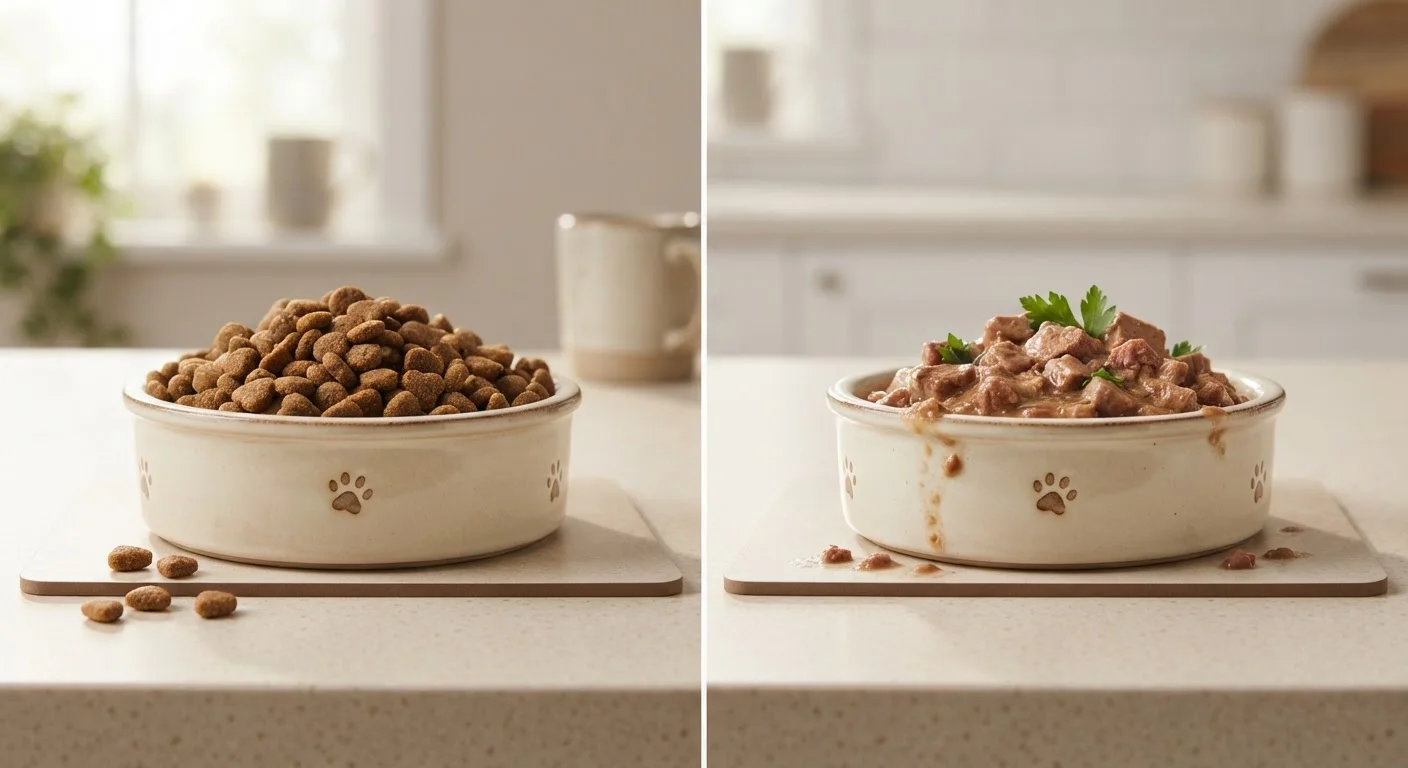
Photo credit: SnippetColumns.com | Easy Search, Reliable Information
In this article
Kibble and wet food differ in more than moisture content. Here's how each stacks up nutritionally and when one may suit your pet better than the other.
Key Takeaways
- Wet food contains roughly 70–80% moisture; kibble typically contains only 8–12%, affecting hydration significantly.
- Dry kibble tends to be more calorie-dense per ounce, making portion control especially important.
- Wet food generally has a higher protein-to-carbohydrate ratio, which matters particularly for obligate carnivores like cats.
- Neither format is universally superior — individual health needs, life stage, and dental status all influence the best choice.
- Always look for an AAFCO nutritional adequacy statement on any pet food label, regardless of format.
- Combining kibble and wet food can balance convenience with moisture benefits, but calorie totals still need monitoring.
How Moisture Content Changes Everything
The most fundamental difference between dry kibble and wet food isn't ingredients — it's water. Wet food typically contains 70–80% moisture by weight, while most dry kibble sits at just 8–12%. That gap has cascading effects on nutrition, digestion, and overall health.
For cats especially, this matters enormously. Cats evolved as desert-adapted predators with a low instinctive thirst drive, relying on prey's moisture content to meet fluid needs. A cat eating only dry kibble may consume significantly less water than their kidneys ideally require. Chronic low-level dehydration is associated with higher risk of urinary crystals and kidney strain in cats — though it's important to note that diet is only one contributing factor, and individual variation is wide. For more on building a nutritionally complete feline diet, see this in-depth guide to cat nutrition.
Dogs are less sensitive to moisture differences but still benefit from wet food's hydration contribution, particularly in hot climates or during illness.
~70–80%
Moisture content in wet pet food
Compared to 8–12% in most dry kibble — a difference that substantially affects daily fluid intake, especially for cats.
~50%
Of cats not drinking enough water
Veterinary nutritionists commonly note that cats fed exclusively dry food tend to consume less total daily water than those on wet or mixed diets.
4 kcal/g
Approximate caloric density of dry kibble
Dry kibble is calorie-dense relative to its volume, which is why portion size guidance on labels is an important reference point for weight management.
Protein, Fat, and Carbohydrate Ratios
Raw percentages on a pet food label can be misleading when comparing wet and dry foods directly. Because wet food contains so much water, its nutrients are diluted by weight. To compare accurately, you need to convert both to a dry matter basis — stripping out all moisture mathematically to see what's actually left.
Once you do that, the differences narrow considerably. However, wet foods still tend to derive more calories from protein and fat, while many dry kibbles rely more heavily on carbohydrates — typically starches like corn, rice, or potato — to bind the product during extrusion. Cats, as obligate carnivores, have limited ability to use carbohydrates efficiently, making the macronutrient ratio more consequential for them than for omnivorous dogs.
Neither format is inherently higher quality. A premium kibble can outperform a low-quality wet food on protein sourcing and digestibility. The label's ingredient list and guaranteed analysis are your starting tools — but the AAFCO nutritional adequacy statement is the baseline requirement to look for first. Our checklist for evaluating commercial pet foods walks through exactly what to look for on the label.
| Criterion | Dry Kibble | Wet Food |
|---|---|---|
| Moisture content | 8–12% | 70–80% |
| Calorie density (per ounce) | Higher | Lower |
| Protein-to-carb ratio | Moderate (varies widely) | Generally higher protein |
| Palatability for picky eaters | Lower aroma appeal | Stronger aroma, softer texture |
| Dental texture benefit | Mild mechanical abrasion | Minimal |
| Shelf life after opening | Weeks (sealed container) | 24–48 hours refrigerated |
| Cost per feeding | Generally lower | Generally higher |
| Hydration support | Low | High |
Dental Health, Palatability, and Practical Trade-offs
Dry kibble is often credited with supporting dental health through its abrasive texture, but the evidence here is more modest than commonly assumed. Standard kibble does provide some mechanical action against plaque, but it doesn't reach below the gumline. Veterinary dental chews or professional cleanings remain the more reliable tools for oral health. Some specialty kibbles carry the Veterinary Oral Health Council (VOHC) seal, indicating tested efficacy — worth looking for if dental health is a priority.
Wet food wins clearly on palatability for many pets. Its higher fat and protein content produces stronger aromas, making it especially useful for pets recovering from illness, underweight animals, or particularly selective eaters. For senior pets losing appetite or experiencing dental pain, the soft texture of wet food can be the difference between adequate and inadequate calorie intake.
On the practical side, kibble is easier to store, less expensive per feeding, and doesn't spoil if left in the bowl for a few hours. Wet food must be refrigerated after opening and used within 24–48 hours. Mixed feeding — offering a base of kibble with a wet food topper — is a common middle-ground approach, though owners need to account for total calories across both to avoid overfeeding.
Understanding how these nutritional trade-offs shift across a pet's life stages adds another layer of consideration. This guide on pet nutrition across life stages covers how dietary needs evolve from puppyhood and kittenhood through senior years.
This article provides general educational information about pet nutrition and is not a substitute for veterinary advice. Consult your veterinarian before making significant changes to your pet's diet, especially if your pet has a health condition.
Comparing Labels: Use Dry Matter Basis
When comparing protein or fat percentages between wet and dry foods, the numbers on the bag and can aren't directly comparable. To convert to dry matter basis, divide the nutrient percentage by (100 minus the moisture percentage), then multiply by 100. Many pet food company websites and veterinary nutrition resources offer dry matter calculators to simplify this step. Your veterinarian or a board-certified veterinary nutritionist can also help interpret labels in the context of your pet's specific needs.

Author
Pets & Animal Care Editorial Team
Pets & Animal Care Editorial Team is the collective byline for our editorial team and contributor network. Articles published under this byline or an editorial pen name are researched, written, and reviewed according to our editorial standards for clarity, consistency, and independence before publication.
View all articles →