
Building a Balanced Plate Without Counting Every Calorie
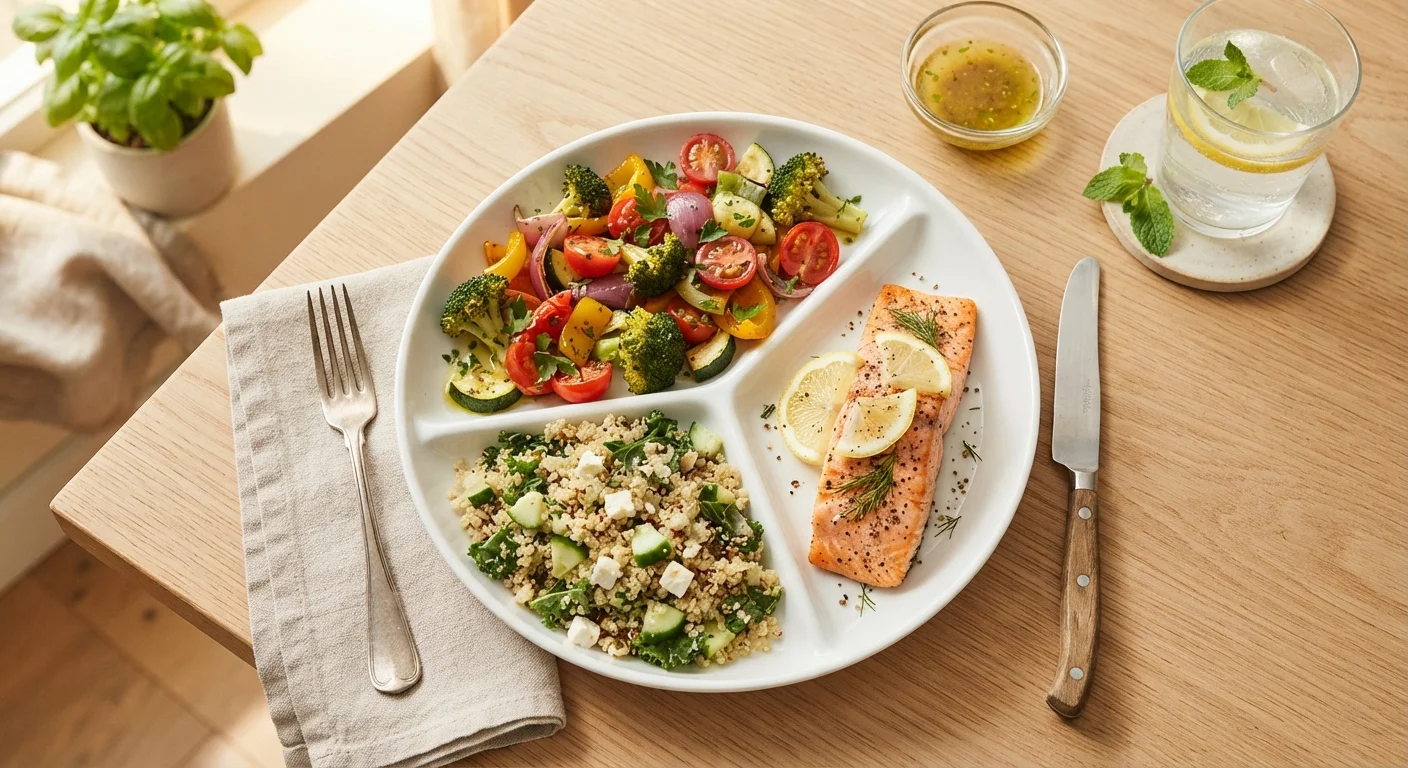
Photo credit: SnippetColumns.com | Easy Search, Reliable Information
In this article
Practical frameworks — like the plate method — that make proportioned eating easier for busy people who don't want to track every gram.
Key Takeaways
- The plate method uses visual proportions to guide balanced eating without tracking apps or scales.
- Half your plate as vegetables or fruit, one quarter protein, one quarter whole grains is a practical baseline.
- No single food group needs to be eliminated — variety and proportion matter more than perfection.
- Consistent habits across meals have more impact than any single perfectly constructed plate.
- Consult a registered dietitian for guidance tailored to your personal health needs.
Why Visual Frameworks Beat Calorie Counting for Most People
Calorie counting can be a useful tool in specific contexts, but for most busy Americans, it creates more friction than benefit. It requires weighing food, logging entries, and sustaining a level of daily attention that is hard to maintain. Research in behavioral nutrition suggests that simpler, more intuitive approaches tend to produce better long-term adherence than precise tracking systems.
Visual frameworks — like the plate method — work by translating general nutritional principles into a format your eyes can judge without any tools. Rather than asking "how many grams of carbohydrate is this?", you ask "does this roughly fill one quarter of my plate?" That mental shift reduces cognitive load and allows eating decisions to become more habitual over time.
It's worth noting that this approach is general guidance for healthy adults. People managing diabetes, kidney disease, eating disorders, or other conditions that affect nutrition should work directly with a registered dietitian or physician rather than relying on general frameworks alone.
This Is General Education, Not Medical Advice
The guidance here is intended as general nutritional education for healthy adults. It is not a substitute for personalized advice from a registered dietitian, physician, or other qualified healthcare professional. If you have a chronic health condition, food allergy, or specific dietary need, please consult a qualified professional before making significant changes to your eating patterns.
What you will need
How to Build Your Balanced Plate
The steps below walk through each section of the plate method in practical terms. Read through the full sequence once before you start, so the logic of each choice is clear before you apply it at your next meal.
A Standard Dinner Plate (9–10 inches)
Provides a natural visual boundary for practicing proportional eating without measuring.
Registered Dietitian
A licensed professional who can tailor nutrition guidance to your individual health goals and conditions.
Understand the Core Framework First
Before adjusting anything on your plate, get comfortable with the basic proportions behind the plate method — a visual tool developed and used by nutrition educators to simplify meal balance. The general breakdown looks like this:
- Half the plate: non-starchy vegetables or a mix of vegetables and fruit
- One quarter: lean protein (poultry, fish, legumes, eggs, tofu, etc.)
- One quarter: whole grains or starchy vegetables (brown rice, whole wheat bread, quinoa, sweet potato)
A small serving of healthy fat — like olive oil used in cooking or avocado on the side — fits alongside this, rather than replacing any section. If you're new to thinking about what you eat, nutrition fundamentals for healthier eating offers a solid foundation before diving in.
Fill the Vegetable Half First
This is the most impactful habit shift for most people. Before portioning anything else, fill half your plate with vegetables — raw, cooked, roasted, or in a salad. Vegetables provide fiber, water content, vitamins, and minerals at relatively low caloric density, which means they support fullness without crowding out nutrients.
Variety matters more than hitting a specific type. Leafy greens, cruciferous vegetables (broccoli, cauliflower), peppers, cucumbers, tomatoes, and cooked carrots all count. Fruit can substitute for part of this section, particularly at breakfast.
Choose a Protein Source for One Quarter
Protein supports muscle maintenance, satiety, and numerous metabolic functions. For one quarter of your plate, select a source appropriate to your diet — this might be grilled chicken, canned tuna, lentils, black beans, eggs, Greek yogurt, or a plant-based option like tempeh.
Processing level matters here: whole or minimally processed proteins generally offer better nutritional profiles than heavily processed alternatives with added sodium or fillers. Check how to read a nutrition label to understand what's actually in packaged protein foods before you buy.
Add Whole Grains or Starchy Vegetables for the Remaining Quarter
The remaining quarter of your plate provides the energy-dense carbohydrates that fuel activity and help maintain steady blood sugar levels when chosen wisely. Whole grains — those that retain the bran and germ — deliver fiber and micronutrients that refined grains lose in processing.
Practical options include: brown rice, whole wheat pasta, farro, oats, barley, whole-grain bread, sweet potato, and corn. You don't need to eliminate white rice or white bread — but consistently choosing whole-grain versions over time is supported by general nutritional guidance.
Add Healthy Fats in Moderation
Dietary fat is essential — it supports absorption of fat-soluble vitamins (A, D, E, K), hormone production, and cell health. Rather than giving fat its own plate section, think of it as a complement: olive oil used to roast vegetables, a small handful of nuts alongside a meal, or avocado added to a bowl.
The type of fat tends to matter more than the total amount. Unsaturated fats (found in olive oil, nuts, seeds, avocado, and fatty fish) are generally favored in nutrition science over industrially produced trans fats. Saturated fat from whole food sources like dairy remains a topic of ongoing research — moderation and context are more practical guides than elimination.
Apply the Framework Consistently, Not Perfectly
The plate method works through consistent habit, not perfection. Meals eaten at restaurants, social gatherings, or on the go won't always conform neatly — and that's fine. The goal is a general pattern across most of your meals, not a rigid rule that makes eating stressful.
If you find yourself routinely unable to follow even a loose version of this framework, factors like budget, time, or food access may be the real obstacles. Healthy eating on a budget and weekly grocery planning are practical next steps for making this sustainable.
Use Your Hand as a Portion Guide
When a measuring cup isn't handy, your palm, fist, and cupped hand are rough proxies for protein, grains, and vegetables respectively. This isn't precise, but it keeps portions roughly in range without any tools — especially useful when eating away from home.
Avoid Swapping One Rigid System for Another
The plate method is a flexible guideline, not a strict rule with pass/fail outcomes. If you find yourself anxious or distressed about whether a meal meets exact proportions, that's worth discussing with a healthcare provider. Rigid food rules can sometimes signal a more complicated relationship with eating. For more on common nutritional missteps, see when healthy eating quietly goes wrong.
This article is for general informational and educational purposes only. It is not medical or dietary advice. Always consult a qualified healthcare professional before making significant changes to your diet, particularly if you have existing health conditions.

Author
Health & Wellness Editorial Team
Health & Wellness Editorial Team is the collective byline for our editorial team and contributor network. Articles published under this byline or an editorial pen name are researched, written, and reviewed according to our editorial standards for clarity, consistency, and independence before publication.
View all articles →