
Understanding Expiration Dates and Shelf Life in Beauty Products
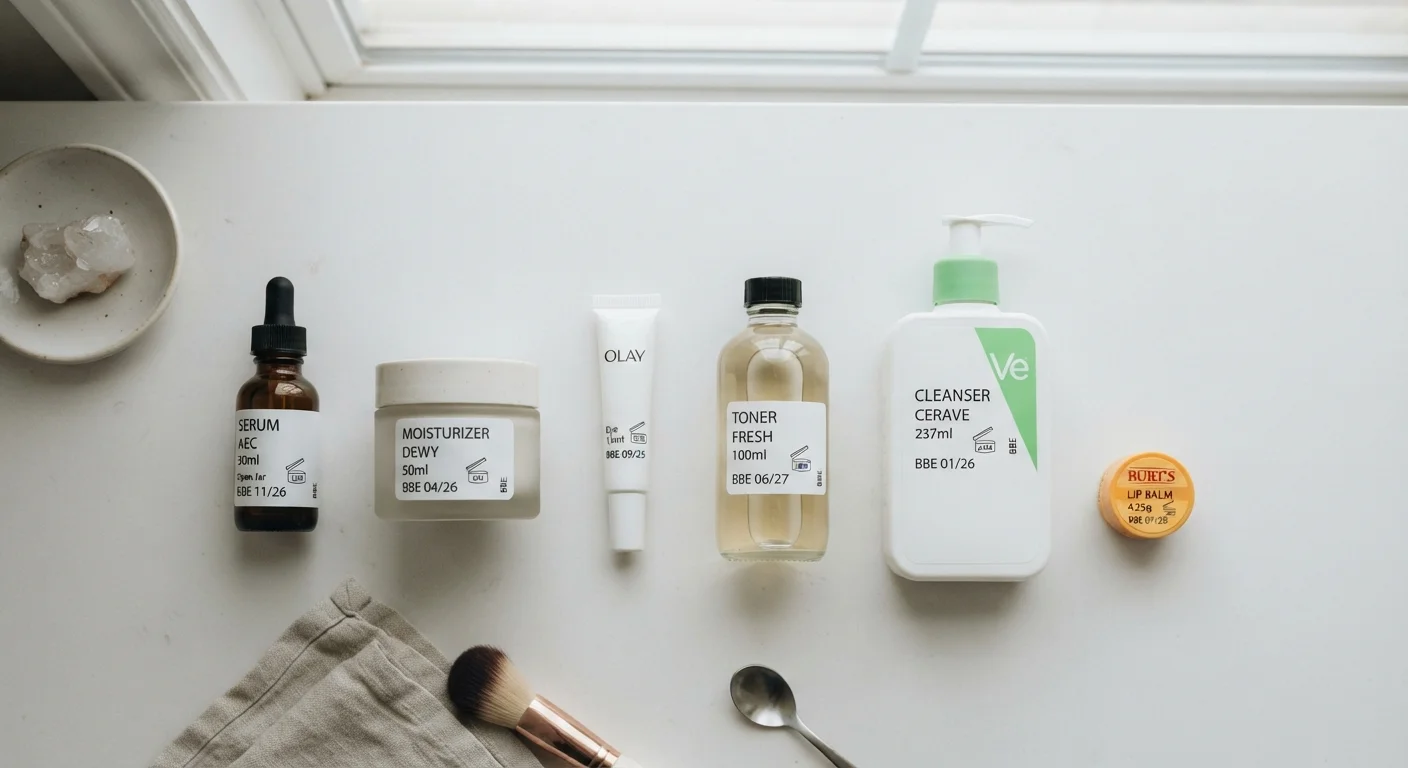
Photo credit: SnippetColumns.com | Easy Search, Reliable Information
In this article
That little jar symbol on your product isn't decorative. Learn how to read PAO symbols and why product age affects safety and performance.
Key Takeaways
- The open jar symbol (PAO) tells you how long a product stays safe after you first open it.
- Expired products may lose efficacy, change texture, or harbor bacteria that irritate skin.
- Sunscreen and eye products carry the highest risk when used past their shelf life.
- Storage conditions — heat, humidity, light — significantly shorten a product's effective lifespan.
- A quick monthly audit of your beauty shelf can protect both your skin and your investment.
What Those Symbols Actually Mean
Most beauty and personal care products sold in the U.S. carry two key date markers, and many shoppers overlook both. The first is a Period After Opening (PAO) symbol — a small open jar icon printed on the packaging with a number and the letter "M" (for months). A label reading "12M" means the product is formulated to remain stable and safe for 12 months after you unseal it, regardless of when it was manufactured.
The second is a batch code or manufacture date, sometimes printed as a stamped string of numbers or letters on the bottom of the container. These codes can be cross-referenced with manufacturer websites or third-party databases to estimate when a product was made — useful for products you haven't opened yet.
Neither symbol is decorative. They reflect real formulation decisions: preservative systems have a working lifespan, active ingredients degrade over time, and emulsions can break down and allow microbial growth. For a deeper look at how to read everything else on a label, see our guide on reading a skincare label without getting lost.
No PAO Symbol? Here's What to Do
Some products — particularly those with a shelf life of 30 months or longer — are not required by U.S. or EU regulation to display a PAO symbol. If you don't see one, check the brand's website or contact customer service with the batch code. As a general fallback, most unopened skincare products are considered stable for about two to three years when stored properly.
Which Products to Prioritize — and Why It Matters for Safety
Not all expired products carry equal risk. Products that contact sensitive areas, have water-based formulas, or contain active ingredients need the most vigilance.
- Sunscreen: SPF efficacy degrades meaningfully after the expiration date. Using expired sunscreen may provide inadequate UV protection even when applied correctly.
- Eye-area products (mascara, eyeliner, eye cream): These are closest to a mucous membrane. Mascara in particular should typically be replaced every three months, as repeated use introduces bacteria into the tube.
- Serums and treatments with active ingredients like vitamin C or retinol: Oxidation renders these ingredients less effective — sometimes completely inert — before visible changes appear.
- Lip products: May develop an off smell or grainy texture as oils go rancid.
- Powder products (eyeshadow, blush): Tend to last longer — often 2–3 years — but applicators and brushes can harbor bacteria if not cleaned regularly.
Understanding what ingredients do in the first place helps you gauge what's at stake. Our article on skincare ingredients decoded breaks this down clearly.
Expired Sunscreen Is a Real Safety Issue
The FDA classifies sunscreen as an over-the-counter drug, and expired sunscreen may not provide the SPF protection stated on the label. Using it may leave you with a false sense of security during sun exposure. Always check the expiration date printed on sunscreen packaging before each use, and replace any bottle that has passed it — regardless of how much product remains.
How to Audit and Maintain Your Beauty Shelf
A product audit doesn't require much time — 15 minutes once a month is enough to stay on top of your collection. Here's how to approach it systematically.
Locate the PAO symbol and any printed dates
Turn each product over and check the bottom, back label, and crimped edge (for tubes). Look for the open jar icon and note the number of months listed. Also scan for a stamped batch code or printed expiration date — not all products have both, but many do.
Mark your products with an open date
Use a fine-tip permanent marker or a small sticker to write the month and year you first opened each product directly on the packaging. This simple habit eliminates guesswork and takes about three seconds per product.
Check for sensory signs of degradation
Even within the PAO window, products can degrade early due to poor storage. Smell each product — a rancid, sour, or unusually sharp odor is a red flag. Check texture: separation, graininess, or a color shift (especially yellowing in vitamin C serums) signals breakdown. If something looks or smells off, don't use it.
Set a discard schedule by product category
Group your products by category and note their PAO months. Create a simple list or phone reminder for products with the shortest shelf lives — mascara (3 months), liquid eyeliner (3–6 months), and sunscreen (12 months or the printed expiration, whichever comes first). Longer-lived products like powder blush or body lotion can be reviewed quarterly.
Reassess your storage conditions
Once you've audited your current products, evaluate where you keep them. Move heat-sensitive items — vitamin C serums, retinols, anything oil-based — away from direct sunlight and humidity. A cool, dark location significantly extends the working life of most formulas.
Storage matters as much as date-checking. Heat, humidity, and direct sunlight all accelerate ingredient breakdown. A bathroom cabinet that gets steamy during showers can cut a product's effective life well short of its PAO. Keep actives and serums in a cool, dry location — a bedroom dresser drawer is often better than a bathroom shelf.
Finally, remember that PAO symbols assume proper storage from the day you open the product. A product left in a hot car or exposed to sunlight may degrade faster than the symbol suggests. When in doubt about a product's quality signals, product label cues can help you read between the lines before you even open something new.
This article is for general informational purposes only and is not a substitute for professional medical or dermatological advice. If you experience skin irritation or an adverse reaction from a beauty product, consult a qualified healthcare provider.

Author
Style & Beauty Editorial Team
Style & Beauty Editorial Team is the collective byline for our editorial team and contributor network. Articles published under this byline or an editorial pen name are researched, written, and reviewed according to our editorial standards for clarity, consistency, and independence before publication.
View all articles →