
Cortisol, Adrenaline, and the Stress Response: A Plain-Language Breakdown
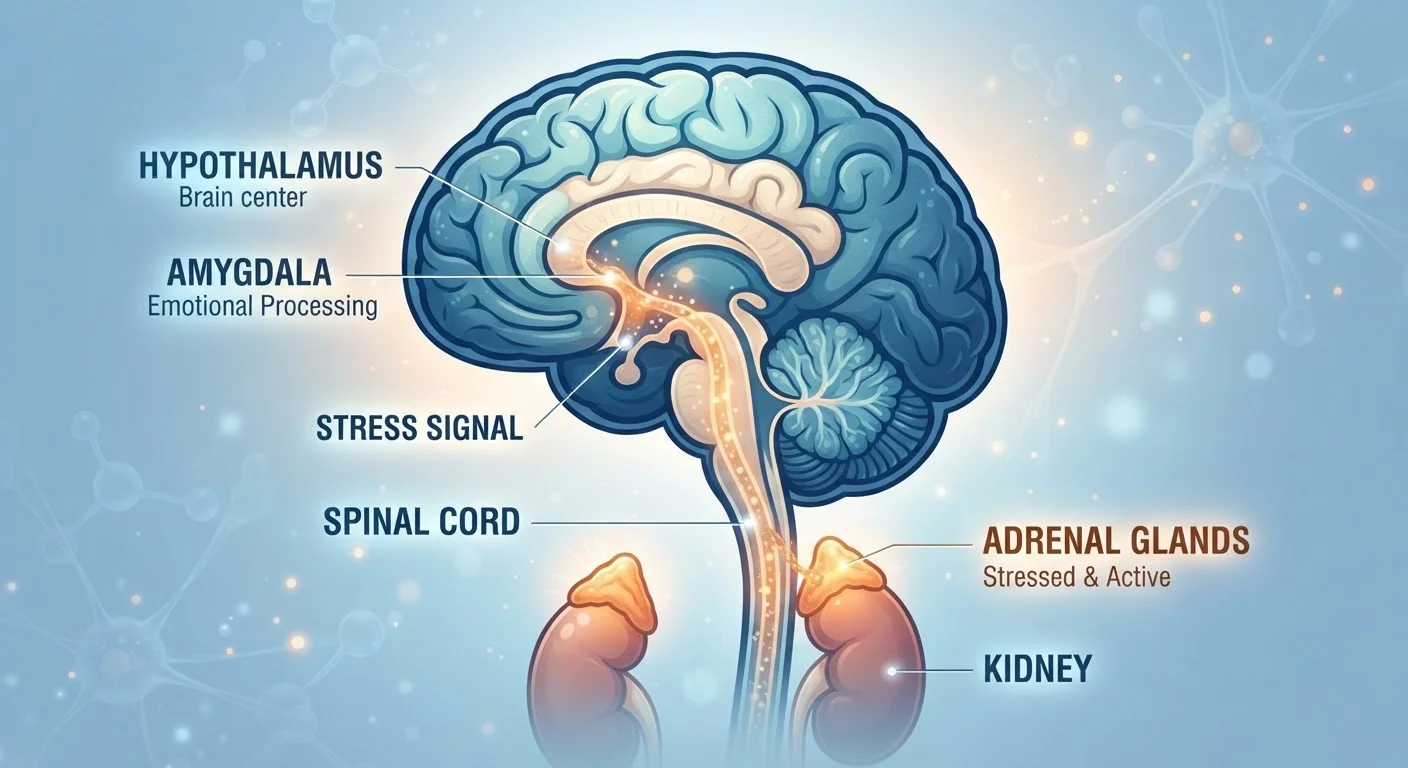
Photo credit: SnippetColumns.com | Easy Search, Reliable Information
In this article
Two hormones do most of the work when you're stressed. Learn what they are, what they do, and why that matters for daily life.
What Actually Happens When You're Stressed
Stress isn't just a feeling — it's a coordinated biological response involving your brain, nervous system, and glands. When you perceive a threat (a looming deadline, a near-miss in traffic, a difficult conversation), your body launches a protective chain reaction almost instantly.
At the center of that reaction are two hormones: adrenaline (also called epinephrine) and cortisol. Each plays a distinct role, and understanding what they actually do helps explain why stress feels the way it does — and why chronic stress can wear on the body over time.
| Primary stress hormones | Adrenaline (epinephrine) and cortisol |
| Where they're produced | Adrenal glands, located above the kidneys |
| Adrenaline onset | Within seconds of perceived threat |
| Cortisol onset | Minutes after adrenaline; effects can last hours |
| Main function of adrenaline | Triggers immediate fight-or-flight physical changes |
| Main function of cortisol | Sustains energy availability during prolonged stress |
Adrenaline: The Fast-Acting First Responder
Adrenaline is released within seconds of a perceived threat. It's produced by the adrenal glands — two small glands that sit atop the kidneys — and acts quickly on multiple organ systems at once.
- Heart rate increases to pump more oxygen-rich blood to your muscles.
- Breathing speeds up so you can take in more oxygen.
- Blood is redirected away from digestion and toward your limbs.
- Pupils dilate to sharpen your visual field.
This is the classic fight-or-flight response — your body preparing to either confront danger or flee from it. The physical sensations are hard to miss: a racing heart, shallow breath, dry mouth, heightened alertness. Adrenaline is fast but short-lived. Once the perceived threat passes, its effects typically fade within minutes.
Adrenaline (Epinephrine)
A hormone released rapidly by the adrenal glands in response to perceived danger. It triggers the fight-or-flight response — raising heart rate, sharpening focus, and redirecting blood to muscles.
Cortisol
A stress hormone released slightly after adrenaline, with longer-lasting effects. It raises blood sugar and suppresses non-essential body functions to sustain energy during a stressor.
Fight-or-Flight Response
The body's automatic physiological reaction to perceived threat. It prepares you to confront or escape danger by rapidly changing heart rate, breathing, and blood flow.
Adrenal Glands
Two small glands located above the kidneys that produce both adrenaline and cortisol, among other hormones central to the stress response.
Parasympathetic Nervous System
The branch of the autonomic nervous system responsible for calming the body after a stress response. It counteracts fight-or-flight and promotes rest and recovery.
Chronic Stress
Prolonged or persistent stress that keeps cortisol elevated over extended periods. Unlike acute stress, chronic stress can contribute to negative effects on sleep, immunity, and mood.
Cortisol: The Slower, Longer-Lasting Partner
While adrenaline handles the immediate alarm, cortisol sustains the response. It's released a few minutes later and stays in circulation much longer — sometimes for hours. Cortisol's main job is to keep energy available while your body manages the stressor.
It does this by:
- Raising blood sugar levels so your muscles and brain have fuel
- Suppressing non-essential functions like digestion and immune activity
- Sharpening alertness and focus in the short term
Cortisol isn't inherently harmful. In healthy, short bursts, it helps you perform under pressure. The problem arises when stress is chronic — meaning cortisol stays elevated for days, weeks, or months. Research consistently links prolonged high cortisol to disrupted sleep, suppressed immune function, changes in mood, and difficulties with memory and concentration. This is why ignoring ongoing stress signals can take a real physical toll over time.
77%
Adults reporting physical symptoms of stress
According to American Psychological Association survey data, a large majority of U.S. adults regularly experience physical symptoms they attribute to stress.
Hours
How long cortisol can remain elevated
Unlike adrenaline, which clears quickly, cortisol can stay elevated for several hours after a stressor — particularly in cases of chronic or repeated stress.
Why This Matters in Daily Life
Most modern stressors — work pressure, financial worry, relationship friction — don't resolve in minutes the way a physical threat would. Your nervous system can't always distinguish between a predator and an inbox overflowing with urgent emails. The same hormonal cascade activates either way.
That means many people spend extended periods with cortisol running higher than their bodies were designed to sustain. Over time, this can affect energy, mood, digestion, and overall resilience. The good news: understanding the mechanism is genuinely useful. Practices like slow, deliberate breathing directly engage the parasympathetic nervous system — the biological "off switch" for the stress response — which helps signal to your body that the threat has passed.
Coping strategies also need to adapt as life changes. What works for managing stress in your twenties may not be equally effective later on. Stress management approaches shift meaningfully across life stages, and recognizing that can help you find approaches that actually fit your current situation.
It's also worth noting that stress responses aren't unique to humans — our pets can experience them too. If you've noticed changes in your dog's or cat's behavior, stress and anxiety in pets is well-documented and worth understanding.
This article is for general informational and educational purposes only. It is not medical advice, and it should not be used as a substitute for guidance from a qualified healthcare professional. If you have concerns about your health or stress levels, please speak with your doctor or a licensed mental health provider.
This Is General Health Information, Not Medical Advice
The information here describes how stress hormones work at a general, educational level. Everyone's physiology differs, and stress-related symptoms can sometimes signal underlying health conditions. If stress is significantly affecting your daily functioning, sleep, or physical health, consult a qualified healthcare professional for personalized guidance.

Author
Health & Wellness Editorial Team
Health & Wellness Editorial Team is the collective byline for our editorial team and contributor network. Articles published under this byline or an editorial pen name are researched, written, and reviewed according to our editorial standards for clarity, consistency, and independence before publication.
View all articles →