
Envelope Budgeting vs. Digital Spending Trackers
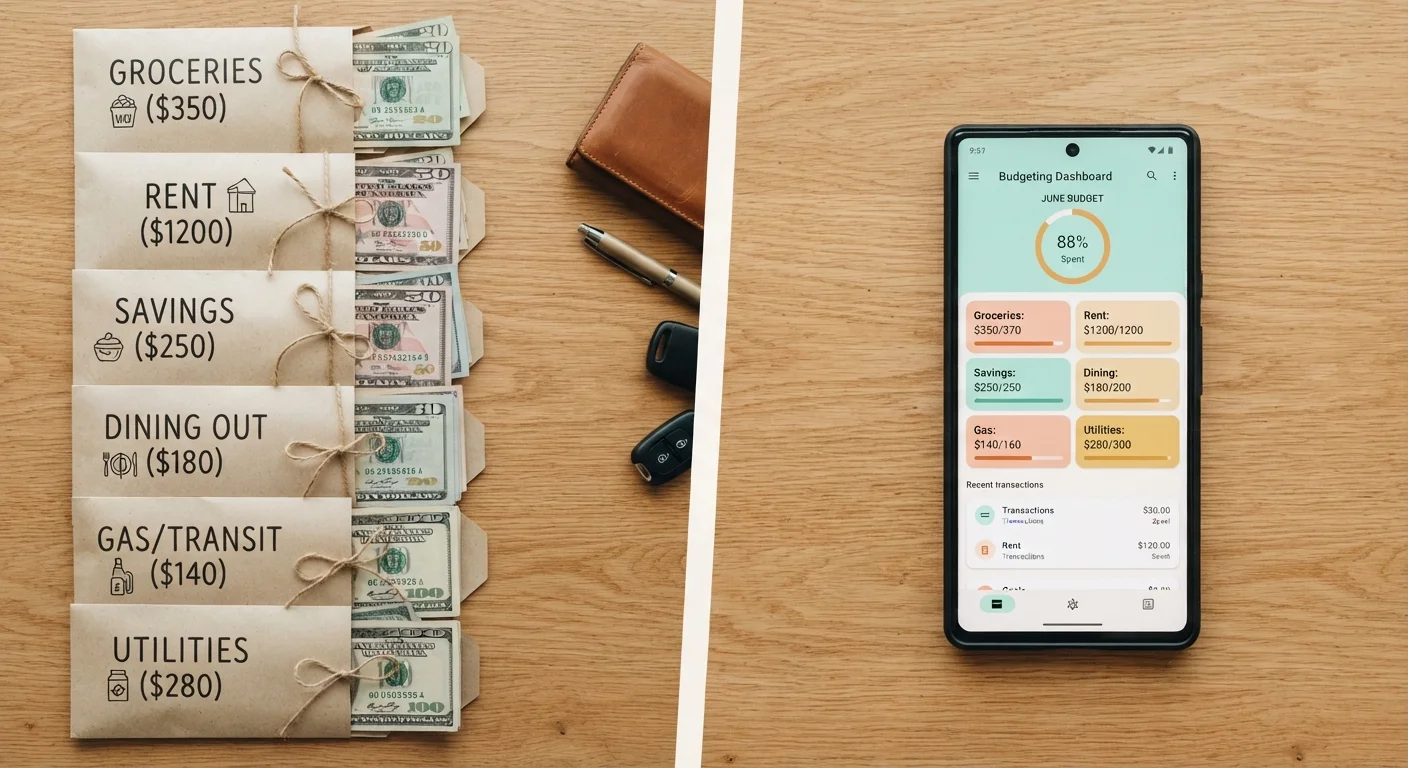
Photo credit: SnippetColumns.com | Easy Search, Reliable Information
In this article
Cash envelopes or digital dashboards? Explore how each method works and which fits different spending habits and lifestyles.
Key Takeaways
- Envelope budgeting uses physical cash divided into spending categories to create firm, visible limits.
- Digital trackers automate transaction logging and give you spending data across multiple accounts instantly.
- Envelope budgeting builds spending awareness through friction; digital tools reduce friction but require discipline.
- Neither method works if you don't review your spending patterns regularly and adjust.
- Combining elements of both approaches is a valid strategy many people find more sustainable.
How Each Method Actually Works
Envelope budgeting is straightforward by design. Each pay period, you withdraw cash and divide it into labeled envelopes — groceries, gas, dining out, entertainment, and so on. Once an envelope is empty, that category's spending is done until next payday. There's no app, no sync, and no ambiguity: the physical cash is the budget.
Digital spending trackers work differently. Most connect to your bank accounts and credit cards, automatically categorizing transactions as they post. You set spending limits per category inside the app, and the tool shows you — often in real time — how much you've used and how much remains. Some tools also flag recurring charges, flag unusual spending, or produce monthly summaries. For a broader look at complementary tracking approaches, see our practical spending tracking methods guide.
| Criterion | Envelope Budgeting | Digital Spending Trackers |
|---|---|---|
| Setup effort | Moderate — manual cash withdrawal each cycle | Low — connect accounts once, largely automated |
| Spending friction | High — physically handing over cash | Low — card swipes feel seamless |
| Works for online purchases | No — cash only | Yes — tracks all digital transactions |
| Real-time visibility | Limited to what's in the envelope | Full view across linked accounts |
| Security risk | Cash lost or stolen is unrecoverable | Requires secure app login and data privacy |
| Best psychological effect | Strong — empty envelope signals stop | Weaker — numbers on screen feel abstract |
| Cost | Free (just envelopes and cash) | Free to paid tiers depending on tool |
Where Each Method Falls Short
Envelope budgeting has real limitations. Carrying cash is inconvenient in an economy built around cards and digital payments. Online purchases, subscription services, and peer-to-peer payments don't fit neatly into envelopes. Safety is also a concern — lost or stolen cash is typically gone for good. The method also requires a trip to the ATM every pay cycle, which adds friction of its own.
Digital trackers have their own gaps. Automatic categorization is often imperfect; many tools misclassify transactions, and correcting them takes consistent attention. More importantly, seeing a number on a screen doesn't carry the same psychological weight as physically handing over cash. Research in behavioral economics consistently suggests that card and digital payments reduce the perceived "pain of paying," making it easier to overspend even when you technically know your balance. If you find yourself spending on autopilot, our piece on mindful versus autopilot spending explores why that gap exists.
77%
Americans living paycheck to paycheck at some point
Survey data from LendingClub and PYMNTS.com has repeatedly shown a majority of U.S. consumers report cash-flow strain, underscoring why a structured budgeting method matters.
~100%
Overage prevention with envelope method
When using strict cash envelopes, overspending a category is physically impossible once the envelope is empty — a structural advantage no digital alert can fully replicate.
Choosing the Right Fit — or Combining Both
The honest answer is that neither method is universally superior. Your choice should reflect how you actually live, not an idealized version of your habits. If your spending is primarily card-based and you manage multiple accounts, a digital tracker is practical by necessity. If you have a specific category — like dining out or discretionary shopping — where you chronically overspend, a physical envelope just for that category can add structure without overhauling your entire system.
Combining approaches is underrated. Many people use digital tools for their overall budget and fixed expenses, while keeping one or two cash envelopes for the categories where they consistently lose control. This hybrid approach captures the psychological power of physical cash where it matters most, without the inconvenience of going fully cash-based.
Whichever system you use, the core principle is the same: regular review. A budget you set and never revisit isn't a budget — it's a wish list. For a complementary strategy that pairs well with either method, consider exploring pay-yourself-first budgeting, which prioritizes savings before discretionary spending decisions are even made.
This article is for general informational and educational purposes only and does not constitute personalized financial advice. Consult a qualified financial professional for guidance specific to your situation.

Author
Money & Finance Editorial Team
Money & Finance Editorial Team is the collective byline for our editorial team and contributor network. Articles published under this byline or an editorial pen name are researched, written, and reviewed according to our editorial standards for clarity, consistency, and independence before publication.
View all articles →