
Keeping Small Pets Mentally Active: Enrichment Routines for Rabbits, Guinea Pigs, and Hamsters
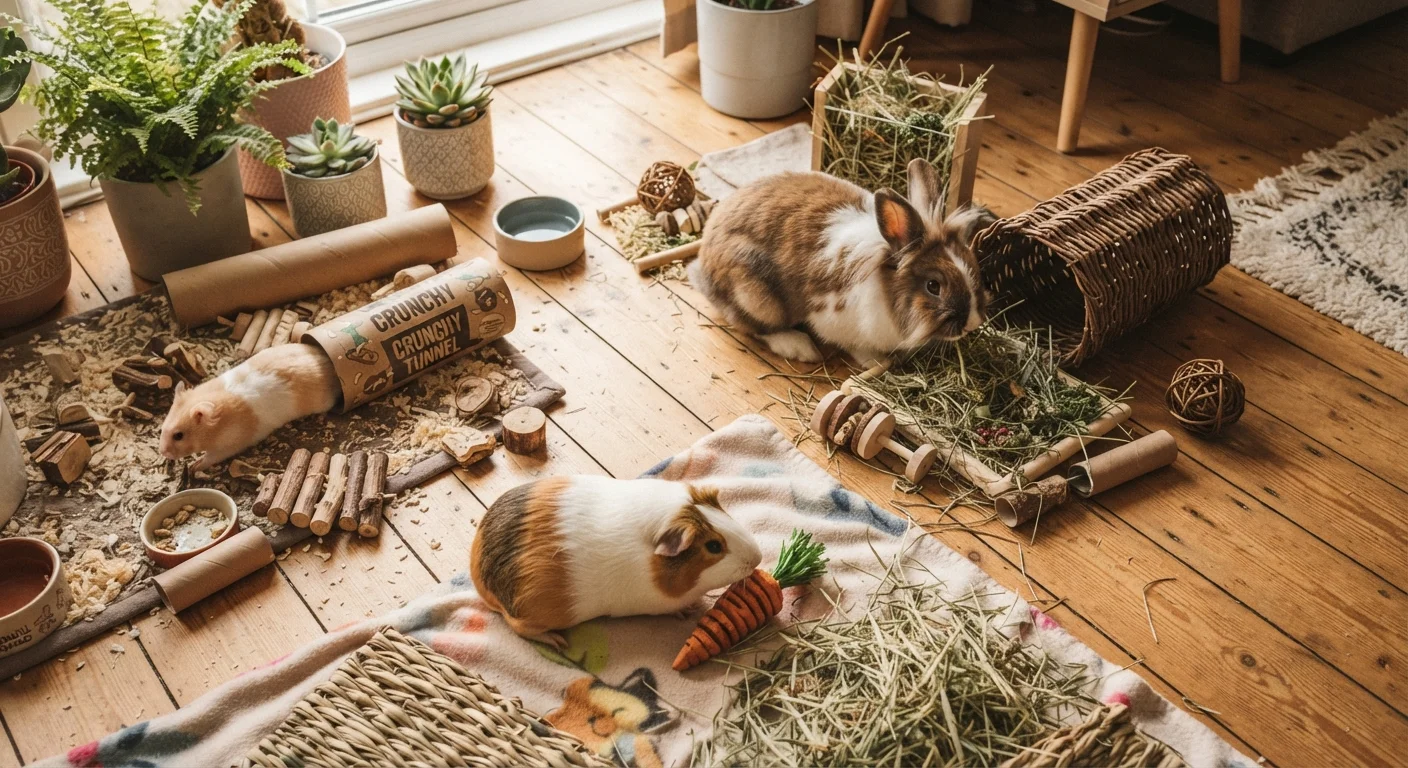
Photo credit: SnippetColumns.com | Easy Search, Reliable Information
Small pets need stimulation too. Discover daily enrichment strategies that are appropriate for rabbits, guinea pigs, and hamsters kept at home.
Key Takeaways
- Mental stimulation is as essential as food and water for rabbits, guinea pigs, and hamsters.
- Simple, low-cost materials like cardboard tubes and hay can serve as effective enrichment tools.
- Each species has distinct behavioral needs — tailor enrichment routines accordingly.
- Consistent daily routines reduce stress-related behaviors like over-grooming and hiding.
- Rotate enrichment items regularly to maintain novelty and prevent habituation.
Why Mental Stimulation Matters for Small Pets
Rabbits, guinea pigs, and hamsters are often assumed to be low-maintenance companions, but their behavioral complexity is frequently underestimated. In natural environments, these animals spend the majority of their waking hours foraging, burrowing, exploring, and socializing. When confined to enclosures without equivalent stimulation, they can develop what animal behaviorists describe as stereotypic behaviors — repetitive, seemingly purposeless actions like bar-chewing or pacing that signal chronic stress.
Mental enrichment addresses this gap by giving small pets appropriate outlets for their instincts. It also strengthens the human-animal bond, since engaged, stimulated animals tend to be more curious and sociable during interaction time. For context on how stress manifests in pets generally, see our piece on signs of stress in pets that daily routines can help relieve. While that article addresses a range of companion animals, the behavioral signals it describes apply equally well to small mammals.
The good news is that effective enrichment does not require expensive equipment. Cardboard, hay, and a predictable daily routine are the foundation. What matters most is consistency and species-awareness — understanding that a hamster's needs differ meaningfully from a rabbit's, even if both animals live in your home.
Check Materials for Safety Before Use
Not all cardboard, wood, or fabric items are safe for small pets. Avoid anything with adhesives, dyes, or chemical treatments. Plain, untreated cardboard and kiln-dried softwoods are generally considered safe, but when in doubt, ask your veterinarian before introducing a new enrichment material.
Building the Daily Enrichment Routine
A practical enrichment routine fits naturally into the care tasks you already perform — feeding, spot-cleaning, and observation. The steps below walk you through building one from scratch, starting with behavioral observation and progressing to a weekly rotation system.
What you will need
Observe Your Pet's Natural Behaviors
Before building an enrichment routine, spend a few days watching how your pet moves through its environment. Note when it is most active, what objects it gravitates toward, and whether it shows any stress signals — such as repetitive pacing, hiding, or over-grooming. Understanding your individual animal is the foundation of effective enrichment. You can cross-reference behavioral cues with guidance in our article on signs of stress in pets that daily routines can help relieve.
Set Up a Base Enrichment Environment
Ensure the enclosure has at least two distinct zones: one for resting and one for activity. Add a hiding shelter, a foraging area with hay, and at least one chewable object. For rabbits, floor space for binkying (joyful leaping) matters significantly. Guinea pigs benefit from group housing with social interaction, while hamsters need deep substrate for burrowing. Tailor the layout to your species before adding rotating enrichment items.
[tool_cards]Introduce Foraging Opportunities Daily
Scatter a portion of your pet's daily food ration — pellets, dried herbs, or vegetable pieces — rather than placing it all in a bowl. Use cardboard tubes stuffed with hay, small paper bags, or egg cartons to hide food. This encourages problem-solving and extends active feeding time, which is especially important for hamsters and guinea pigs whose wild counterparts spend hours foraging. Even 10 minutes of scatter feeding provides meaningful mental work.
Schedule Species-Appropriate Interaction Time
Rabbits are crepuscular — most active at dawn and dusk — so brief, calm handling sessions in early morning or evening tend to go better. Guinea pigs are social and generally tolerate more frequent, relaxed lap time. Hamsters are nocturnal; forcing interaction during the day disrupts their sleep and can cause stress. Align your interaction windows with your pet's natural rhythm and keep sessions short and positive, ending before the animal shows signs of overstimulation such as teeth-chattering or freezing.
[important_callout]Rotate and Refresh Enrichment Items Weekly
Replace or rearrange enrichment objects on a weekly schedule to maintain novelty. This does not require purchasing new items — removing a tunnel for one week and reintroducing it the next is often enough to renew interest. Track which items generate the most engagement and prioritize those in your rotation. Avoid leaving soiled or damaged items in the enclosure, as these can become hazards rather than enrichment.
[tip_callout]Monitor and Adjust the Routine Over Time
Enrichment needs shift as animals age, recover from illness, or change social circumstances. A rabbit that previously enjoyed exploring a play area may slow down as it gets older — adjust accordingly rather than forcing activity. Revisit the routine seasonally and after any health changes. For a broader view of how life stage affects small pet care needs, consider the principles outlined in pet health across life stages, which applies broadly to companion animals of all sizes.
This article is for general informational purposes only and does not constitute veterinary advice. Always consult a qualified veterinarian for concerns about your pet's health or behavior.

Author
Pets & Animal Care Editorial Team
Pets & Animal Care Editorial Team is the collective byline for our editorial team and contributor network. Articles published under this byline or an editorial pen name are researched, written, and reviewed according to our editorial standards for clarity, consistency, and independence before publication.
View all articles →