
Reading a Pet Food Label Without Getting Lost in the Fine Print
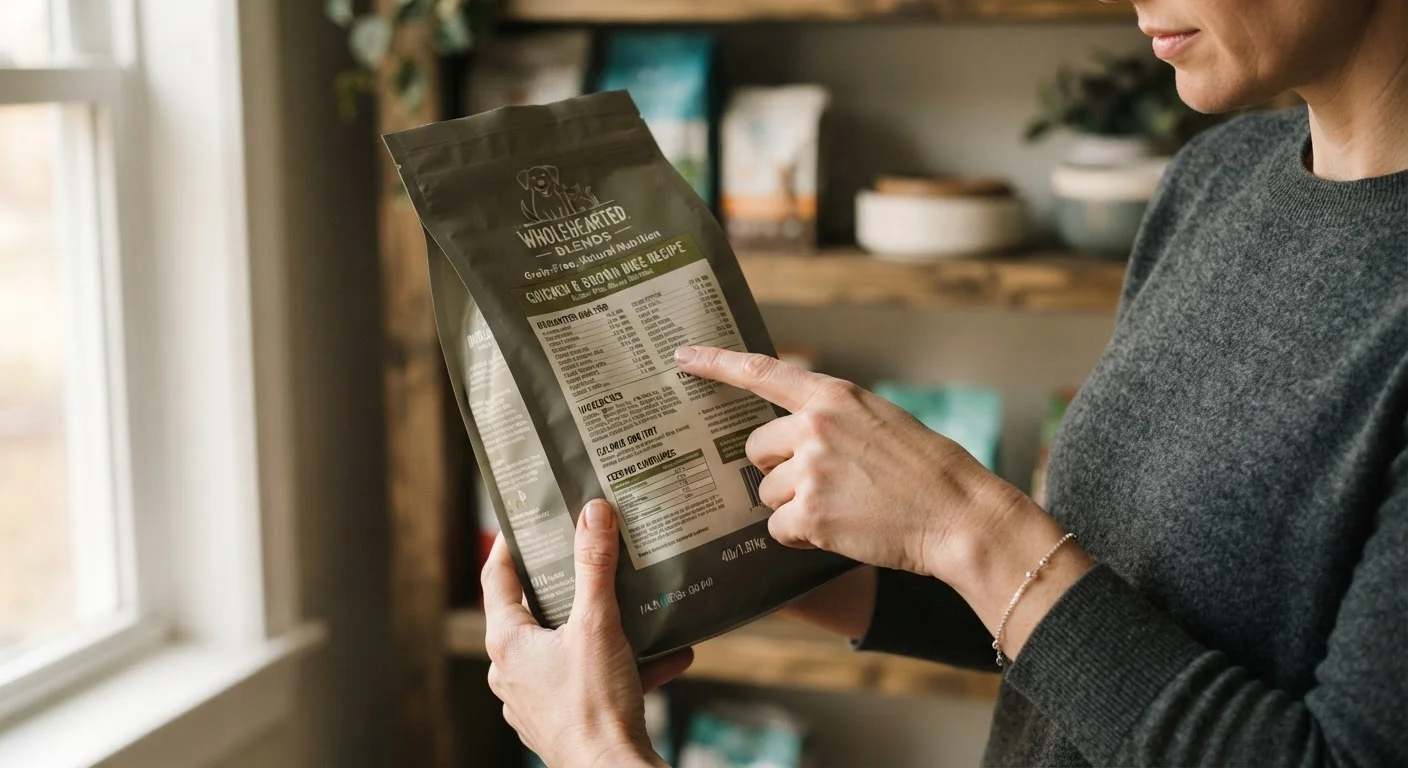
Photo credit: SnippetColumns.com | Easy Search, Reliable Information
In this article
Ingredient lists, guaranteed analysis, and AAFCO statements can be confusing. This guide explains what each section actually tells you about your pet's food.
Key Takeaways
- Ingredients are listed by weight before cooking, so moisture content affects where items appear on the list.
- The guaranteed analysis shows minimum or maximum nutrient percentages, not exact amounts.
- An AAFCO nutritional adequacy statement confirms whether a food is complete and balanced for a specific life stage.
- Marketing terms like 'natural' and 'holistic' have limited or no regulatory definition on pet food labels.
- The feeding guidelines on labels are starting estimates — your pet's actual needs will vary.
Why Pet Food Labels Can Feel So Confusing
Pet food packaging is regulated — but not always in ways that make reading it easy. Labels must follow rules set by the AAFCO and individual state feed control agencies, which means certain pieces of information are required by law. However, the formatting, terminology, and marketing language surrounding those requirements can make the whole label feel like a puzzle.
The good news is that once you know which sections carry real nutritional meaning and which are largely marketing, navigating a label becomes much more manageable. This guide walks through each key section in the order you're likely to encounter it. For a broader overview of how labeling conventions work, see what pet food labels are actually telling you.
What you will need
Step-by-Step: How to Read Each Section of the Label
Work through the label systematically rather than scanning randomly. Each section below serves a distinct purpose, and understanding what each one does — and doesn't — tell you will help you make sense of the whole picture.
Check the Product Name for Built-In Rules
AAFCO naming rules determine how prominently an ingredient can appear in the product name based on how much of it is present. If a named ingredient (e.g., 'chicken') appears alone in the name, it must make up at least 95% of the product by weight, excluding water. If the name says 'chicken dinner' or 'chicken entrée,' the named ingredient only needs to reach 25%. A 'with chicken' label requires just 3%.
This means the product name itself signals ingredient concentration — before you even read the back of the package.
Read the Ingredient List in Order — With One Caveat
Ingredients are listed by weight in descending order, measured before cooking. Whole meats like chicken or beef contain significant moisture, which weighs them down. After cooking, that moisture is removed and the actual dry weight drops considerably. This is why a whole meat listed first may contribute less protein than a 'meal' (pre-rendered, lower-moisture) listed third or fourth.
Ingredient splitting — dividing a single ingredient into multiple forms (e.g., 'ground corn,' 'corn gluten meal,' 'corn bran') to push each lower on the list — is also a practice worth knowing about. For a closer look at protein sources specifically, see how different protein sources compare.
Interpret the Guaranteed Analysis Panel
The guaranteed analysis lists minimum percentages for crude protein and crude fat, and maximum percentages for crude fiber and moisture. These are regulatory guarantees — not exact formulations. The actual amounts in any given batch may be higher than the minimums or lower than the maximums.
Comparing guaranteed analysis figures across wet and dry foods directly is misleading because moisture content differs dramatically. To compare them fairly, you'd need to calculate each food on a dry-matter basis by removing moisture from the equation. This requires a small calculation but gives a more accurate nutritional comparison.
Locate and Understand the AAFCO Nutritional Adequacy Statement
This small block of text is one of the most meaningful parts of any pet food label. It states whether the food is nutritionally complete and balanced for a specific life stage (growth, adult maintenance, all life stages, or reproduction), and how that was determined — either through laboratory nutrient analysis or through feeding trials.
Foods that have passed an AAFCO feeding trial carry a statement indicating they were fed to actual animals under controlled conditions, which is generally considered a more rigorous standard than analysis alone. Foods labeled 'for supplemental feeding only' or 'for intermittent use' are not complete and balanced and should not serve as a pet's sole diet.
For a full plain-language breakdown of this statement, see how to read the AAFCO statement.
Review the Feeding Guidelines as a Starting Point
Feeding guidelines are printed based on average animals at a given weight. They are a reasonable starting range, not a prescription. Factors including spay/neuter status, activity level, age, breed, and concurrent health issues all influence how much your individual pet should eat.
Start within the suggested range, then monitor your pet's body condition score — ribs should be palpable but not visible; there should be a visible waist when viewed from above. Adjust portions gradually based on what you observe over several weeks. If your pet has a health condition affecting their nutritional needs, consult your veterinarian before making significant changes. See also how to transition between foods without digestive upset.
Cross-Reference With Your Vet
Label literacy helps you ask better questions, but it doesn't replace a veterinarian's knowledge of your specific pet. If you find a label detail confusing or are evaluating a food for a pet with health concerns, bring the package or a photo of the label to your next appointment. Your vet can interpret it in the context of your pet's individual needs.
What the Label Still Won't Tell You
Even a label you've read thoroughly has limits. Guaranteed analysis figures reflect nutrient ranges, not precise formulations. Ingredient quality — the sourcing, freshness, and digestibility of each item — is not disclosed on the label itself. Two foods with identical ingredient lists can differ substantially in how well a pet absorbs and uses those nutrients.
Marketing terms are another layer to filter. Words like holistic, premium, and human-grade are either unregulated or carry definitions that may not match consumer expectations. Even natural has a specific AAFCO definition that permits some processing. Understanding this gap between marketing and regulation is covered in more depth in our guide to ingredient concerns that are genuinely worth attention.
Feeding guidelines printed on packaging are formulated for the average pet of a given weight. Activity level, metabolic rate, neuter status, and health conditions all affect actual needs. Use the label's guidelines as a starting point, and adjust based on your individual animal's body condition over time. For decisions about specific health conditions or life stages, consult your veterinarian rather than relying on label guidance alone.
Treats and Toppers Count Too
Treats, food toppers, and supplements are not always subject to the same labeling requirements as complete pet foods. If these items make up a significant portion of your pet's daily intake, they can shift the overall nutritional balance in ways the main food label won't reflect. Learn more about how extras fit into a balanced pet diet to keep the full picture in view.
This article is for general informational and educational purposes only. It is not a substitute for veterinary advice. Always consult a qualified veterinarian regarding your individual pet's nutritional needs and health status.

Author
Pets & Animal Care Editorial Team
Pets & Animal Care Editorial Team is the collective byline for our editorial team and contributor network. Articles published under this byline or an editorial pen name are researched, written, and reviewed according to our editorial standards for clarity, consistency, and independence before publication.
View all articles →