
Journaling for Mental Clarity: What the Research Suggests and How to Start
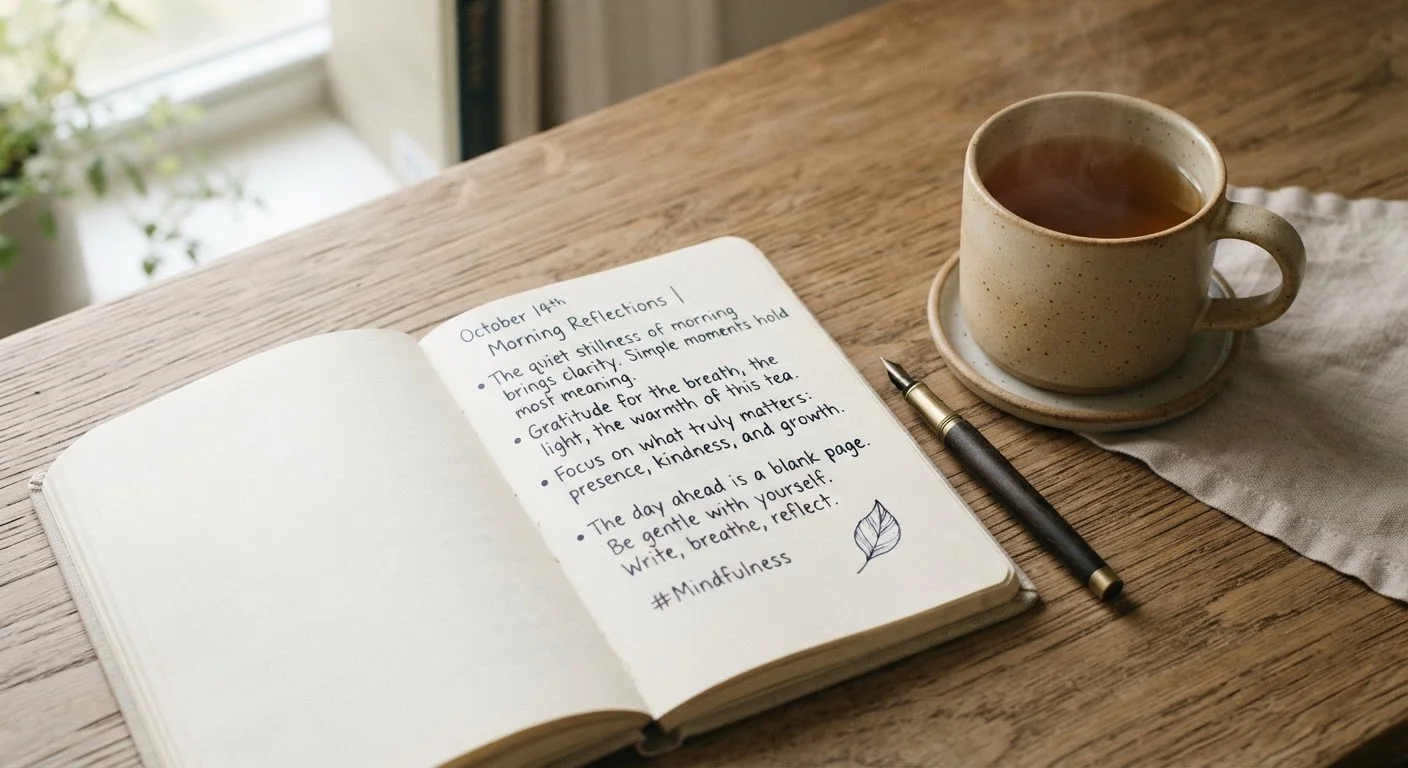
Photo credit: SnippetColumns.com | Easy Search, Reliable Information
In this article
Expressive writing has been studied as a tool for processing emotion. Here's what evidence says and a low-pressure way to begin.
Key Takeaways
- Research suggests expressive writing can help people process difficult emotions and reduce rumination.
- There is no single correct way to journal — different formats serve different mental wellness goals.
- A sustainable practice needs only 10–15 minutes and a low-pressure approach to prompts.
- Journaling is a self-help tool, not a substitute for professional mental health support.
What Expressive Writing Research Actually Says
The scientific case for journaling is more nuanced than many wellness headlines suggest. Psychologist James Pennebaker conducted foundational research in the 1980s and 1990s showing that writing about emotionally significant experiences — not just events, but feelings — was associated with measurable benefits, including reduced visits to health centers and improvements in self-reported wellbeing.
Subsequent meta-analyses have found that expressive writing can reduce symptoms of psychological distress for some people, particularly when it helps them build a coherent narrative around difficult experiences. The working theory is that translating raw emotion into language makes it easier to process and integrate — sometimes called emotional labeling or affect labeling in psychological literature.
That said, research results are mixed. Benefits tend to be modest, effects vary considerably by individual, and simply venting negative feelings without reflection doesn't appear to produce the same gains. The key ingredient seems to be moving from raw emotion toward some degree of meaning-making or perspective-taking.
Research Has Nuance
While the evidence for expressive writing is promising, it's not a guaranteed outcome for everyone. Benefits in studies tend to be moderate and vary based on individual factors, the type of writing used, and context. Think of journaling as a supportive habit, not a prescribed treatment.
For a broader foundation in everyday mental wellness practices, see our guide to everyday mental wellness — a grounded starting point covering multiple self-care tools.
Types of Journaling and What Each Targets
Not all journaling looks the same. Understanding a few distinct approaches helps you choose one that fits your actual goal.
Expressive writing
A form of journaling where you write openly about your thoughts and feelings around significant experiences, rather than just describing events. It's the style most studied in psychological research.
Affect labeling
The process of putting feelings into words. Research suggests this can reduce emotional intensity by engaging the brain's language-processing systems alongside its emotion-processing areas.
Rumination
Repeatedly cycling through the same negative thoughts without resolution. Reflective journaling is thought to help interrupt rumination by moving toward narrative and perspective.
Gratitude journaling
A structured practice of regularly writing down specific things you appreciate. Associated with modest improvements in mood and life satisfaction in some studies.
Meaning-making
The process of building a coherent understanding of why something happened and what it means for you. Research suggests this is a key mechanism behind the benefits of expressive writing.
- Expressive writing: Unstructured, stream-of-consciousness writing about feelings and experiences. Most closely tied to the psychological research above. Good for processing difficult emotions or stressful periods.
- Gratitude journaling: Writing down specific things you appreciate. Research on gratitude practices suggests benefits for mood and life satisfaction, though the effect size is modest and individual results vary.
- Reflective or prompted journaling: Responding to a specific question — e.g., "What drained my energy today, and what restored it?" Useful for pattern recognition and self-awareness over time.
- Bullet journaling: A structured system combining tasks, events, and brief notes. More organizational than therapeutic, but can reduce cognitive load by externalizing scattered thoughts.
You can mix formats depending on what a given day calls for. Interestingly, the same reflective habit can be adapted for financial self-awareness — our piece on keeping a spending journal explores how writing captures the emotional context behind decisions that raw data misses.
How to Start Without Overthinking It
The biggest barrier to journaling is rarely time — it's performance anxiety. People worry about writing well, saying the right thing, or having something profound to report. None of that is required.
Start Small, Stay Consistent
You don't need a special notebook or a perfect routine to begin. A plain piece of paper and 10 minutes of honest writing is enough to start building the habit. Aim for three sessions in your first week — after that, the threshold to continue drops significantly.
Here's a low-pressure framework for building a journaling habit:
- Pick one time slot and protect it briefly. Morning (to set intention) and evening (to decompress) are common starting points. Even 10 minutes works.
- Start with a single prompt. Try: "What's taking up the most mental space right now?" Write without editing yourself.
- Write for yourself, not for an audience. No one else needs to read this. That permission to be unpolished is what makes expressive writing work.
- Don't judge the output. Some entries will feel meaningful; others will feel mundane. Both are fine. Consistency matters more than quality.
- Review periodically, but lightly. Looking back over a few weeks of entries can reveal patterns in your mood, energy, or stress triggers that aren't obvious day to day.
If you want to integrate journaling into a broader self-check routine, our weekly mental wellness check-in offers a simple repeatable structure covering sleep, stress, mood, and connection.
When Journaling Has Limits
Journaling is a genuine self-help tool, but it operates within real limits. It works best for everyday stress, emotional processing, and self-awareness — not as a treatment for clinical mental health conditions.
If you're experiencing persistent anxiety, depression, grief that isn't lifting, or trauma symptoms, journaling alone is unlikely to be sufficient. In those situations, professional support — from a licensed therapist, psychologist, or your primary care provider — becomes important. Our related article on therapy vs. self-help strategies outlines clearly when self-guided tools have a useful role and when professional care is the more appropriate path.
A note for specific populations: if you're navigating a significant health condition, pregnancy, or supporting a child's mental wellbeing, please consult a qualified healthcare professional rather than relying on general self-help frameworks.
Used realistically, journaling is a low-cost, accessible way to build a habit of self-reflection. It won't solve everything — but for many people, a few honest minutes on a page each day genuinely shifts how they relate to stress.
This article is for general informational and educational purposes only and is not a substitute for professional medical or mental health advice. If you have concerns about your mental health, please speak with a qualified healthcare professional.
Frequently Asked Questions

Author
Health & Wellness Editorial Team
Health & Wellness Editorial Team is the collective byline for our editorial team and contributor network. Articles published under this byline or an editorial pen name are researched, written, and reviewed according to our editorial standards for clarity, consistency, and independence before publication.
View all articles →