
Keeping a Spending Journal: What It Reveals That Bank Statements Don't
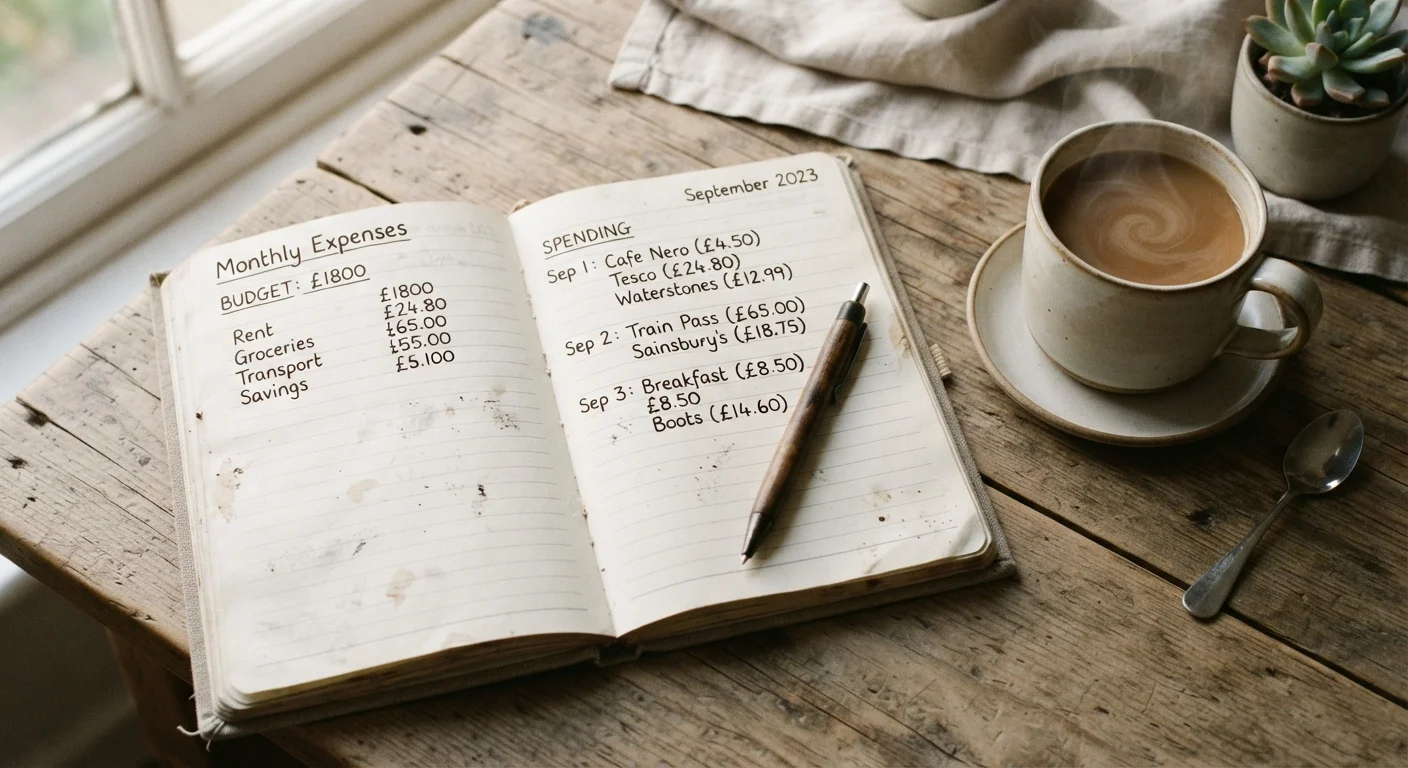
Photo credit: SnippetColumns.com | Easy Search, Reliable Information
In this article
A spending journal captures context and emotion that raw transaction data can't — and that context is often where habits actually change.
Key Takeaways
- Bank statements show what you spent but rarely reveal why — context is where habits change.
- A spending journal adds emotional and situational data that raw transaction records omit.
- The habit works best when entries are brief and made close to the moment of purchase.
- Consistency matters more than detail; even one sentence per transaction builds useful patterns.
- Journaling is a complement to budgeting tools, not a replacement for them.
Captures emotional context behind purchases
A journal entry can record stress, boredom, or social pressure as contributing factors — data no bank statement or app produces.
Reveals situational spending patterns over time
Reviewing a month of entries often surfaces triggers — specific times of day, locations, or moods — that correlate with impulsive or regretted purchases.
Introduces a brief pause before or after spending
The act of knowing you'll write something down can create a small moment of reflection that reduces automatic, unconsidered purchases.
Requires no app, subscription, or account access
A notebook or plain text file is sufficient; there's no learning curve, no syncing, and no dependency on third-party platforms.
Reduces buyer's remorse by making decisions more deliberate
Journalers who record their reasoning at the time of purchase tend to make more considered decisions, since the act of writing externalizes the thought process.
Demands consistent manual effort to remain useful
Unlike automated tracking tools, a spending journal only generates insight if entries are made regularly — gaps in the record distort any patterns you try to identify.
Self-reporting bias can skew the data
People tend to omit or underrepresent purchases they feel embarrassed about, which can produce a record that flatters rather than accurately reflects spending behavior.
No automatic calculations, categories, or alerts
Totaling expenses, spotting category overspending, or triggering budget warnings all require manual work that apps handle automatically.
High early dropout rate before habit solidifies
Most people who start a spending journal abandon it within the first two weeks, often before the entries accumulate enough to show meaningful patterns.
What a Bank Statement Actually Tells You
A bank or credit card statement is a ledger: merchant name, amount, date. That's useful, but it's also incomplete in a specific way. It tells you the outcome of a decision — money moved — without recording anything about the decision itself.
Did you buy lunch because you were hungry, bored, or stressed after a difficult meeting? Did that online order arrive after midnight browsing, or was it something you'd researched for weeks? The statement reads the same either way. This is the gap a spending journal is designed to fill.
Tracking spending through statement reviews is a solid foundation, but pattern recognition requires context — and context is the one thing transaction data consistently strips out.
How a Spending Journal Works in Practice
The format is deliberately low-tech. Each time you spend money — or shortly after — you log a few details beyond the dollar amount: where you were, what prompted the purchase, and how you felt about it at the time. A single sentence per entry is enough to be useful.
The point isn't meticulous record-keeping. It's building a running account of the circumstances around your spending. Over two or three weeks, entries stop looking like isolated events and start revealing clusters: purchases made during commutes, stress-driven impulse buys, or consistent overspending in one specific category.
Captures emotional context behind purchases
A journal entry can record stress, boredom, or social pressure as contributing factors — data no bank statement or app produces.
Reveals situational spending patterns over time
Reviewing a month of entries often surfaces triggers — specific times of day, locations, or moods — that correlate with impulsive or regretted purchases.
Introduces a brief pause before or after spending
The act of knowing you'll write something down can create a small moment of reflection that reduces automatic, unconsidered purchases.
Requires no app, subscription, or account access
A notebook or plain text file is sufficient; there's no learning curve, no syncing, and no dependency on third-party platforms.
Reduces buyer's remorse by making decisions more deliberate
Journalers who record their reasoning at the time of purchase tend to make more considered decisions, since the act of writing externalizes the thought process.
This kind of pattern recognition is harder to achieve through apps or spreadsheets alone, which is why spending mindfully vs. spending on autopilot is such a meaningful distinction once you've kept a journal for a month.
The Real Drawbacks to Consider
Honesty matters here: keeping a spending journal requires consistent, manual effort in a world built to make spending frictionless. The same ease that makes a tap-to-pay transaction take two seconds makes journaling it feel comparatively burdensome.
Demands consistent manual effort to remain useful
Unlike automated tracking tools, a spending journal only generates insight if entries are made regularly — gaps in the record distort any patterns you try to identify.
Self-reporting bias can skew the data
People tend to omit or underrepresent purchases they feel embarrassed about, which can produce a record that flatters rather than accurately reflects spending behavior.
No automatic calculations, categories, or alerts
Totaling expenses, spotting category overspending, or triggering budget warnings all require manual work that apps handle automatically.
High early dropout rate before habit solidifies
Most people who start a spending journal abandon it within the first two weeks, often before the entries accumulate enough to show meaningful patterns.
Dropout rates are high, particularly in the first two weeks before the habit solidifies. Entries also depend on honest self-reporting — it's easy to omit purchases you'd rather not examine. And unlike a budgeting app, a journal doesn't automatically categorize data, run totals, or send alerts.
If you're weighing this against more structured systems, the envelope budgeting vs. digital spending trackers comparison is worth reading — it maps out where automated tools have a structural edge.
Where Journals Outperform Digital Tools
The emotional layer is where a spending journal earns its keep. Research in behavioral economics has long suggested that purchasing decisions are heavily influenced by emotional state — yet no transaction record captures that state. A journal entry that reads "bought this because I was anxious after the call" is information no algorithm generates from a merchant code.
This Is a Supplement, Not a Full Budget System
A spending journal tracks the story behind purchases — it doesn't replace a budget. It won't stop an overdraft, alert you to a recurring charge, or show your net worth. Think of it as the qualitative layer on top of whatever quantitative system you already use. For readers comparing structured approaches, shopping lists, waiting periods, and spend journals offers an honest side-by-side look at which habit-building strategies actually hold up over time.
This is also what distinguishes the practice from general journaling. If you're curious about expressive writing more broadly, journaling for mental clarity covers the psychological evidence — but a spending journal is narrower: it's a financial self-audit tool, not a therapeutic exercise.
For readers building a broader framework around their habits, the complete framework for developing lasting spending habits puts this practice in context alongside trigger identification and structured review routines.
~33%
Impulse purchases driven by emotional state
Consumer research from the Journal of Consumer Psychology has consistently linked a significant share of unplanned purchases to emotional triggers rather than need or prior intent.
66 days
Average time to form a new habit
A widely cited study published in the European Journal of Social Psychology found that habit formation took an average of 66 days, suggesting early dropout is a normal challenge — not a personal failure.

Author
Smart Shopping Editorial Team
Smart Shopping Editorial Team is the collective byline for our editorial team and contributor network. Articles published under this byline or an editorial pen name are researched, written, and reviewed according to our editorial standards for clarity, consistency, and independence before publication.
View all articles →