
Upselling, Anchoring, and Other Retail Tactics That Shape What You Spend
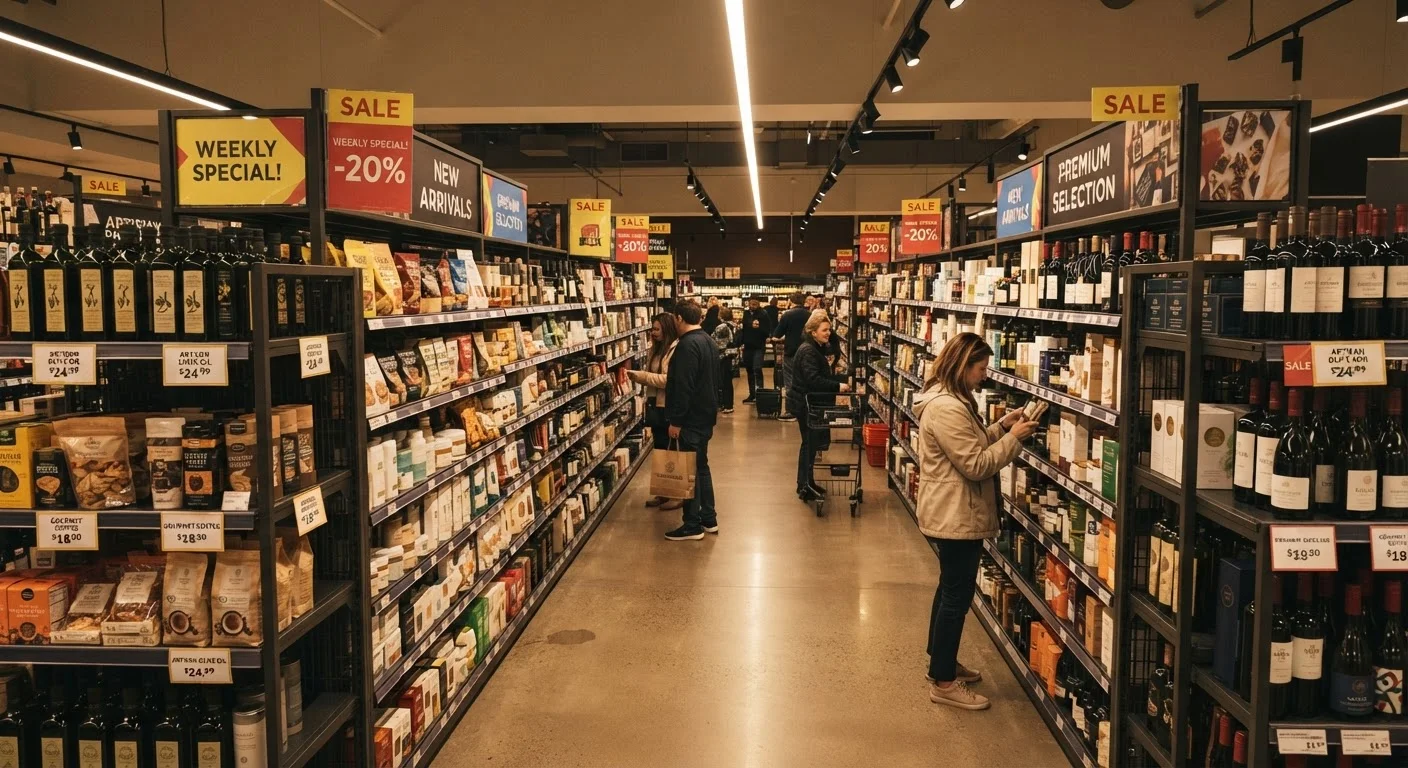
Photo credit: SnippetColumns.com | Easy Search, Reliable Information
In this article
Understanding how pricing psychology and store design influence purchase decisions can help you shop with more intention.
Key Takeaways
- Price anchoring sets a reference point that makes other prices feel like bargains by comparison.
- Upselling prompts you to spend more by framing upgrades as small, logical additions.
- Store layout and product placement are engineered to maximize exposure to higher-margin items.
- Awareness of these tactics is a practical tool — you don't need to avoid shopping, just shop deliberately.
- Setting a budget and a list before you shop remains one of the most effective defenses against these tactics.
The Invisible Architecture of Every Store You Enter
Walk into almost any retail environment — physical or digital — and you're moving through a space that has been carefully engineered. Product placement, lighting, shelf height, aisle width, and even background music have measurable effects on how long shoppers linger and how much they spend. This isn't accidental design; it's a deliberate application of consumer psychology research.
Eye-level shelving, for instance, is reliably prime real estate. Higher-margin products tend to land right in your line of sight, while store-brand alternatives are typically placed lower. Online, the same principle shows up in default sort orders and sponsored placements that push premium options to the top of search results.
Understanding this architecture doesn't mean every shopping trip becomes an adversarial exercise. It means you can make more deliberate choices when you know what's shaping them. For a broader look at how the retail environment fuels unplanned spending, see The Psychology Behind Impulse Buying.
~$314
Average monthly unplanned spending per US consumer
Slickdeals' consumer research has consistently found that Americans report spending several hundred dollars monthly on impulse purchases across categories.
60–70%
Purchase decisions made inside the store
Research from POPAI (the global association for marketing at retail) has estimated that a majority of purchase decisions are made in-store rather than planned in advance.
Eye level
Where highest-margin products are placed
Retail merchandising standards consistently prioritize eye-level shelving for products with higher profit margins, a practice documented across grocery and general retail research.
Price Anchoring: How the First Number Shapes Every Number After
Anchoring is one of the most studied and reliable effects in behavioral economics. When you see a price — especially the first price you encounter for a product category — it sets a mental reference point. Every subsequent price gets evaluated relative to that anchor, not to an objective standard of value.
Retailers deploy this deliberately. A store might display a $400 blender at the entrance of a kitchen section not because it expects to sell many, but because it makes $150 blenders seem like a reasonable spend. 'Was $89, now $59' tags use the same mechanism: the crossed-out number is the anchor, and your brain registers $59 as a win regardless of whether $89 was ever a realistic price.
“Humans are not irrational, but they are predictably irrational — and retailers have learned to use those predictable patterns with great precision.”
— Dan Ariely, Behavioral economist and author of 'Predictably Irrational'
You can counter anchoring by researching a product's typical price range before you shop, rather than using in-store reference prices as your baseline. Unit price math is another concrete tool for cutting through misleading comparisons on shelf tags.
Upselling, Cross-Selling, and the Decoy Effect
Upselling is the practice of prompting a shopper to choose a more expensive option than what they originally intended. It works because the upgrade is framed as incremental: 'For just $10 more, you get the premium version.' That $10 feels small in the context of an already-large purchase — a phenomenon tied to proportional thinking rather than absolute cost.
Cross-selling adds complementary products to the mix. The cable alongside the TV, the warranty on the appliance, the accessories bundled with electronics — these are structured moments where a retailer introduces related spending while your wallet is already open.
The decoy effect takes a subtler approach. Introduce three options where one is clearly inferior, and the presence of that weak option steers most shoppers toward the retailer's preferred choice. This is why subscription pricing so often comes in three tiers: the middle option typically delivers the highest margin and is where the decoy structure points you.
The 'Middle Option' Warning
When you see three pricing tiers, pause before defaulting to the middle. Retailers often structure the tiers so the middle option appears to be the sensible compromise — but it's typically positioned to maximize their margin, not your value. Ask yourself: do I actually need what the middle tier includes, or does the basic option meet my needs?
These tactics compound quickly. An upsell here, a cross-sell there, and a decoy-nudged tier choice can add meaningfully to a total well above what you intended to spend. The thinking patterns that trap shoppers — like anchoring bias and fear of regret — often make it harder to walk away from these prompts.
Practical Habits That Restore Your Spending Intention
Awareness of retail tactics is useful, but it needs to be paired with concrete habits to change outcomes. A few approaches that hold up in practice:
- Make your list before you go. Decide what you need before entering any shopping environment. A written list acts as a commitment device that reduces the pull of unplanned suggestions.
- Set a ceiling, not just a target. Rather than budgeting a specific amount, define the maximum you're willing to spend. This creates a clearer line for evaluating upsells and add-ons.
- Research reference prices independently. Don't let a store's anchor be your only data point. A quick check of comparable prices before you shop gives you a genuine baseline.
- Pause before the add-on. Whether it's a warranty, an upgrade, or a bundle, give yourself 24 hours before agreeing to unplanned additions above a threshold you set in advance.
For frameworks that help you make confident decisions without second-guessing, mental frameworks for cutting through product overwhelm offers a practical starting point. And if you want to build consistent, informed shopping habits over time, the Smarter Spending Habits hub covers the broader picture.
This article is for general informational and educational purposes only. It does not constitute personalized financial advice. For guidance specific to your financial situation, consult a qualified financial professional.
Frequently Asked Questions

Author
Money & Finance Editorial Team
Money & Finance Editorial Team is the collective byline for our editorial team and contributor network. Articles published under this byline or an editorial pen name are researched, written, and reviewed according to our editorial standards for clarity, consistency, and independence before publication.
View all articles →