
Crate Training vs. Free Roaming: Choosing the Right Setup for Your Dog at Home
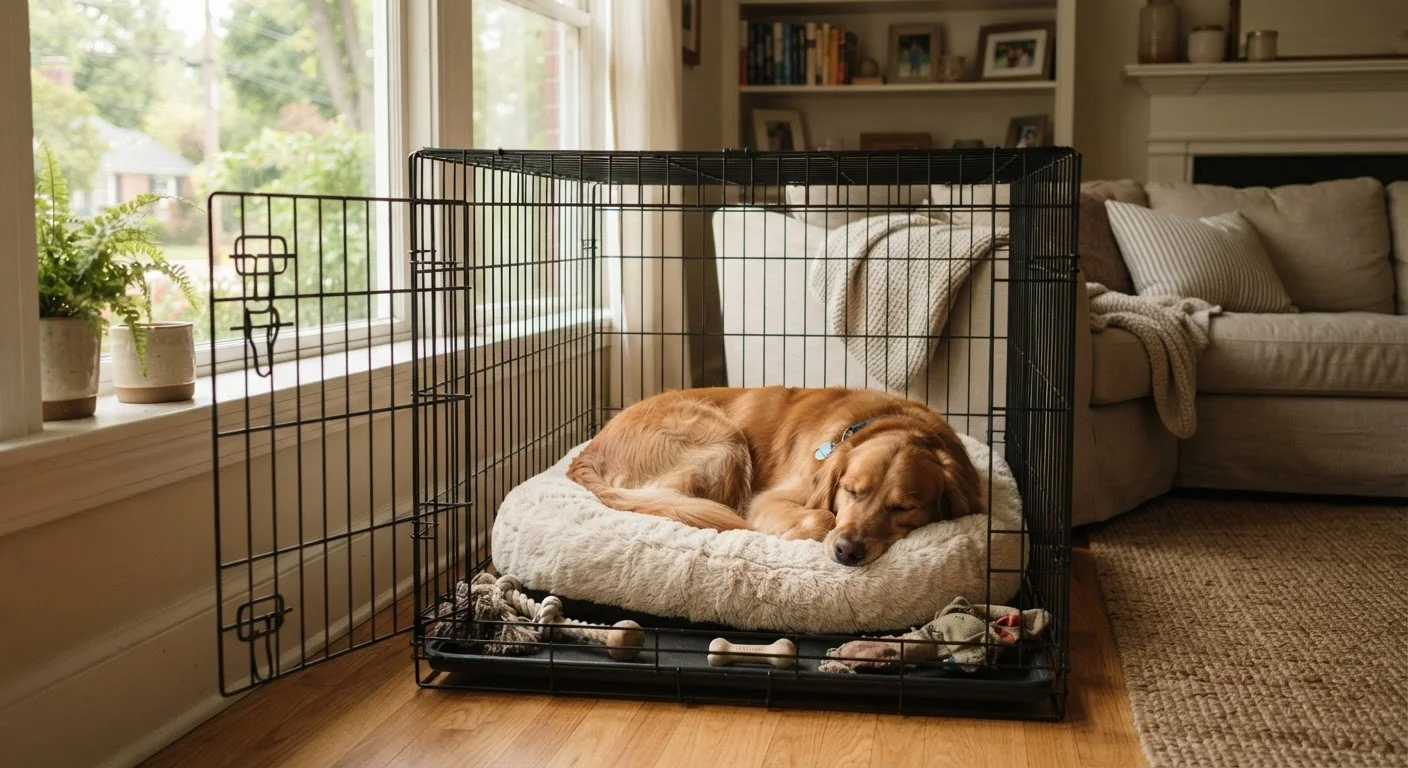
Photo credit: SnippetColumns.com | Easy Search, Reliable Information
In this article
Should your dog have the run of the house or a designated space? Compare the practical, behavioral, and safety implications of each approach.
Key Takeaways
- Crate training leverages a dog's natural denning instincts and supports housetraining, especially for puppies.
- Free roaming suits confident, well-trained adult dogs but requires a fully dog-proofed environment.
- Most dogs benefit from a gradual transition — beginning with a crate and expanding freedom as trust is earned.
- Neither approach is universally superior; the right choice depends on your dog's age, temperament, and training history.
- Consistent daily routines reinforce whichever setup you choose, reducing anxiety and unwanted behavior.
Understanding What Each Approach Actually Means
Crate training means giving your dog a dedicated enclosed space — typically a wire, plastic, or soft-sided crate — sized so they can stand, turn around, and lie down comfortably. The crate serves as a den: a predictable, low-stimulation retreat your dog can associate with rest and safety. Free roaming, by contrast, means your dog has unsupervised access to part or all of your home when you're not actively watching them.
These aren't rigid categories. Many owners blend both — crating at night or during work hours, then allowing supervised access to common areas during family time. Understanding the core trade-offs helps you decide which baseline arrangement fits your household right now, with room to evolve as your dog matures.
For a broader look at how this fits into your dog's day, see our practical daily care guide for first-time owners.
The Case for Crate Training
Dogs are den animals by nature. A properly introduced crate can feel reassuring rather than restrictive — a space that belongs entirely to the dog. The key word is introduced: a crate should never be used as punishment, and a dog should never be left crated for excessive stretches that exceed their physical and psychological tolerance.
Crating offers several concrete advantages:
- Housetraining support: Dogs instinctively avoid soiling their sleeping area, making the crate a powerful aid when establishing bathroom routines for puppies.
- Damage prevention: Unsupervised puppies and adolescent dogs can chew electrical cords, swallow household items, or access toxic substances. The crate eliminates these risks.
- Anxiety management: Some dogs find an enclosed, familiar space calming during thunderstorms, fireworks, or busy household gatherings.
- Travel readiness: Crate-comfortable dogs handle vet visits, car travel, and boarding with far less stress.
Mind the Clock: Crate Duration Matters
Puppies under six months generally shouldn't be crated for more than three to four hours at a stretch during the day. Adult dogs have greater capacity, but no dog should be crated for the majority of a 24-hour period. If your schedule requires long absences, consider a dog walker, midday check-in, or a safely gated room as an alternative. Time in the crate should always be balanced with adequate exercise and social interaction.
Crate duration matters significantly. Puppies under six months generally shouldn't be crated for more than three to four hours at a stretch during the day. Adult dogs have greater capacity, but no dog should be crated for the majority of a 24-hour period. If your schedule requires long absences, consider a dog walker, midday check-in, or a safely gated room as an alternative.
The Case for Free Roaming
Free roaming is not a shortcut or a sign of lax ownership — for the right dog, it's genuinely the better choice. A confident, housetrained adult dog who has demonstrated reliable behavior around furniture, food, and household items may thrive with open access, reducing the isolation and confinement that can contribute to frustration.
Behavioral research consistently shows that dogs with adequate exercise, mental enrichment, and predictable human interaction are less likely to engage in destructive behavior regardless of their physical setup. That means free roaming works best when paired with a structured daily routine. Our guide on building a daily routine your dog will thrive on covers how to structure those elements effectively.
Before granting full free-roam access, confirm:
- Your dog has no history of destructive behavior when unsupervised.
- All toxic plants, cleaning products, and small ingestible objects are secured or removed.
- Trash cans are lidded and food is stored out of reach.
- Electrical cords are managed or protected.
| Crate Training | Free Roaming | |
|---|---|---|
| Best suited for | Puppies, newly adopted dogs, anxious dogs | Well-trained, settled adult dogs |
| Housetraining support | Strong — limits accidents to a predictable space | Relies on already-established reliability |
| Safety from household hazards | High — dog cannot access dangerous items | Requires thorough dog-proofing throughout home |
| Risk of anxiety or frustration | Possible if crated too long or without positive introduction | Low for confident dogs with enrichment and exercise |
| Setup effort | Requires consistent training and appropriate crate sizing | Requires full home dog-proofing and behavior foundation |
| Flexibility over time | Can phase out as dog matures and earns trust | Can expand or restrict access as needs change |
How Age and Temperament Shape the Decision
No single setup fits every life stage. Puppies almost universally benefit from crate training during their first several months — not because crates are inherently better, but because puppies haven't yet built the impulse control or housetraining reliability that safe free roaming requires. As outlined in our guide to daily care across a dog's lifespan, needs shift meaningfully from puppyhood through adolescence into adulthood and senior years.
Adolescent dogs (roughly six to eighteen months, depending on breed) often regress in training reliability — a phase where many owners find returning to crate use helpful even after earlier success. Senior dogs may actually prefer a crate or enclosed dog bed as mobility decreases and they seek predictable, low-traffic resting areas.
Temperament matters equally. Anxious dogs who pace or vocalize in a crate may need a gradual desensitization protocol before crating is comfortable. Conversely, dogs who are highly destructive or have a history of ingesting non-food items may need longer-term crate support even as adults. If you're navigating training challenges, it helps to separate fact from folklore — our article on common dog training myths addresses several widespread misconceptions about confinement and correction.
Building Toward the Right Long-Term Setup
Most dogs follow a similar trajectory: crate training during puppyhood → supervised free access to one room → gradual expansion to additional spaces as trust is established. This phased approach lets you gather real behavioral data rather than making assumptions.
Practical steps for a smooth transition:
- Start with the crate as a positive space. Feed meals inside it, place high-value chews there, and leave the door open when supervision is possible so the dog can choose to enter voluntarily.
- Use a gated room as a middle step. A dog-proofed laundry room or kitchen gives more space than a crate without full household access.
- Run short test departures. Leave for fifteen minutes, return, and observe for signs of anxiety or destruction before extending duration.
- Maintain the crate as an option even after transitioning. Many free-roaming dogs continue to choose their crate as a rest spot — keeping it available preserves that option.
This article is for general informational and educational purposes only and is not a substitute for professional veterinary or certified animal behaviorist guidance. If your dog shows signs of severe separation anxiety, compulsive behavior, or aggression related to confinement, consult a veterinary behaviorist or certified professional dog trainer.

Author
Pets & Animal Care Editorial Team
Pets & Animal Care Editorial Team is the collective byline for our editorial team and contributor network. Articles published under this byline or an editorial pen name are researched, written, and reviewed according to our editorial standards for clarity, consistency, and independence before publication.
View all articles →