
Why Positive Reinforcement Works — And Common Ways Pet Owners Misapply It
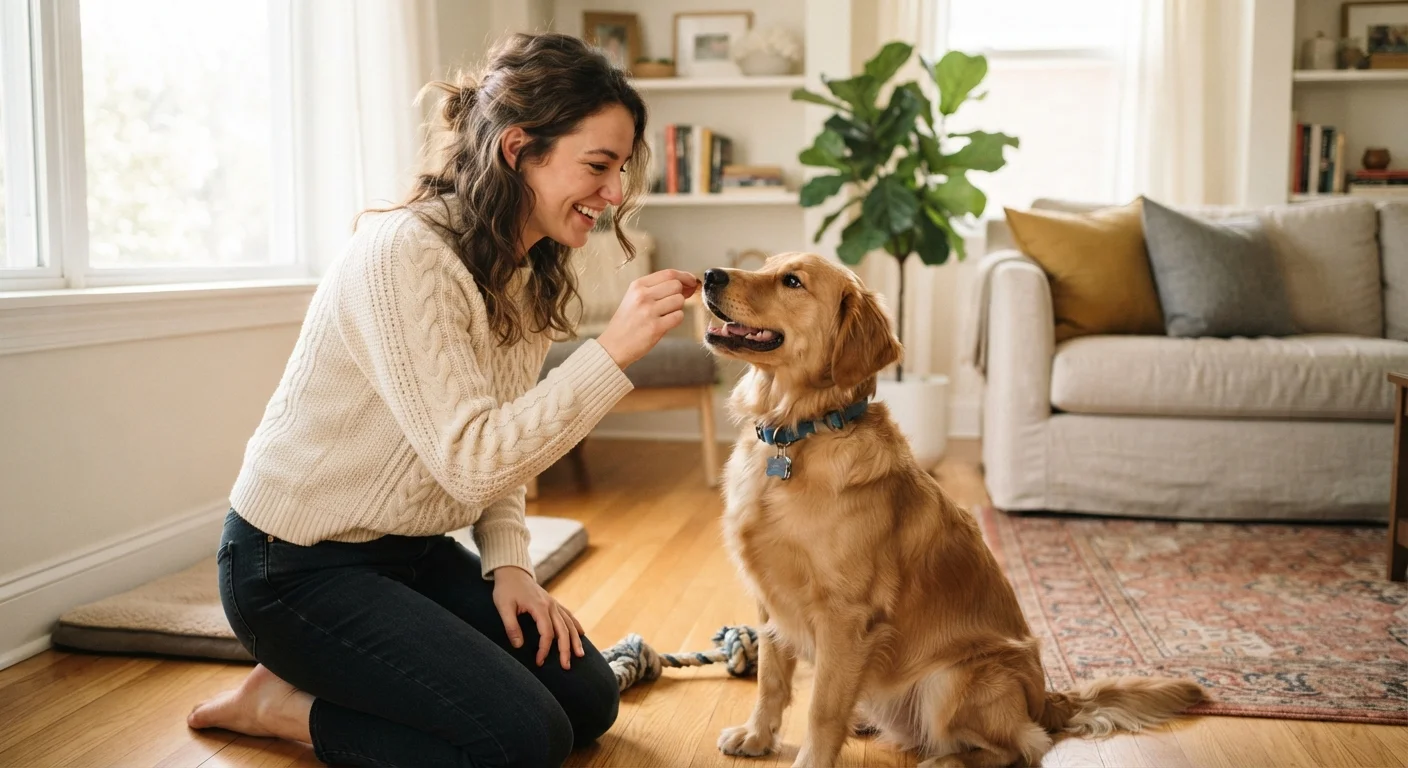
Photo credit: SnippetColumns.com | Easy Search, Reliable Information
In this article
Rewarding good behavior sounds simple, but timing, treat choice, and consistency all matter. Learn where well-meaning training habits often go wrong.
Key Takeaways
- Positive reinforcement works best when the reward arrives within one to two seconds of the desired behavior.
- Treats should be small, high-value, and used strategically — not handed out freely throughout the day.
- Inconsistency between household members can undermine even a well-designed training plan.
- Verbal cues and emotional tone are as important to your pet as the food reward itself.
- Phasing out constant treat use over time builds lasting, reliable behavior without dependency.
The Science Behind Positive Reinforcement
Positive reinforcement is grounded in behavioral science: when an animal receives something it values immediately after performing a behavior, that behavior becomes more likely to repeat. It's a principle that applies broadly across species, from dogs and cats to birds and rabbits. The key word is immediately — the connection between action and reward must be clear for your pet to understand what earned it.
This method works because it builds motivation without fear. Rather than suppressing unwanted behavior through discomfort, positive reinforcement guides pets toward behaviors you actually want, making learning an active, rewarding experience for them. Behavioral researchers and veterinary behaviorists widely recognize it as the most humane and effective foundation for training. For a broader look at how daily training fits into overall pet wellness, see our daily pet care guide.
Rewarding the pet too late after the desired behavior occurs.
Why it happens: Owners often finish giving a command, watch to confirm the behavior, then reach for a treat — by which time several seconds have passed.
Using the same treat regardless of the task's difficulty.
Why it happens: Owners assume any treat signals approval, without accounting for how motivating it actually is in a distracting or challenging setting.
Reinforcing the wrong behavior accidentally by rewarding excitement rather than calm compliance.
Why it happens: A jumping dog gets a treat the moment it finally sits, but the owner has already made eye contact and spoken — rewarding the preceding chaos as much as the sit.
Inconsistent rules across different people in the household.
Why it happens: Family members may have different thresholds for what's acceptable, or may not know what cues and rules are currently being trained.
Treating positive reinforcement as a permanent, never-fading process without any transition plan.
Why it happens: Owners worry that removing treats will cause the behavior to disappear, so they never fade the reward schedule.
Why Good Intentions Still Lead to Training Setbacks
Most training mistakes don't come from neglect — they come from love. Owners who freely hand out treats, enthusiastically praise at the wrong moment, or skip sessions when life gets busy are almost always trying to do right by their pets. Understanding why these habits undercut progress is the first step to correcting them.
1–2 sec
Optimal reward delivery window after a behavior
Veterinary behaviorists commonly cite this window as critical for animals to associate a reward with the specific action performed.
10% rule
Maximum treat contribution to daily calorie intake
Many veterinary nutritionists suggest treats should account for no more than 10% of a pet's total daily caloric intake to maintain dietary balance.
It's also worth recognizing that positive reinforcement doesn't exist in a vacuum. If your household is sending mixed signals — one person allowing a behavior another person discourages — your pet isn't being stubborn. They're responding logically to an inconsistent environment. For a deeper look at separating training fact from fiction, myths about dog training that persist among well-meaning owners are worth exploring.
Avoid Treat Inflation Over Time
If your pet only responds when a treat is visible, the reward has become a bribe rather than a reinforcer. This often happens when treats are used to lure a behavior rather than reward it after the fact. Build the habit of asking for the behavior first, then producing the reward — keeping your pet working for an outcome they can't always predict.
Treats also have a nutritional footprint. Small training rewards add up across multiple sessions per day. Keeping portions tiny — pea-sized or smaller — and accounting for treat calories within your pet's daily intake helps avoid unintended weight gain. The role of treats in a balanced pet diet is worth understanding before you establish your training routine.
This article is for general informational and educational purposes only. For personalized guidance about your pet's health or behavior, consult a qualified veterinarian or certified animal behaviorist.

Author
Pets & Animal Care Editorial Team
Pets & Animal Care Editorial Team is the collective byline for our editorial team and contributor network. Articles published under this byline or an editorial pen name are researched, written, and reviewed according to our editorial standards for clarity, consistency, and independence before publication.
View all articles →