
Treats, Toppers, and Supplements: Where They Fit in a Balanced Pet Diet
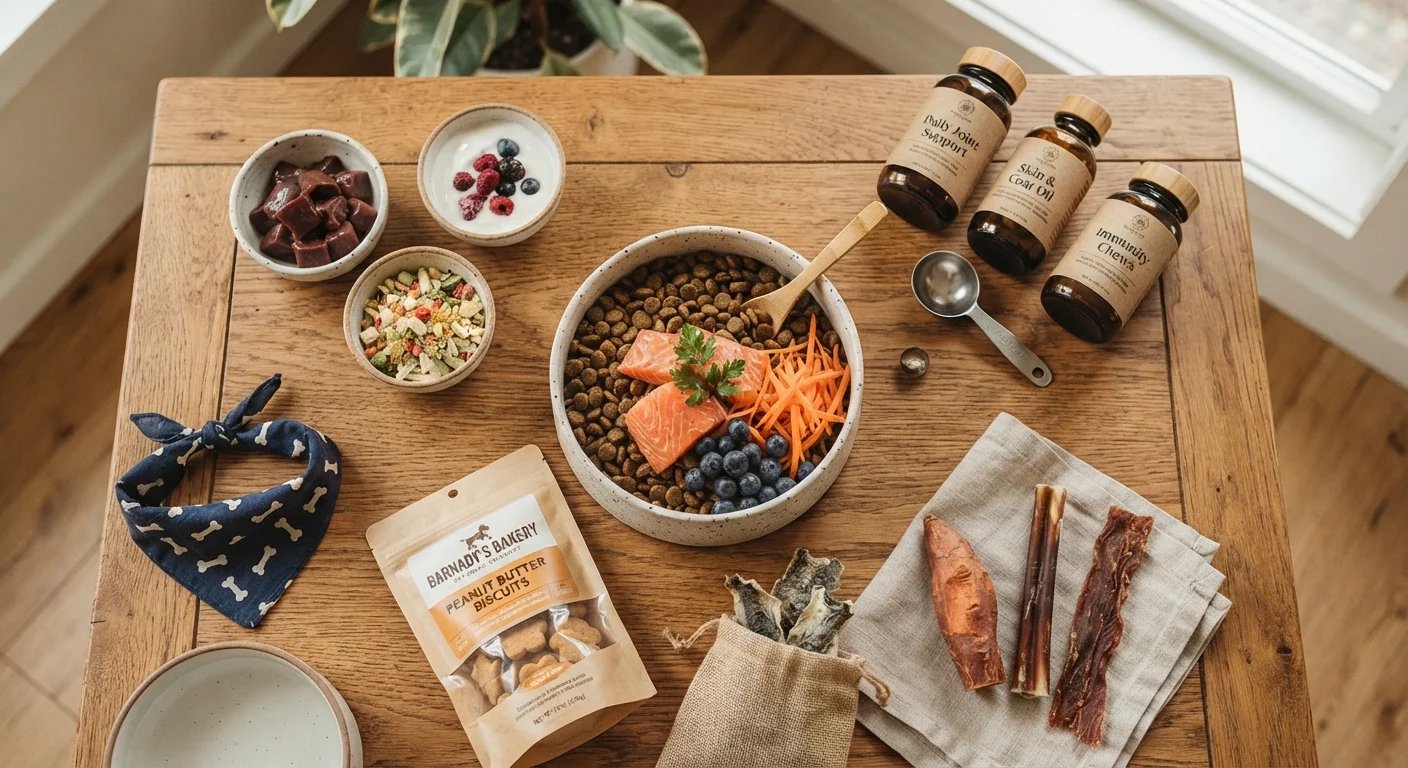
Photo credit: SnippetColumns.com | Easy Search, Reliable Information
In this article
Extras can complement a pet's diet — or quietly tip the nutritional balance. Learn how treats, food toppers, and supplements actually fit into the bigger picture.
Key Takeaways
- Treats should make up no more than 10% of a pet's daily caloric intake to avoid nutritional imbalance.
- Food toppers can enhance palatability but may disrupt a diet's nutrient ratios if used carelessly.
- Most pets eating a complete, balanced diet do not need additional supplements without veterinary guidance.
- Reading ingredient lists and calorie counts on extras is just as important as reading them on base food.
- Always consult your veterinarian before adding supplements, especially for pets with health conditions.
Understanding the Role of Extras in Your Pet's Diet
A well-chosen base diet is the foundation of your pet's nutrition — but for many owners, feeding rarely stops there. Treats are used for training and bonding, toppers are added to entice picky eaters, and supplements are stirred in with the best intentions. These additions aren't inherently problematic, but they do carry real consequences for nutritional balance that are easy to overlook.
The key distinction to keep in mind: commercial pet foods labeled as "complete and balanced" have been formulated to meet established nutrient profiles set by organizations like the Association of American Feed Control Officials (AAFCO). When you start layering extras on top of that foundation, you're altering the equation — sometimes helpfully, sometimes not. Understanding how each category of extra actually functions helps you make smarter choices and avoid quietly undermining a diet that was already doing its job.
For a deeper look at how to evaluate what's already in your pet's bowl, our guide on reading a pet food label walks through AAFCO statements, guaranteed analysis panels, and ingredient lists in plain language.
Treats: The 10% Rule and Why It Matters
Treats are the most commonly used dietary extra — and the most commonly overused. Veterinary nutrition guidance broadly supports limiting treats to no more than 10% of a pet's total daily caloric intake. Beyond that threshold, treats begin to crowd out the nutrients delivered by the base food, potentially creating gaps in protein, vitamins, or minerals over time.
The calorie content of treats varies considerably and isn't always intuitive. A small, dense biscuit may carry as many calories as a larger freeze-dried piece. Checking the calorie count per treat — listed as kcal/treat or kcal/kg on the packaging — lets you account for them accurately, especially if your pet is also involved in reward-based training where treat frequency runs high.
When treats serve a training function, smaller pieces given more frequently are generally preferable to larger ones given less often — the reinforcement effect depends on timing and repetition, not size. See our article on how positive reinforcement works for guidance on matching treat use to training goals.
Food Toppers: Palatability vs. Nutritional Disruption
Food toppers — broths, raw food mix-ins, freeze-dried protein crumbles, pureed vegetables — are popular with owners of picky eaters or pets transitioning between diets. Used occasionally and in modest amounts, they're unlikely to cause harm. Used daily in significant quantities, they can shift the macro- and micronutrient profile of a meal in ways that aren't immediately visible.
The concern is dilution: if a topper replaces a meaningful portion of the base food's volume without delivering comparable nutrition, deficiencies can accumulate over time. Toppers that are high in fat, for example, can tip a meal's caloric density upward, contributing to weight gain — particularly in less active or older pets.
Toppers and Picky Eating: A Word of Caution
Consistently relying on toppers to get a pet to eat can sometimes reinforce selective eating behavior, especially in dogs. A pet that learns that holding out produces a more enticing meal may become increasingly reluctant to eat plain food. If palatability is a persistent challenge, a veterinary check to rule out dental pain, nausea, or other medical causes is a sensible first step before making toppers a permanent fixture.
If your pet is a consistently reluctant eater, that's worth discussing with a veterinarian rather than indefinitely masking with toppers. Appetite changes can sometimes signal underlying health issues that deserve attention. Our comprehensive resource on pet nutrition across life stages addresses how palatability needs and dietary requirements shift with age.
Supplements: When They Help and When They're Unnecessary
The supplement market for pets has grown substantially, offering products targeting joint health, coat condition, digestive support, immune function, and more. Some of these have a reasonable evidence base — omega-3 fatty acids from fish oil, for instance, have been studied for their role in skin, coat, and inflammatory conditions. Others have limited or mixed research behind them.
Check calorie counts on treats and account for them in your pet's daily intake.
Many owners underestimate how much treats contribute to total daily calories, which can lead to gradual weight gain or nutrient dilution. Tracking treat calories alongside meal calories keeps the 10% guideline achievable.
Use food toppers in small, consistent amounts rather than variable large portions.
Inconsistent topper quantities make it harder to assess your pet's actual nutrient intake day to day. Small, measured additions are less likely to displace base food nutrition or unpredictably increase caloric load.
Confirm a nutritional gap exists before introducing a supplement.
Supplementing without identifying a deficiency risks creating imbalances, particularly with fat-soluble vitamins and minerals that accumulate in tissue. A veterinarian can assess whether a supplement is warranted based on diet, health history, and bloodwork.
Read ingredient lists and guaranteed analysis panels on treats and toppers, not just base food.
Extras are subject to the same labeling standards as main pet foods, meaning the same analytical tools apply. High sugar, salt, or fat content in treats can quietly work against a well-chosen base diet.
Adjust base food portions when regularly using calorie-dense toppers or treats.
Extras add to total daily intake, not replace it — unless deliberate adjustments are made. Without reducing base portions accordingly, caloric creep is a predictable result.
The most important principle is this: a pet eating a complete and balanced commercial diet is likely already receiving adequate levels of most vitamins and minerals. Adding more of a fat-soluble nutrient — vitamins A, D, E, or K — can cause toxicity over time, since these accumulate in the body rather than being excreted. Supplementing without knowing what's already present in the base food is guesswork, not nutrition management.
For pets on homemade diets, the calculus shifts. Homemade recipes frequently fall short on calcium, zinc, and certain B vitamins. Our article on nutritional gaps in homemade pet food outlines the most common shortfalls and how a veterinary nutritionist can help close them.
“Nutrition is not just about what goes in the bowl — it's the sum of everything an animal eats across the day. Treats and supplements are part of that sum, whether owners account for them or not.”
— Lisa Freeman, Board-certified veterinary nutritionist and professor of clinical nutrition
This article provides general educational information about pet nutrition and is not a substitute for personalized veterinary advice. Always consult a licensed veterinarian before making changes to your pet's diet or adding supplements.

Author
Pets & Animal Care Editorial Team
Pets & Animal Care Editorial Team is the collective byline for our editorial team and contributor network. Articles published under this byline or an editorial pen name are researched, written, and reviewed according to our editorial standards for clarity, consistency, and independence before publication.
View all articles →