
Shopping Lists, Waiting Periods, and Spend Journals: Which Habits Actually Work
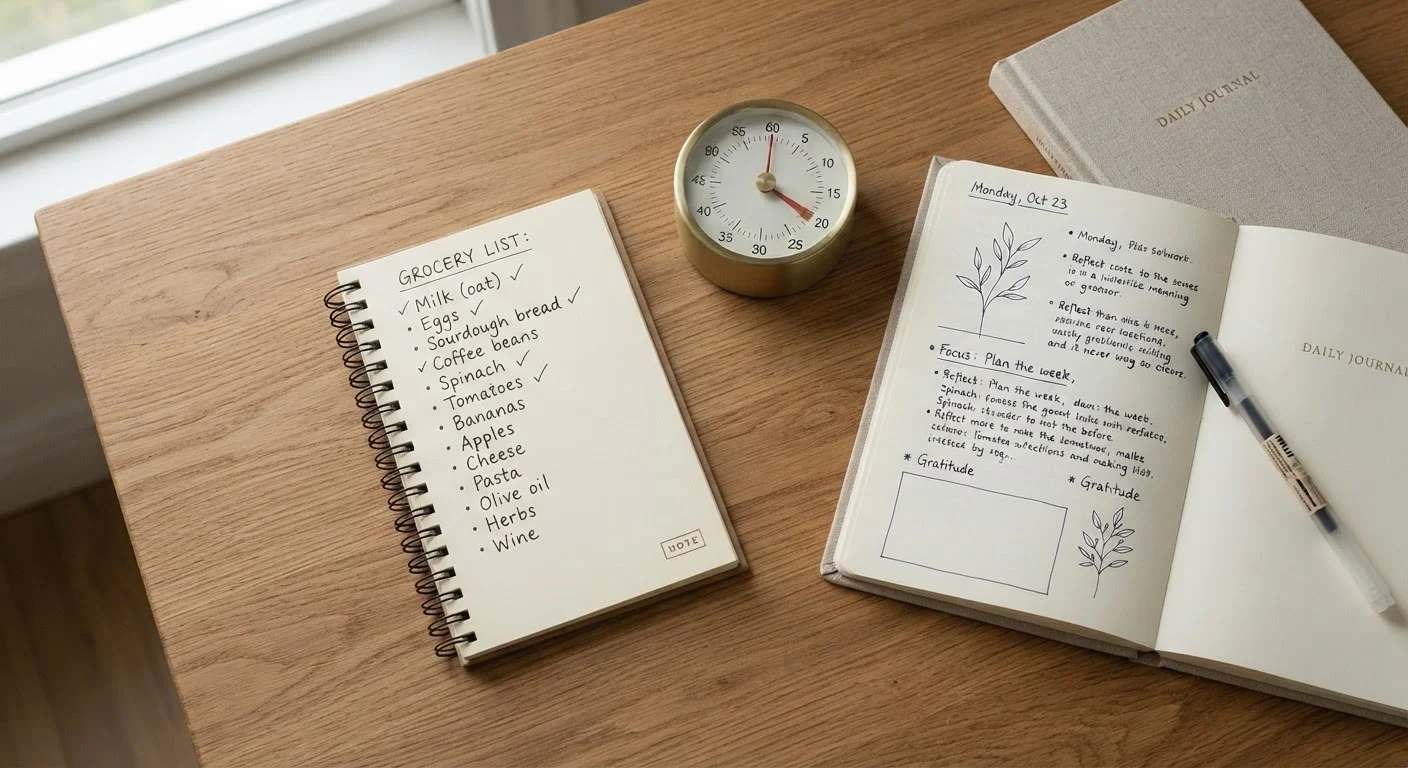
Photo credit: SnippetColumns.com | Easy Search, Reliable Information
In this article
An honest look at three popular strategies for curbing overspending — how each works, who it suits, and where each falls short.
Key Takeaways
- Shopping lists reduce impulse purchases most effectively when written before entering a store or opening an app.
- Waiting periods work by creating distance between an emotional trigger and the act of buying.
- Spend journals surface patterns that bank statements miss — including the emotional context behind purchases.
- No single habit works for everyone; combining two or more approaches often produces the most durable results.
- Consistency matters more than perfection — any of these habits applied irregularly will underperform.
The Problem These Habits Are Trying to Solve
Most overspending isn't the result of ignorance — it's the result of context. A cart that starts with three items ends at twelve. A browser tab opened to research ends in a checkout screen. These moments happen fast, and they happen repeatedly.
Three habits get recommended more than almost any others for curbing this pattern: writing shopping lists before you buy, imposing a waiting period on unplanned purchases, and keeping a spend journal that records not just what you bought but why. Each one targets a different vulnerability in the buying process. Understanding how they work — and where they break down — is more useful than adopting all three blindly. For a broader view of what separates deliberate and automatic spending, see our comparison of mindful versus autopilot spending.
Shopping Lists: The Oldest Trick Still Worth Using
A shopping list works as a pre-commitment device. By deciding what you need before you're inside a store — physical or digital — you reduce the number of real-time decisions you have to make. Each unplanned item you encounter requires you to actively override your list rather than passively add it to a cart.
Research in behavioral economics consistently supports pre-commitment as one of the more reliable tools for reducing impulsive choices. The list doesn't just tell you what to buy; it implicitly tells you what not to buy.
Where lists fall short: They're only useful if written before exposure to products. A list made while browsing a retail site is written under influence, not before it. Lists also do nothing to address the emotional state driving an unplanned shopping session in the first place.
| Shopping Lists | Waiting Periods | Spend Journals | |
|---|---|---|---|
| Primary function | Pre-purchase planning | Impulse interruption | Pattern recognition |
| When it works | Before entering store or app | At moment of temptation | After purchases, on reflection |
| Effort to start | Very low | Low | Moderate |
| Effort to sustain | Low | Moderate | High |
| Time to see results | Immediately | Days to weeks | Weeks to months |
| Main failure point | Made after browsing begins | Urgency tactics override it | Inconsistent recording |
| Works best for | In-store or routine shopping | Online impulse purchases | Chronic or emotional overspending |
For a deeper look at how spending categories slip through even well-maintained lists, this overview of overlooked budget categories is worth a read.
Waiting Periods: Buying Time to Think
A waiting period — sometimes called a spending pause — inserts a deliberate delay between the impulse to buy and the act of buying. The most common version is a 24- or 48-hour rule applied to any unplanned purchase above a set dollar amount you define for yourself.
The mechanism is straightforward: most impulse purchases are driven by a temporary emotional state — excitement, boredom, stress, or social comparison. Time dissipates that state. When you return to the item a day later, you're evaluating it with a calmer, more accurate sense of whether you actually want it.
Setting a Useful Waiting Period Threshold
A waiting period is only as effective as the rule that defines it. Choose a dollar amount that reflects where your impulse spending actually happens — for many people this is somewhere between $20 and $50. Write the item down somewhere visible when you decide to wait; this prevents the 'I'll remember it later' rationalization that shortcuts the pause. Revisiting the item after the waiting period is the whole point — don't skip that step.
Where waiting periods fall short: They require a rule you'll actually follow. Without a clear personal threshold (what dollar amount triggers the pause?) or a system for tracking items you're waiting on, the habit collapses. Flash sales and artificial urgency are specifically designed to override waiting periods, so this strategy is less effective for shoppers who are highly susceptible to time-limited framing. For a practical walkthrough of making this habit stick, see building a spending pause into your routine.
Spend Journals: Uncovering the Why Behind the What
A spend journal goes further than a bank statement or budgeting app. It records not just the transaction but the context: where you were, how you felt, what triggered the purchase, and — after some time — whether the purchase delivered what you expected.
This habit is slower and more effortful than the others, but it produces a different kind of insight. Patterns that are invisible in raw transaction data become visible when you can see that most of your unplanned purchases happen on Tuesday evenings, or after stressful workdays, or in a specific category that consistently leaves you with buyer's remorse.
~33%
Purchases shoppers report regretting
Consumer surveys consistently find roughly one-third of discretionary purchases are later described by buyers as unnecessary or regretted.
24–48 hrs
Typical waiting period recommendation
Personal finance practitioners and behavioral researchers commonly suggest a one-to-two-day pause before completing unplanned purchases above a self-defined threshold.
Where journals fall short: Consistency is the main obstacle. Journaling requires you to record purchases close to the moment they happen, which is inconvenient. Many people start strong and abandon the habit within weeks. The payoff is also delayed — a journal needs several weeks of entries before meaningful patterns emerge.
Our deeper look at what spend journals reveal covers exactly what to record and how to review entries productively. You can also compare journaling to other tracking methods in this overview of tracking approaches that hold up in daily life.
Building a Habit That Actually Lasts
Any of these three habits can work in isolation, but they address different stages of the spending decision. Lists work at the planning stage. Waiting periods work at the point of temptation. Journals work at the reflection stage. Together, they create a feedback loop — you plan with a list, pause when tempted, and review patterns afterward.
The practical advice from behavioral research is consistent: start with one habit and make it automatic before adding another. If you try to adopt all three simultaneously, none of them will stick. Pick the one that addresses your most frequent failure point first.
For a structured approach to building this kind of system, the complete framework for developing lasting spending habits walks through the full process from identifying triggers to building review routines. And if you want to understand what warning signs suggest your current habits are working against you, this guide to recognizing problematic patterns is a useful starting point.

Author
Smart Shopping Editorial Team
Smart Shopping Editorial Team is the collective byline for our editorial team and contributor network. Articles published under this byline or an editorial pen name are researched, written, and reviewed according to our editorial standards for clarity, consistency, and independence before publication.
View all articles →