
Your Face Wash Is Not Your Body Wash
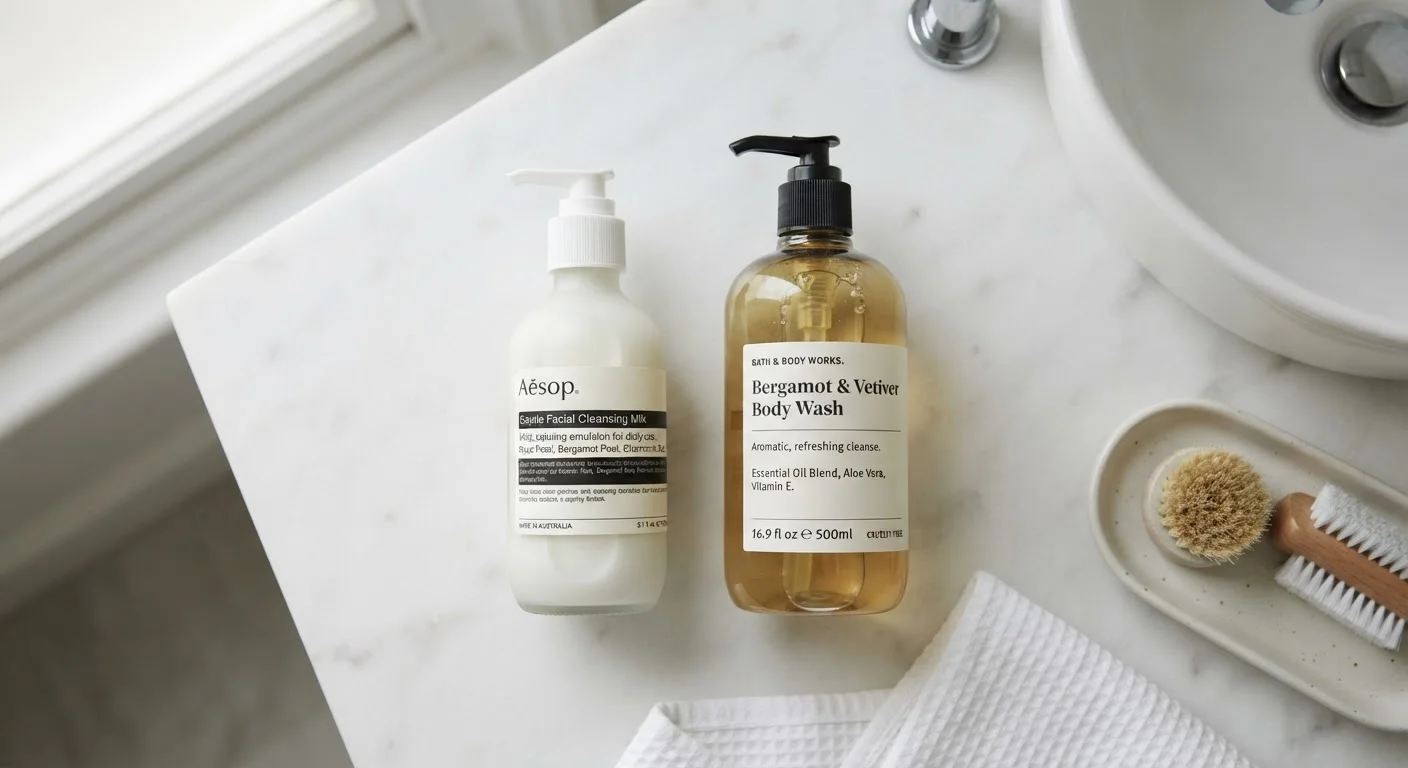
Photo credit: SnippetColumns.com | Easy Search, Reliable Information
In this article
Using the wrong cleanser on your face is a common grooming mistake. Learn why facial and body skin have different needs — and how to address them.
Key Takeaways
- Facial skin is thinner, more sensitive, and has a different pH balance than body skin.
- Body wash and bar soap are typically too harsh for the delicate skin on your face.
- Using the wrong cleanser can disrupt your skin barrier and trigger breakouts or dryness.
- Choosing a cleanser formulated specifically for your face type is a foundational grooming step.
Why Your Skin Isn't the Same Everywhere
It's a reasonable assumption: skin is skin, so why wouldn't one cleanser work from head to toe? In practice, the skin on your face is structurally and functionally distinct from the skin covering the rest of your body — and treating them identically is one of the most common grooming missteps people make.
Facial skin is significantly thinner, more densely packed with sebaceous (oil-producing) glands, and more reactive to environmental stressors. It also maintains a delicate pH — roughly 4.5 to 5.5 — that sits on the slightly acidic end of the spectrum. This acidity supports your skin barrier, which acts as a protective layer against bacteria, irritants, and moisture loss. Body cleansers are typically formulated at a higher pH and with stronger surfactants designed to cut through sweat, oil, and environmental grime on tougher skin. When those formulas meet your face, the mismatch can compromise that protective barrier.
Understanding this distinction is the starting point for building a smarter cleansing routine. For a broader look at how cleansing fits into your overall regimen, see The Anatomy of a Daily Grooming Routine.
Common Cleanser Mistakes — and How to Fix Them
Most cleanser errors aren't intentional — they stem from convenience, budget shortcuts, or simply not knowing that a distinction exists. Here's where things tend to go wrong.
Using body wash as a face cleanser out of convenience.
Why it happens: When bathroom space and budgets are tight, consolidating products feels practical. Many people assume cleansers are interchangeable.
Using bar soap — including antibacterial varieties — on the face.
Why it happens: Bar soap is ubiquitous and inexpensive. Some people grew up using it on everything and never questioned the habit.
Over-cleansing the face by washing too frequently or too vigorously.
Why it happens: The logic seems intuitive: if some cleansing is good, more must be better. This is especially common among people dealing with oiliness or acne.
Skipping moisturizer after washing because skin feels clean or oily.
Why it happens: Freshly washed skin can temporarily feel tight or bare, and people with oily skin often assume adding moisture will make things worse.
~4.5–5.5
Healthy facial skin pH range
Dermatologists generally cite this slightly acidic range as optimal for maintaining the facial skin barrier and resisting bacterial growth.
2x
Higher sebaceous gland density on the face
The face has a significantly higher concentration of oil-producing glands than most body areas, making it more reactive to product formulation differences.
If persistent breakouts are following you despite a careful routine, the cleanser you're using — or how you're using it — may be part of the problem. Our guide on why your skin keeps breaking out covers the most common culprits in detail.
How to Choose the Right Cleanser for Your Face
Selecting a facial cleanser doesn't require a dermatology degree, but it does require knowing your skin type. Oily or acne-prone skin generally responds well to gel or foaming cleansers that remove excess sebum without stripping. Dry or sensitive skin tends to benefit from cream or lotion formulas that cleanse without disrupting the moisture barrier. Combination skin often calls for a gentle, balanced formula used consistently rather than aggressively.
Fragrance Is a Common Hidden Irritant
Many body cleansers contain fragrance — both synthetic and natural — at concentrations that can irritate the more sensitive skin on your face. This irritation may not appear immediately; it can build gradually as redness, flaking, or a compromised skin barrier. When selecting a facial cleanser, fragrance-free formulas are generally a safer baseline, especially for sensitive or reactive skin.
Beyond formula type, pay attention to ingredient lists. Fragrance — whether synthetic or natural — is a common irritant in cleansers not formulated for the face. Alcohol-heavy formulas can also be unnecessarily drying. Neither is inherently dangerous in every case, but both appear more often in body products than in face-specific ones, which is another reason the distinction matters.
For a deeper look at how product choice and washing habits interact, face washing habits that support healthy skin covers frequency, water temperature, and technique. And if you're reconsidering your body cleanser at the same time, bar soap vs. body wash breaks down how those formulas differ from each other — and from what belongs on your face.
This article is for general informational purposes only and is not a substitute for advice from a qualified dermatologist or healthcare professional.

Author
Style & Beauty Editorial Team
Style & Beauty Editorial Team is the collective byline for our editorial team and contributor network. Articles published under this byline or an editorial pen name are researched, written, and reviewed according to our editorial standards for clarity, consistency, and independence before publication.
View all articles →