
Why That Gadget Felt Indispensable in the Store and Useless at Home
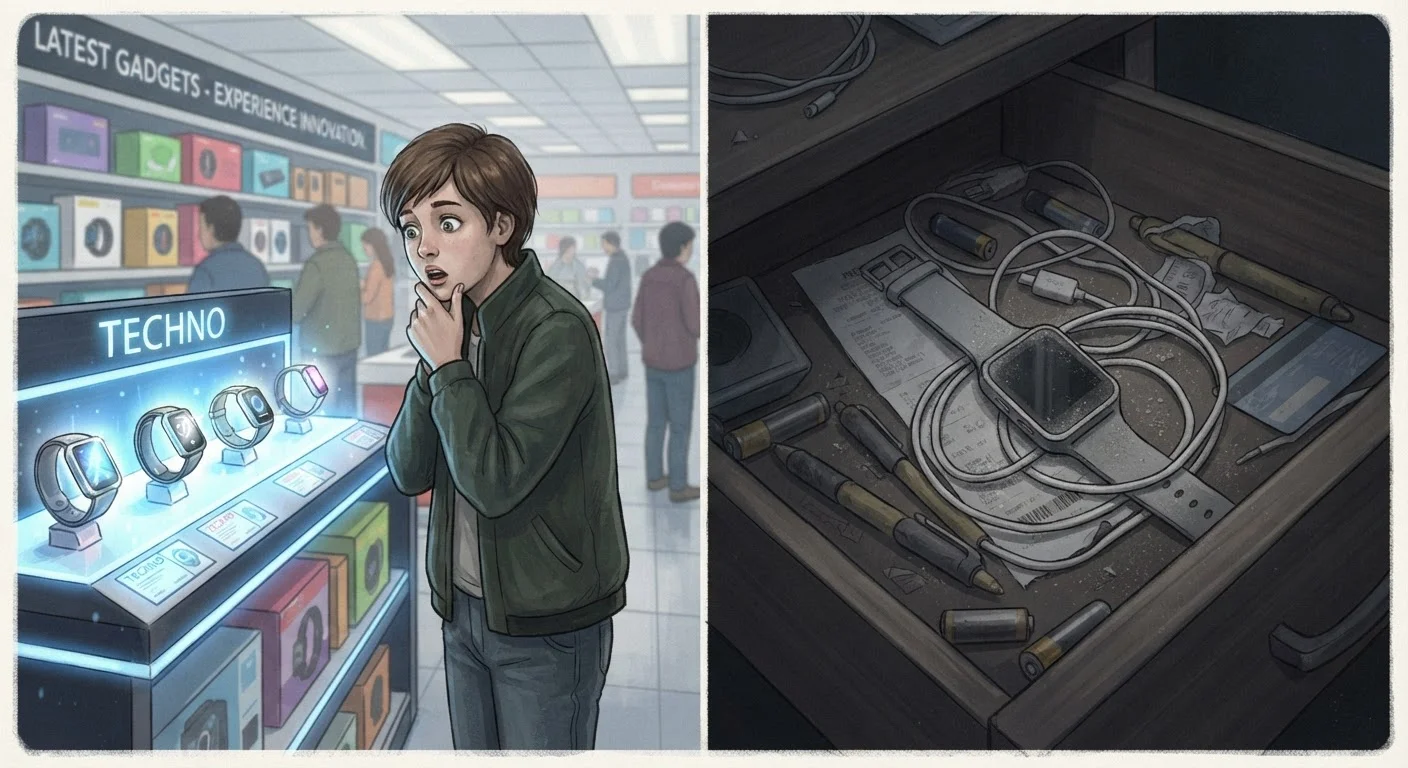
Photo credit: SnippetColumns.com | Easy Search, Reliable Information
The psychology and design tactics behind impulse tech buys — and how to spot them before you get home.
Key Takeaways
- Retail environments are deliberately designed to make gadgets feel more useful than they are at home.
- Buying a gadget for a single feature you may rarely use is one of the most common tech regrets.
- Asking 'where exactly will I use this, and how often?' before buying filters out most impulse purchases.
- Setup friction and compatibility issues often kill enthusiasm within the first week of ownership.
- Slowing down the decision — even by 48 hours — dramatically reduces post-purchase disappointment.
The Store Is a Stage Set Against You
Electronics retailers invest heavily in making gadgets perform at their absolute peak. Demo units are charged to 100%, displays are calibrated to vivid showroom settings, and staff are on hand to walk you through every impressive feature. You're not evaluating the product in your life — you're evaluating it in an environment purpose-built to sell it.
That context gap is real and consequential. A noise-cancelling headphone that sounds stunning in a noisy store may feel like overkill at your quiet home desk. A tablet that seemed snappy at the demo kiosk might feel redundant once you're back home next to your laptop. Understanding that the store is a controlled performance — not a real-world simulation — is the first layer of defence. For a deeper look at the psychological mechanisms at play, see what drives impulse buying.
Buying a gadget primarily for one impressive feature you saw demonstrated once.
Why it happens: Demo experiences are curated to highlight standout moments, making a single capability feel transformative rather than situational.
Ignoring setup complexity and ecosystem requirements until you're already home.
Why it happens: In-store, setup is invisible — the device is already running. Buyers don't naturally think about what it will take to get it working in their specific home environment.
Equating spec numbers with real-world improvement — assuming higher always means better.
Why it happens: Spec sheets use concrete numbers that feel objective and measurable, which gives them an authority they don't always deserve in practice.
Buying for an aspirational version of yourself rather than your actual habits.
Why it happens: Gadgets are easy to project onto — the fitness tracker assumes you'll work out daily, the e-reader assumes you'll read every night. The store moment feels like a fresh start.
Underestimating how quickly novelty fades once a device is no longer new.
Why it happens: The in-store experience is inherently novel — you're touching it for the first time, under good lighting, with assistance. That novelty is mistaken for lasting utility.
Slowing Down Saves Money — and Frustration
Most gadget regrets share a common root: the decision was made at peak excitement, without accounting for daily reality. The fix is rarely about researching harder — it's about introducing deliberate friction into your own process.
~33%
Tech purchases regretted within 3 months
Consumer surveys consistently indicate roughly a third of electronics buyers report feeling their purchase didn't meet expectations after the novelty wore off.
48 hrs
Cooling-off period that reduces impulse buys
Behavioral research on purchase decisions suggests a short waiting period significantly lowers the likelihood of impulse-driven regret in discretionary spending categories.
A 48-hour pause between seeing a gadget and purchasing it is one of the most reliable filters available. During that window, ask yourself two questions: Where, specifically, would I use this on a regular week? And do I already own something that does this well enough? If the answers are vague, that's useful information. You may already own tech that covers the gap — it just hasn't been fully explored yet.
If you want a structured approach to evaluating any purchase before you commit, this end-to-end decision framework walks through every dimension worth weighing. And if you notice you're stuck in a loop of browsing without deciding, recognising the thinking patterns that trap shoppers can help break the cycle.
Beware the 'I'll Use It Eventually' Trap
Telling yourself a gadget will come in handy someday is one of the most reliable signs of a purchase driven by emotion rather than genuine need. 'Eventually' rarely arrives on schedule — and in the meantime, the device occupies a drawer and a spot in your budget. Apply the same scrutiny you'd give any recurring subscription: if you can't point to a specific, regular use, the value case is weak.

Author
Tech & Gadgets Editorial Team
Tech & Gadgets Editorial Team is the collective byline for our editorial team and contributor network. Articles published under this byline or an editorial pen name are researched, written, and reviewed according to our editorial standards for clarity, consistency, and independence before publication.
View all articles →