
Collision vs. Comprehensive Coverage: Clearing Up the Confusion
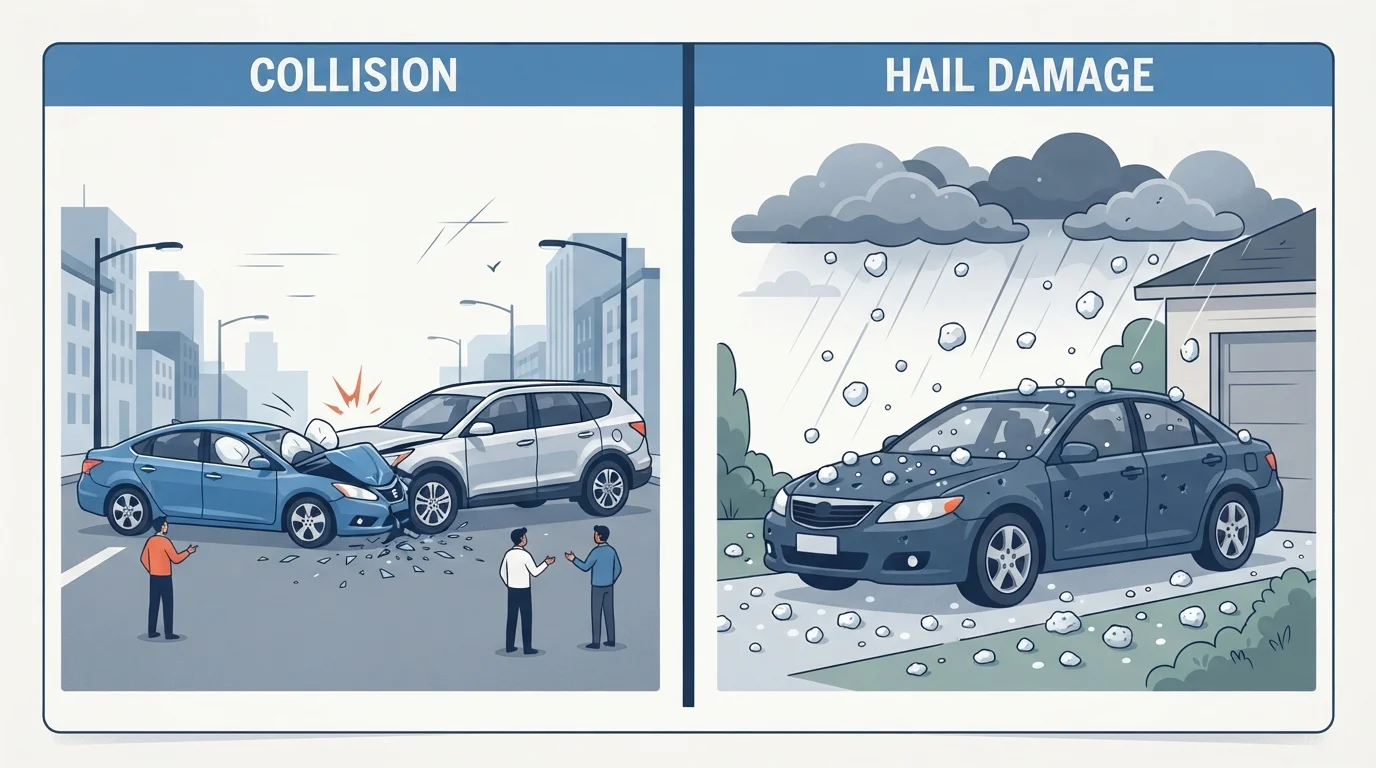
Photo credit: SnippetColumns.com | Easy Search, Reliable Information
In this article
These two coverages are often bundled but protect against very different events. Here's exactly what each one covers — and what it doesn't.
Key Takeaways
- Collision covers damage from your car hitting another vehicle or object; comprehensive covers nearly everything else.
- Neither coverage is legally required in most states, but lenders typically require both on financed or leased vehicles.
- Both coverages apply to your own vehicle only - not damage you cause to someone else's property.
- Each has a separate deductible you pay before your insurer covers the remaining repair or replacement cost.
- Together, collision and comprehensive form what's commonly called 'full coverage' alongside liability insurance.
The Core Difference - and Why It Matters
Most drivers know they have "full coverage," but far fewer can explain exactly what that means when something goes wrong. Collision and comprehensive are the two physical damage coverages bundled under that phrase - and they operate on completely different triggers.
Collision coverage pays to repair or replace your vehicle when it's damaged in an accident involving another car, a guardrail, a fence, a pothole, or any other object your car makes contact with - whether you caused the accident or not. The key element is movement: your vehicle (or another vehicle) was in motion and struck something.
Comprehensive coverage (sometimes called "other than collision") covers physical damage that doesn't involve a crash. That includes theft, vandalism, fire, flooding, hail, falling objects like tree branches, and animal strikes - hitting a deer, for example, is a comprehensive claim, not collision.
Mixing these up can create real problems at claim time. If you assume your policy covers flood damage but you only carry collision, you'll be paying out of pocket. For a broader plain-language breakdown of all coverage types, see Auto Insurance Decoded.
| Criterion | Collision Coverage | Comprehensive Coverage |
|---|---|---|
| What triggers a claim | Contact with another vehicle or object | Non-collision events (weather, theft, animals) |
| Fault required? | No - covers regardless of fault | No - covers regardless of fault |
| Typical deductible range | $500-$1,500 common | $0-$1,000 common |
| Payout basis | Actual cash value of vehicle | Actual cash value of vehicle |
| State-mandated? | No | No |
| Required by lenders? | Usually yes (financed/leased) | Usually yes (financed/leased) |
| Covers theft? | No | Yes |
| Covers animal strikes? | No | Yes |
| Covers weather damage? | No | Yes (hail, flood, wind) |
Deductibles, Limits, and How Claims Actually Work
Both coverages come with a deductible - the amount you pay before your insurer covers the rest. Common deductible levels run from $250 to $1,500. Collision deductibles are typically set higher than comprehensive deductibles, which can sometimes be as low as $0 for certain events like windshield repair in states that require it.
When you file a claim, your insurer pays up to the vehicle's actual cash value (ACV) - the market value of your car at the time of the loss, not what you paid for it or what it would cost to replace with a new model. Depreciation reduces ACV over time, which is why older vehicles may not generate a payout large enough to justify the premiums. If you're curious how gaps in coverage choices add up, why drivers end up underinsured is worth a read.
~6%
Average comprehensive claims rate among insured drivers
Industry data suggests comprehensive claims are filed less frequently than collision claims, partly because many covered events are seasonal or regional.
$500
Most common collision deductible chosen by drivers
According to insurance industry research, $500 is the deductible level selected most often, balancing premium savings against out-of-pocket exposure.
One practical note: comprehensive and collision are separate coverages with separate deductibles. A single incident won't trigger both. If another driver hits your parked car, that's a collision claim - yours if you use your own policy, or the at-fault driver's liability coverage if they're identified.
When Each Coverage Applies - and When Neither Does
Understanding the boundary between these coverages helps set accurate expectations.
- Collision applies: rear-end accidents, rollovers, hitting a curb or parking barrier, single-vehicle crashes
- Comprehensive applies: hail damage, a stolen vehicle, fire, flooding, a tree limb falling on a parked car, colliding with an animal
- Neither applies: mechanical breakdowns, normal wear and tear, tire blowouts from age, or damage to another person's vehicle (that's what liability coverage is for)
Neither coverage is required by state law, but lenders almost always require both when a vehicle is financed or leased. If you own your vehicle outright, carrying both is a personal financial decision. Liability vs. Full Coverage walks through how to think about that trade-off.
The "Full Coverage" Label Can Be Misleading
"Full coverage" is an informal term, not an insurance industry definition. It generally refers to a policy that includes liability, collision, and comprehensive - but it does not mean every possible loss is covered. Mechanical failure, normal depreciation, and contents stolen from your vehicle (as opposed to the vehicle itself) are common exclusions. Always read the declarations page and exclusions section of your actual policy.
For unfamiliar terms in your own policy documents - deductible, subrogation, ACV - the Auto Insurance Glossary is a useful quick-reference tool.
This article is for general informational purposes only and does not constitute personalized insurance advice. Coverage terms, exclusions, and premiums vary by provider and state. Review your actual policy documents and consult a licensed insurance agent or adviser for guidance specific to your situation.

Author
Autos & Driving Editorial Team
Autos & Driving Editorial Team is the collective byline for our editorial team and contributor network. Articles published under this byline or an editorial pen name are researched, written, and reviewed according to our editorial standards for clarity, consistency, and independence before publication.
View all articles →