
Dealer Service Center vs. Independent Mechanic: Understanding the Trade-offs
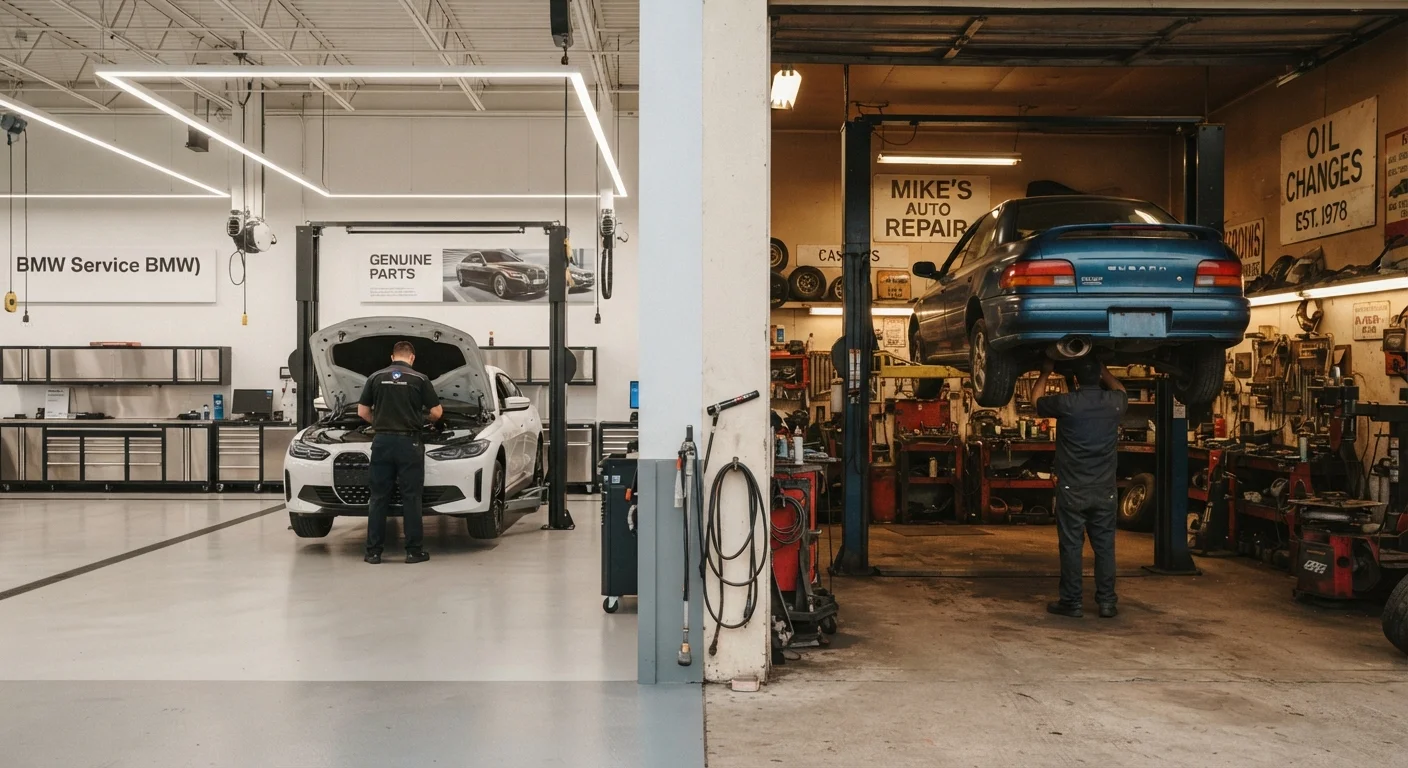
Photo credit: SnippetColumns.com | Easy Search, Reliable Information
In this article
Both have real advantages. Here's an honest look at what each option offers so you can choose with confidence, not guesswork.
Key Takeaways
- Dealership service centers offer brand-specific expertise and access to OEM parts, but typically charge higher labor rates.
- Independent mechanics often provide more personalized service and competitive pricing on common repairs.
- Your vehicle's warranty status is a key factor in deciding where to take it for service.
- For complex, model-specific diagnostics, a dealership's specialized tools may be worth the extra cost.
- Getting estimates from both options before authorizing major work is a practical way to protect your budget.
Why the Choice Matters More Than You'd Think
Most drivers pick a service provider out of habit or convenience and never question it. But where you take your car can meaningfully affect what you pay, how quickly issues get resolved, and whether a repair holds up over time. Understanding the real differences - not just the reputation each option carries - puts you in a better position to decide case by case rather than defaulting to one or the other every time.
This is especially relevant if you're trying to keep maintenance costs manageable without skipping important upkeep. The shop you choose is one of the bigger variables you actually control.
| Dealer Service Center | Independent Mechanic | |
|---|---|---|
| Labor rates | Generally higher | Generally lower |
| Parts used | OEM (factory original) | OEM-equivalent or aftermarket |
| Technician specialization | Brand-specific training | Multi-brand experience |
| Warranty & recall work | Covered at no cost | Not authorized for warranty claims |
| Diagnostic tools | Proprietary manufacturer software | Third-party diagnostic tools |
| Availability | Limited to that brand's dealer network | Widely available in most areas |
| Best for | Warranty repairs, recalls, complex diagnostics | Routine maintenance, out-of-warranty repairs |
What Dealership Service Centers Do Well
Dealerships employ factory-trained technicians who specialize in a single brand. That specialization matters when your vehicle has a software glitch, an intermittent fault code, or a failure that requires proprietary diagnostic equipment. Manufacturers regularly update their tools and technical service bulletins - information that flows to dealership service departments first and most completely.
Dealerships also handle recalls and warranty repairs at no charge to you, since those costs are covered by the manufacturer. If your vehicle is still under its new-car or powertrain warranty, having work performed at a non-dealer shop without prior authorization can - in some circumstances - complicate a future warranty claim. Always review your warranty documentation before making that call.
The trade-off is cost. Dealer labor rates are generally higher, and they typically install OEM (original equipment manufacturer) parts, which carry list prices above comparable aftermarket alternatives. For a straightforward oil change or brake job on a vehicle with 80,000 miles and no active warranty, that premium may not translate to better results.
Check Your Warranty Before You Commit
The Magnuson-Moss Warranty Act generally protects your right to have a vehicle serviced at an independent shop without automatically voiding a manufacturer warranty - but there are exceptions for specific conditions and required fluids. Review your warranty documentation carefully, and if you're unsure, ask the dealer's service department directly before any work is done.
What Independent Mechanics Bring to the Table
A good independent shop can service nearly any make or model. Modern diagnostic software - much of it available to independent shops through third-party licensing - has significantly narrowed the technology gap with dealerships for most common repairs. Where independents tend to shine is in transparency, flexibility, and price.
Labor rates at independent shops are typically lower than dealership rates, and many will use quality aftermarket or OEM-equivalent parts that cost less without meaningful sacrifice in durability. For routine services - oil changes, tire rotations, brake pads, filters, belts - the outcome is usually identical regardless of who performs the work.
The key variable is trust. An established independent shop with strong community reviews and an ASE-certified staff is not a compromise - it's a legitimate, often preferable choice. Before authorizing any significant repair, understand what the estimate actually covers so you're comparing apples to apples.
How to Decide for Your Specific Situation
A few practical questions help clarify the decision:
- Is the repair covered under warranty or a recall? Go to the dealer - it's free, and it protects your coverage.
- Does the issue require brand-specific diagnostic software? Dealer expertise is worth the cost here.
- Is this routine maintenance on an older vehicle? An independent shop is often the cost-effective choice.
- Have you gotten at least one other estimate? For any job over a few hundred dollars, a second opinion is reasonable. Knowing when you're being overcharged starts with having a comparison point.
If you're newer to managing your own vehicle maintenance, getting familiar with the basics before your first repair can help you ask better questions at either type of shop and avoid being caught off guard.
~$110-$160/hr
Typical dealer labor rate range
AAA research has found dealership labor rates commonly run higher than independent shop averages, which tend to fall in the $75-$120/hr range depending on region.
35%+
Drivers who use independent shops
Industry surveys consistently show a significant share of American drivers prefer independent mechanics for out-of-warranty vehicles, citing cost and personal relationships.

Author
Autos & Driving Editorial Team
Autos & Driving Editorial Team is the collective byline for our editorial team and contributor network. Articles published under this byline or an editorial pen name are researched, written, and reviewed according to our editorial standards for clarity, consistency, and independence before publication.
View all articles →