
What Your Mechanic's Estimate Actually Includes — and What to Ask About
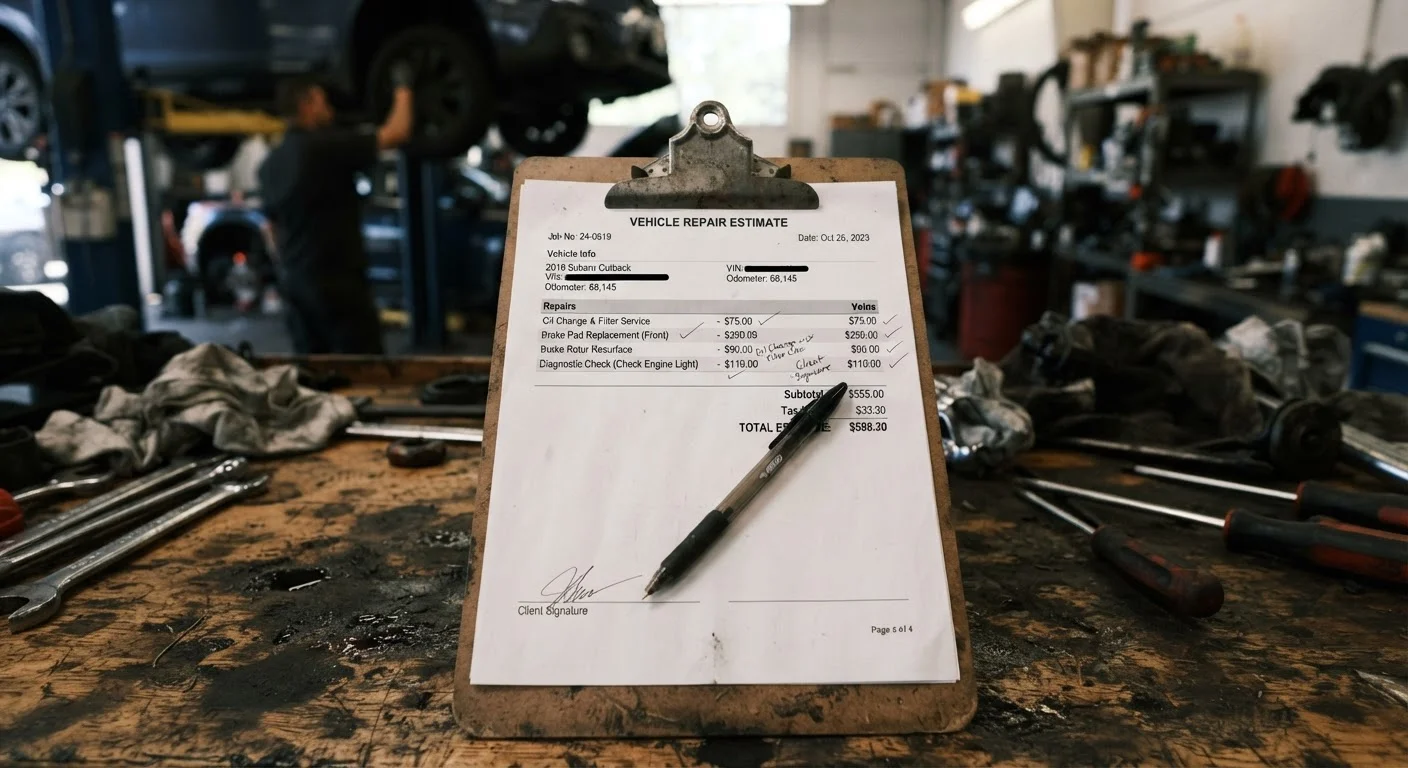
Photo credit: SnippetColumns.com | Easy Search, Reliable Information
In this article
A repair estimate can be confusing. Here's how to read one clearly, spot vague line items, and ask the right questions before you authorize work.
Key Takeaways
- Repair estimates break into three categories: parts, labor, and shop fees — each worth scrutinizing.
- Labor rates and parts markups vary widely; knowing the ranges helps you ask sharper questions.
- You have the right to request a written, itemized estimate before authorizing any work.
- Vague line items like 'miscellaneous' or 'shop supplies' deserve a direct explanation.
- Approving a diagnostic inspection does not obligate you to approve the repair that follows.
What's Actually Inside a Repair Estimate
A mechanic's estimate isn't one number — it's a structured document with distinct components, and each one is negotiable or at least explainable. Most itemized estimates include three core categories:
- Parts: The cost of physical components — filters, brake pads, sensors, belts. Shops typically source parts at wholesale and charge retail, so there's a markup built in. That's standard practice, but the margin varies considerably.
- Labor: Billed by the hour, usually based on a flat-rate guide (such as Mitchell or AllData) that estimates how long a job should take, not necessarily how long it actually takes. A shop may charge 2.5 hours for a job that took 90 minutes.
- Shop fees: Often called "shop supplies" or "environmental fees," these cover consumables like rags, disposal costs, and small hardware. They're typically a small percentage of the total — but they should be listed explicitly, not buried.
Some estimates also include a diagnostic fee, charged to identify the problem before any repair begins. This is separate from the repair itself. Agreeing to a diagnostic does not lock you into approving the work that follows.
If you're weighing where to take your vehicle in the first place, our breakdown of dealer vs. independent shops covers what each option typically offers on pricing and parts sourcing.
How to Read the Document Before You Sign
Before you authorize any work, ask for a written, itemized estimate — verbal quotes don't protect you. Most states have consumer protection laws that require shops to provide written estimates above a certain dollar threshold, though requirements vary by state.
What you will need
Once you have the document in hand, go through it methodically:
Confirm the estimate is itemized, not just a total
A single lump-sum figure tells you nothing. Ask the service advisor to break it into parts, labor, and fees. If the shop resists providing a line-item breakdown, treat that as a signal to ask more questions or seek a second opinion.
Check the labor hours and rate separately
Find the hourly labor rate (usually listed near the top or bottom of the document) and the number of hours billed. Multiply them to verify the labor subtotal. Then look up the flat-rate time for your specific repair using a free resource or by asking the advisor which guide they use.
Identify whether parts are OEM or aftermarket
Ask the advisor to specify the source for each major part on the estimate. For critical safety systems — brakes, steering, suspension — some mechanics and manufacturers recommend OEM parts. For less critical components, quality aftermarket parts are often a reasonable, lower-cost alternative. Either way, you should know what you're paying for.
Ask about every fee you don't recognize
Point to each line item you can't immediately explain and ask the advisor what it covers. Legitimate shops will answer clearly. If an explanation is vague or the advisor seems annoyed by the question, that's useful information about how that shop operates.
Clarify which items are urgent and which are advisory
Ask the advisor to walk you through any "recommended" services on the estimate and explain the safety or mechanical consequence of deferring each one. This lets you make an informed decision about what to approve now and what to monitor. Not every advisory item demands immediate action.
For drivers watching costs closely, strategies for managing car maintenance on a tight budget can help you prioritize which repairs to approve now versus monitor over time.
Get a Second Opinion on Big Repairs
For any repair estimated above a few hundred dollars, it's reasonable — and common — to get a second written estimate from another shop. Most reputable shops expect this and won't penalize you for it. A second opinion also helps you distinguish between a legitimate repair and an unnecessary upsell.
Common Pitfalls and When to Push Back
Even experienced car owners get caught off guard by certain estimate practices. A few patterns worth recognizing:
- Bundled labor: Some shops bundle multiple jobs under one labor charge without separating them. Ask how many individual tasks are included and whether any of them share labor time (for example, when replacing a timing belt, water pump replacement is often done simultaneously at minimal extra labor cost).
- OEM vs. aftermarket parts: Original Equipment Manufacturer (OEM) parts come from the vehicle's manufacturer; aftermarket parts are made by third parties. Both can be appropriate depending on the repair — but you should know which you're getting and why.
- Vague line items: "Miscellaneous" with no description is a red flag. Ask what it covers before you approve it.
- Recommended vs. required work: Shops sometimes add advisory items — services that aren't urgent. Ask the advisor to clarify which repairs are safety-critical and which can wait.
If you're new to navigating repair shops, our guide for new drivers facing their first repair offers a plain-English walkthrough of the whole process.
Verbal Approvals Can Lead to Disputes
If a shop calls mid-repair to recommend additional work, don't approve it verbally without asking for a revised written estimate first. Request that any additions be documented and confirmed before the mechanic proceeds. This protects you if the final invoice is higher than expected.
Once you're comfortable reading estimates, you'll also be better positioned to recognize unnecessary upsells — our article on signs you're overpaying for routine service covers the most common ones.

Author
Autos & Driving Editorial Team
Autos & Driving Editorial Team is the collective byline for our editorial team and contributor network. Articles published under this byline or an editorial pen name are researched, written, and reviewed according to our editorial standards for clarity, consistency, and independence before publication.
View all articles →