
The Science Behind Tire Pressure — and Why It Matters More Than You Think
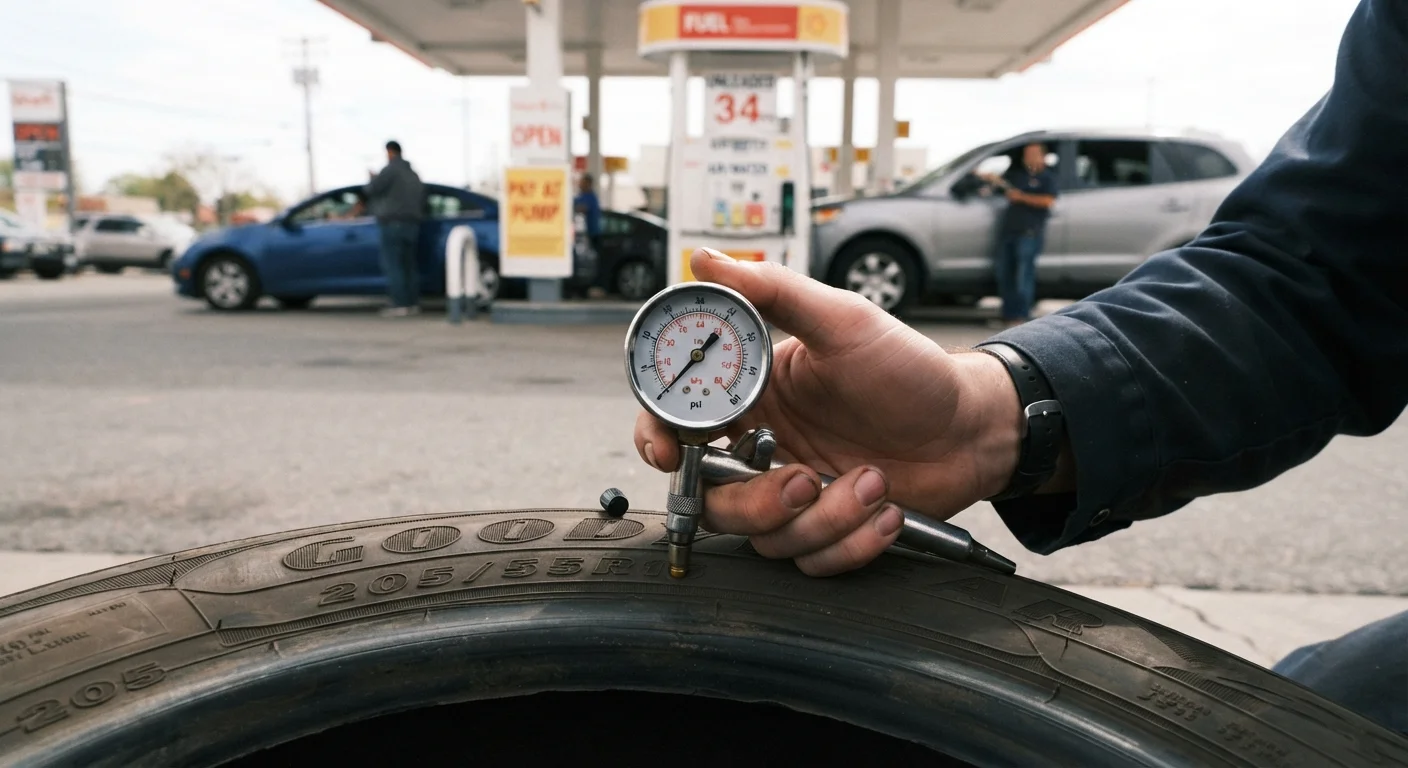
Photo credit: SnippetColumns.com | Easy Search, Reliable Information
In this article
Underinflated tires cost you fuel and grip. Understand how pressure works, how to check it, and what PSI is right for your vehicle.
Key Takeaways
- Correct tire pressure is printed on a sticker inside your driver's door jamb, not on the tire sidewall.
- Underinflated tires can reduce fuel economy by roughly 0.2% for every 1 PSI drop across all four tires.
- Cold mornings cause pressure to drop; always check pressure when tires are cold for an accurate reading.
- Overinflation is just as problematic as underinflation — it reduces traction and accelerates center tread wear.
- A basic tire pressure gauge costs a few dollars and eliminates reliance on shop fees for this simple check.
How Tire Pressure Actually Works
A tire isn't just a rubber ring — it's a pressurized vessel engineered to carry load, absorb road shock, and transmit steering and braking forces. The air inside does most of the structural work. When pressure is correct, the tire maintains its designed shape: a specific contact patch meets the road, load is distributed evenly, and heat generated by flexing stays within safe limits.
When pressure is too low, the sidewalls bow outward and the center of the tread lifts slightly. The tire flexes more with every rotation, generating excess heat that degrades the rubber compound and internal cords over time. When pressure is too high, the tire becomes rigid, the contact patch shrinks toward the center, and the ride transmits more road shock to the suspension.
Neither extreme is benign. Both compromise the traction and wear characteristics the tire was designed to deliver.
~0.2%
Fuel economy lost per 1 PSI underinflation (per tire)
The U.S. Department of Energy estimates that keeping tires properly inflated can improve gas mileage by a meaningful margin over time.
1 PSI
Pressure change per 10°F temperature shift
This well-established relationship explains why pressure readings fluctuate seasonally and why cold-morning checks are most accurate.
25%
Pressure drop that triggers most TPMS alerts
Federal regulations require TPMS systems on passenger vehicles sold in the U.S. since 2008 to warn drivers at this threshold.
Reading the Right Number — and Where to Find It
One of the most persistent tire myths is that you should inflate to the number printed on the tire sidewall. That number is the maximum pressure the tire can safely hold — not the recommendation for your vehicle. Inflating to that figure in a typical passenger car would make the ride punishing and reduce the contact patch below what your brakes and suspension expect.
The number you actually want is on a label inside the driver's door jamb or on the door itself. It's set by the vehicle manufacturer based on the car's weight, suspension geometry, and the specific tire size fitted at the factory. Front and rear recommendations sometimes differ, so check both. For more on how tire condition fits into broader upkeep, see our guide on car maintenance on a tight budget.
Check Pressure Before Cargo or Passenger Loads
If you're planning a loaded road trip — full passenger seats, roof rack, or trailer — check your owner's manual for load-specific inflation guidance. Some vehicles specify higher rear tire pressure when carrying heavy loads. Your door-jamb sticker may include this as an alternate recommendation.
Checking Pressure Correctly — Temperature Matters
Tire pressure expands with heat. After driving, the air inside a tire warms up and pressure rises — sometimes by 4–6 PSI above the cold reading. If you check pressure immediately after a long drive and then add air to reach your target, you'll end up overinflated once the tire cools.
Always check tires when they are cold — meaning the vehicle has been parked for at least three hours or driven fewer than a mile at low speed. Early morning, before the day's first significant drive, is ideal. Use a quality gauge (digital or dial-type are both reliable), remove the valve cap, press the gauge firmly onto the valve stem, and read the result. Add or release air as needed, then recheck.
This is a task anyone can do in under five minutes with a gauge that costs a few dollars. It doesn't require a shop visit. For context on how tire condition ties into pre-trip readiness, see what a vehicle safety inspection actually covers.
Why It Hits Your Wallet
Tire pressure has a direct, measurable effect on fuel economy. The U.S. Department of Energy has noted that underinflated tires increase rolling resistance — meaning the engine works harder to move the vehicle forward. The fuel penalty may seem small per PSI, but across thousands of miles it adds up in both fuel cost and accelerated tire wear.
Uneven wear caused by improper pressure can shorten tire life significantly. Replacing a set of tires prematurely is one of the more avoidable vehicle expenses. Proper pressure, combined with regular rotation, protects that investment. See our article on rotating your tires for how those two habits work together.
On highway trips, the impact is amplified. Fuel economy on long drives is influenced by multiple factors — tire pressure is one of the few you can control before you leave the driveway.
Frequently Asked Questions

Author
Autos & Driving Editorial Team
Autos & Driving Editorial Team is the collective byline for our editorial team and contributor network. Articles published under this byline or an editorial pen name are researched, written, and reviewed according to our editorial standards for clarity, consistency, and independence before publication.
View all articles →