
Your Car's Warning Lights, Decoded
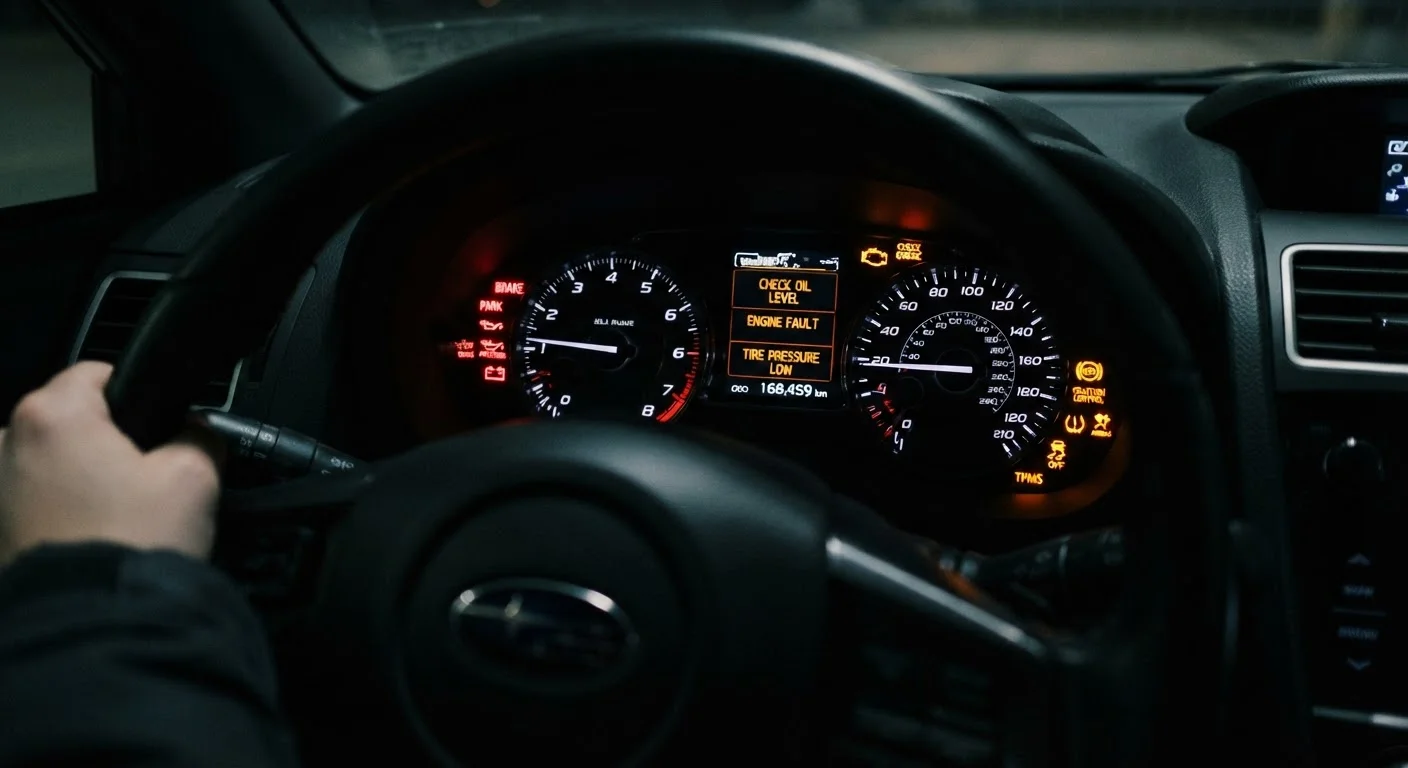
Photo credit: SnippetColumns.com | Easy Search, Reliable Information
In this article
Dashboard symbols can be cryptic. Learn what each warning light actually means and when it demands immediate attention.
How Warning Lights Actually Work
Modern vehicles rely on an OBD system — a network of sensors that continuously monitors engine performance, emissions, fluid levels, and safety systems. When a sensor detects a value outside its expected range, it triggers a dashboard indicator. The light itself is just the messenger; the real information lives in a stored diagnostic trouble code (DTC) that a mechanic — or anyone with an OBD-II reader — can retrieve.
Color is your first cue to urgency. Red lights signal a condition requiring immediate attention — continuing to drive could cause serious damage or create a safety hazard. Amber or yellow lights indicate a fault that needs attention soon but typically isn't a stop-right-now emergency. Green and blue lights are informational, confirming that a system (like high beams or cruise control) is active.
| Warning light colors | Red = stop now; Amber = attention soon; Green/Blue = system active |
| OBD-II standard applies to | All U.S. passenger vehicles built after 1996 (U.S. EPA regulatory requirement) |
| Flashing check engine light | Indicates active engine misfire — reduce speed and seek same-day service |
| Free diagnostic scans | Available at many auto parts retailers at no charge |
| TPMS trigger threshold | Approximately 25% below recommended tire pressure (NHTSA TPMS final rule) |
Understanding the color hierarchy alone can prevent costly mistakes, like ignoring a red oil pressure warning until the engine seizes.
The Lights That Mean Stop Immediately
A handful of warning lights should prompt you to safely pull over and shut off the engine as soon as possible:
- Oil Pressure Warning (red oil can icon): This does not mean you're low on oil — it means oil isn't circulating at adequate pressure. Driving with no oil pressure can destroy an engine in minutes. Pull over, shut off the car, and check the oil level before proceeding.
- Engine Temperature Warning (red thermometer icon): Your engine is overheating. Turn off the A/C, pull over safely, and let the engine cool before opening the hood. Never remove the radiator cap on a hot engine.
- Battery / Charging System Warning (red battery icon): The electrical system isn't charging properly. Your car is running on battery reserve — you may have 20–30 minutes before it dies entirely. Reduce electrical loads and head directly to a shop.
- Brake System Warning (red BRAKE or exclamation icon): If this appears while driving (not just at startup with the parking brake engaged), it can signal low brake fluid or a hydraulic failure. Have it inspected immediately. For more context on brake behavior, see our brake maintenance guide.
Amber Lights: Don't Ignore, But Don't Panic
These indicators are telling you something needs attention within the next few days to a few weeks — not necessarily right now:
Diagnostic Trouble Code (DTC)
A standardized alphanumeric code stored by a vehicle's OBD system when a sensor reading falls outside acceptable parameters. A mechanic uses these codes as a starting point for diagnosis, not a final verdict.
OBD-II
On-Board Diagnostics, second generation — a standardized diagnostic interface required on all U.S. passenger vehicles built after 1996. It allows external scan tools to read fault codes and live sensor data.
TPMS
Tire Pressure Monitoring System — a federally mandated sensor system that alerts the driver when a tire's pressure drops roughly 25% below the manufacturer's recommended level.
Catalytic Converter
An emissions control device in the exhaust system that converts harmful combustion byproducts into less harmful gases. Engine misfires can overheat and permanently damage this component.
Charging System
The combination of alternator, voltage regulator, and battery that keeps a vehicle's electrical systems running while the engine is on. A failure means the battery is draining without being replenished.
- Check Engine Light (amber engine outline): The most misunderstood light on any dashboard. It could signal anything from a loose gas cap to a misfiring cylinder. A solid amber light means get it scanned soon; a flashing check engine light means active misfires that can damage your catalytic converter — reduce speed and get it checked the same day.
- Tire Pressure Monitoring System / TPMS (amber tire cross-section icon): One or more tires are significantly under- or over-inflated. Check pressures manually — cold tire pressure is most accurate in the morning before driving.
- Low Fuel Warning: Straightforward, but worth noting: consistently running the tank near empty can stress the fuel pump, which relies on fuel for cooling.
- Traction Control or Stability Control (amber car with skid lines): The system is actively working, which is normal on slippery roads. If it stays on, the system may be disabled or faulty.
If a warning light appears and you're unsure whether it's serious, a quick diagnostic scan at most auto parts retailers is free and takes about five minutes. That one step can tell you whether you're looking at a $15 fix or a $1,500 repair — and help you avoid unnecessary shop visits.
OBD-II Readers Are Inexpensive and Reusable
Basic Bluetooth OBD-II adapters are widely available and work with free or low-cost smartphone apps. Owning one lets you read and understand any dashboard code before visiting a shop, giving you more informed conversations with your mechanic. This won't replace a professional diagnosis, but it removes the information asymmetry that often leads to overpaying.
What to Do After a Light Appears
Document it: note which light appeared, under what conditions (cold start, highway speed, idling), and whether it stayed on or flickered. This context helps any mechanic diagnose the problem faster, which can reduce diagnostic labor time.
Do not assume clearing the code resolves the underlying problem. Some drivers reset lights with an OBD-II reader to pass a visual inspection — this can mask real issues and in many states constitutes a registration violation. Understanding your auto coverage is also relevant here: if a warning-light issue leads to a breakdown, knowing what your policy covers matters. Review the basics with our auto insurance coverage explainer or check your declarations page guide to understand your roadside or mechanical breakdown provisions.
Finally, consult your owner's manual. Every vehicle is different, and manufacturers include vehicle-specific indicator descriptions in the instrument cluster section. The manual is your most reliable reference — more so than general internet searches that may describe a different model year's system.
This article is for general informational purposes only. For diagnosis, repair decisions, or safety concerns related to your specific vehicle, consult a qualified mechanic.

Author
Autos & Driving Editorial Team
Autos & Driving Editorial Team is the collective byline for our editorial team and contributor network. Articles published under this byline or an editorial pen name are researched, written, and reviewed according to our editorial standards for clarity, consistency, and independence before publication.
View all articles →