
Understanding Dietary Fiber: Why Most Americans Don't Eat Enough
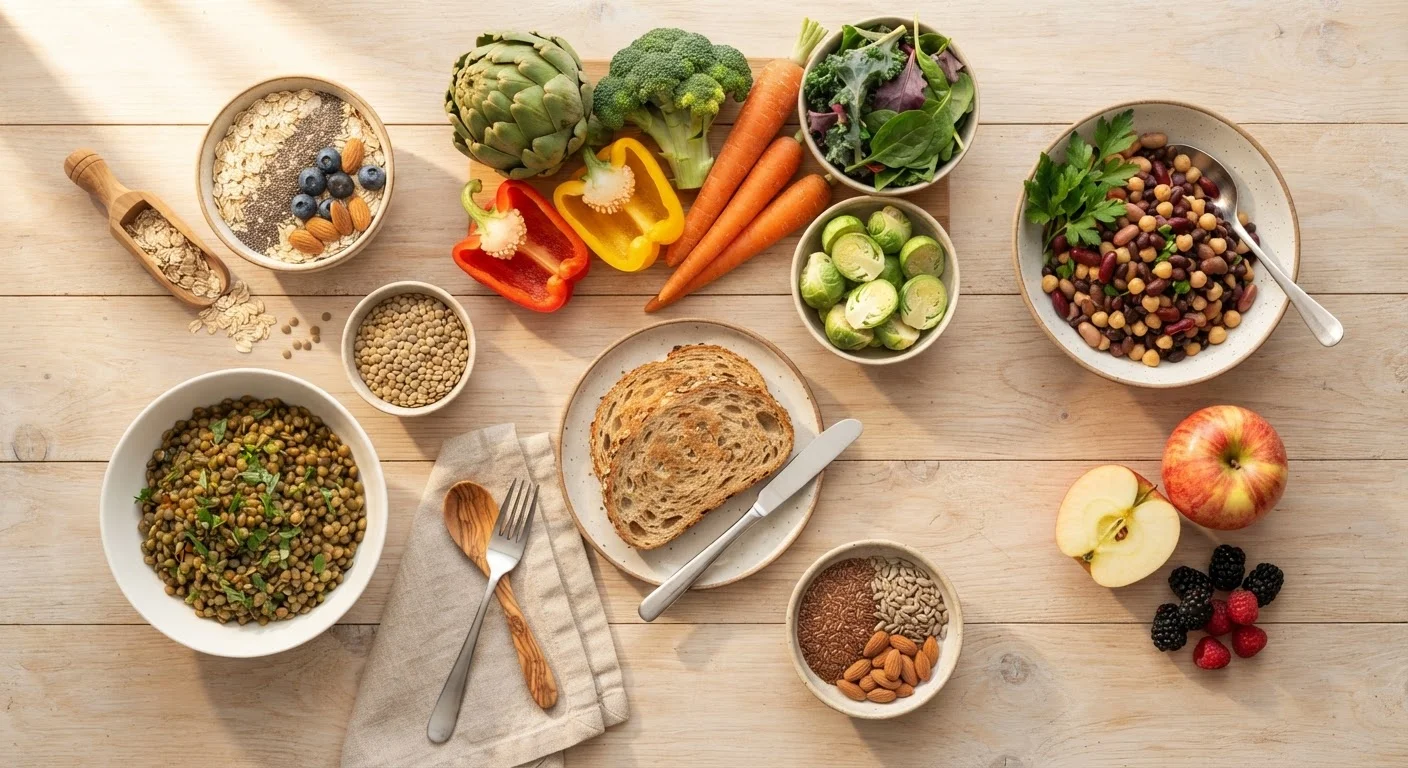
Photo credit: SnippetColumns.com | Easy Search, Reliable Information
In this article
Fiber does far more than aid digestion. Here's what soluble and insoluble fiber each do, and which everyday foods are reliable sources.
Key Takeaways
- Most American adults consume only about half the recommended daily fiber intake.
- Soluble fiber supports healthy blood sugar and cholesterol levels; insoluble fiber aids regularity.
- Whole grains, legumes, fruits, and vegetables are the most reliable fiber sources.
- Gradually increasing fiber — along with adequate water — helps avoid digestive discomfort.
- Fiber intake is linked to reduced risk of heart disease, type 2 diabetes, and certain digestive conditions.
The Fiber Gap: Why It Matters
Fiber is one of the most consistently under-consumed nutrients in the American diet — not because it's hard to find, but because modern food processing has removed much of it from everyday staples. White bread, refined cereals, and packaged snacks have largely displaced the whole grains, beans, and vegetables that were historically reliable fiber sources.
The consequences aren't trivial. Research has consistently linked low fiber intake to higher rates of constipation, elevated cholesterol, blood sugar instability, and increased long-term risk of heart disease and type 2 diabetes. Getting adequate fiber isn't about following a trend — it reflects well-established nutritional science. For a broader look at nutrients that quietly fall short in American diets, see Micronutrients You Might Not Be Getting Enough Of.
~15g
Average daily fiber intake for U.S. adults
According to data from the Dietary Guidelines for Americans Advisory Committee, most American adults fall well short of the recommended 25–38 grams per day.
95%
Americans not meeting fiber recommendations
Research published in the American Journal of Lifestyle Medicine has characterized dietary fiber as a genuine public health shortfall, with an estimated 95% of Americans under-consuming it.
10–15%
Lower heart disease risk associated with higher fiber intake
Multiple large observational studies have found associations between higher dietary fiber consumption and meaningfully reduced cardiovascular disease risk, though individual outcomes vary.
Soluble vs. Insoluble Fiber: Two Different Jobs
Calling something simply "fiber" glosses over an important distinction. The two main types function quite differently inside the body.
Soluble fiber dissolves in water to form a thick gel in the intestines. This gel slows the absorption of sugar, which helps moderate blood glucose levels after meals. It also binds to cholesterol particles and carries them out of the body, which is why diets high in soluble fiber are associated with lower LDL (low-density lipoprotein) cholesterol. Oats, barley, apples, citrus fruits, and legumes like lentils and kidney beans are particularly rich in soluble fiber.
Insoluble fiber doesn't dissolve. Instead, it adds physical bulk to stool and accelerates the movement of food through the intestines. This supports regular bowel movements and may reduce the risk of diverticular disease. Whole wheat products, nuts, seeds, green beans, and the skins of many vegetables and fruits are primary sources.
Most plant foods contain some of both types. Eating a varied diet built around whole plants naturally delivers both without the need to track each type individually.
A Simple Starting Point
If tracking feels overwhelming, focus on one change: replace at least one refined grain serving per day with a whole grain equivalent, and add a legume to two or three meals each week. These two habits alone can meaningfully shift average fiber intake without requiring calorie counting or complex meal planning. Always increase water intake alongside fiber to support digestion.
Reliable Everyday Fiber Sources
You don't need specialty foods or supplements to close the fiber gap. A handful of practical, widely available food categories cover the ground efficiently.
- Legumes: Cooked lentils, black beans, chickpeas, and split peas are among the most fiber-dense foods available — providing roughly 13–16 grams per cooked cup.
- Whole grains: Oats, barley, bulgur, and 100% whole wheat products provide significantly more fiber than their refined equivalents. When reading a food label, look for "whole grain" as the first listed ingredient. Reading a Nutrition Label Without the Confusion explains exactly how to interpret that information.
- Vegetables: Broccoli, Brussels sprouts, carrots, and artichokes are particularly fiber-rich. Leaving edible skins on potatoes and cucumbers preserves extra fiber.
- Fruits: Berries, pears, apples, and oranges offer meaningful fiber, especially when eaten whole rather than juiced.
- Nuts and seeds: Almonds, chia seeds, and flaxseeds are compact fiber sources that can be added to meals without much effort.
Fiber also works closely with hydration — water helps fiber do its job in the digestive tract. For a fuller picture of how hydration fits into overall nutrition, see Why Hydration Is a Nutrition Topic, Not Just a Fitness One.
How to Increase Fiber Without Discomfort
A rapid jump in fiber intake commonly causes bloating and gas because gut bacteria need time to adapt. The standard recommendation is to increase fiber gradually — adding one new high-fiber food at a time over several weeks — while simultaneously increasing water intake.
Practical strategies include swapping refined grains for whole grain versions, adding a handful of beans to soups or salads, and choosing whole fruit over juice. These are small substitutions that compound meaningfully over time without requiring a complete diet overhaul.
It's also worth noting that the fiber content of your diet shows up on nutrition labels. The "% Daily Value" column gives a quick reference point for whether a food is a meaningful contributor. For a deeper dive into how to use labels effectively, Reading a Nutrition Label Without the Confusion is a helpful companion resource.
This article is for general informational and educational purposes only and is not a substitute for professional medical or dietary advice. Consult a qualified healthcare provider before making significant changes to your diet, especially if you have a chronic health condition.
Frequently Asked Questions

Author
Health & Wellness Editorial Team
Health & Wellness Editorial Team is the collective byline for our editorial team and contributor network. Articles published under this byline or an editorial pen name are researched, written, and reviewed according to our editorial standards for clarity, consistency, and independence before publication.
View all articles →