
Emergency Fund, Sinking Fund, or Rainy Day Fund — What's the Difference?
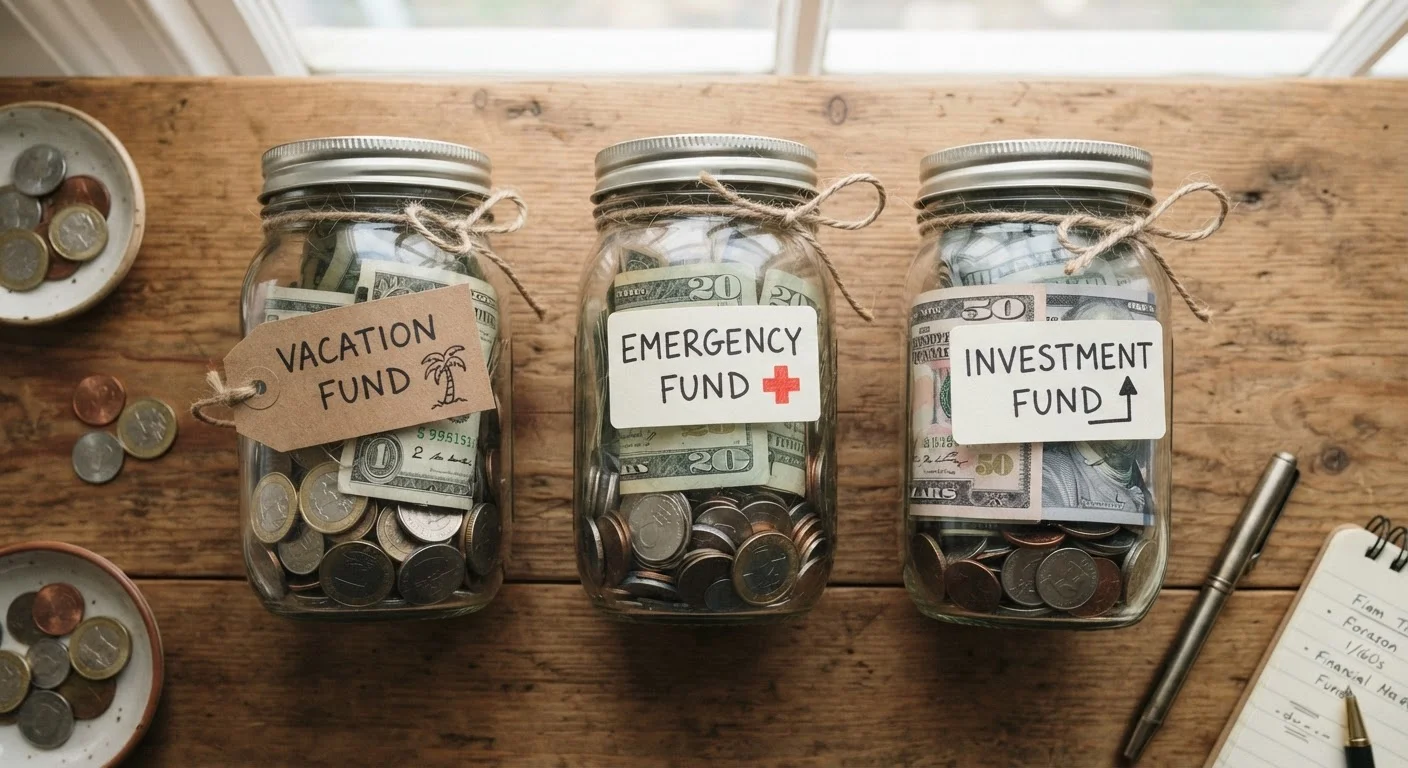
Photo credit: SnippetColumns.com | Easy Search, Reliable Information
In this article
These three savings concepts are often confused. Here's what each one is for, how they work, and when you might need all three.
Three Names, Three Very Different Jobs
Emergency fund. Sinking fund. Rainy day fund. These terms show up constantly in personal finance conversations, often used interchangeably — and that's a problem. Treating them as the same thing can leave you underprepared when life doesn't go to plan.
Each of these savings buckets has a specific purpose, a different target amount, and a different timeline. Understanding the distinctions helps you allocate your money intentionally rather than keeping one vague pile labeled "savings" that never seems to be enough for anything.
| Emergency fund target | 3–6 months of essential living expenses (Common personal finance guidance; varies by income stability and household) |
| Rainy day fund range | $500–$2,000 (General personal finance framing; adjust to your budget) |
| Sinking fund structure | Goal amount ÷ months until needed = monthly contribution |
| Recommended account type | Liquid, accessible savings account (not invested) (Applies especially to emergency and rainy day funds) |
| Primary distinction | Emergency = unexpected; Sinking = planned; Rainy day = minor buffer |
This article is general financial education, not personalized advice. For guidance specific to your situation, consult a licensed financial professional.
Emergency Fund: Your Financial Safety Net
An emergency fund is money set aside exclusively for genuine, unexpected disruptions — job loss, a medical crisis, a major car breakdown that leaves you unable to work. The defining feature is that you can't predict when you'll need it or exactly how much it will cost.
Most personal finance guidance suggests building three to six months of essential living expenses in an emergency fund, though the right amount depends on your income stability, household size, and risk tolerance. Households with variable income or a single earner often benefit from leaning toward the higher end of that range.
Critically, an emergency fund should sit in a liquid, accessible account — not invested in the market, where it could drop in value exactly when you need it most. A high-yield savings account is a common choice, though any account where funds are accessible without penalty works.
See our full guide to emergency funds for a deeper look at sizing and building one, or start here if you're building from zero.
Sinking Fund: Planned Savings for Known Costs
A sinking fund is almost the opposite of an emergency fund. Instead of preparing for the unknown, it prepares you for expenses you already know are coming — they just don't arrive every month.
Annual car registration, holiday gifts, a home appliance you know will need replacing, a vacation you're planning for next summer — these are sinking fund candidates. You identify the expense, estimate the cost, determine your timeline, and divide accordingly. If you need $1,200 for holiday spending in 12 months, you set aside $100 per month.
Many people run multiple sinking funds simultaneously, each labeled for a specific goal. This approach removes the unpleasant surprise of a large bill arriving without funds to cover it — and avoids raiding your emergency fund for expenses that were never really emergencies.
Emergency Fund
A dedicated savings reserve for unexpected, high-impact financial disruptions such as job loss or a major medical expense. Typically covers three to six months of essential living costs and should remain in a liquid, accessible account.
Sinking Fund
Savings accumulated gradually for a known future expense. You determine the cost, set a deadline, and contribute a fixed amount each month until the goal is reached.
Rainy Day Fund
A small financial buffer — often $500 to $2,000 — intended to absorb minor, everyday financial surprises without disrupting your main budget or emergency savings.
Liquid Account
A savings or bank account from which funds can be withdrawn quickly and without penalty. Liquidity is essential for emergency and rainy day funds since you may need access on short notice.
Learn more about the mechanics in our sinking fund explainer.
Rainy Day Fund: The Small Buffer in Between
A rainy day fund occupies the middle ground. It's smaller than a full emergency fund and less structured than a sinking fund. Think of it as a minor cushion for life's everyday inconveniences — a parking ticket, a co-pay you didn't budget for, a modest car repair, or a replacement household item.
There's no universal target, but a common framing is anywhere from $500 to $2,000 — enough to handle a minor setback without putting it on a credit card or disrupting your broader budget. Unlike an emergency fund, you'll likely tap a rainy day fund more frequently, so it gets replenished regularly as part of your monthly budget.
The rainy day fund matters most for people who are still building their emergency fund. It provides a small buffer so that minor disruptions don't derail progress on bigger savings goals.
Do You Need All Three?
Not necessarily all at once, but ideally all three serve distinct, complementary roles in a healthy savings plan.
A practical starting order: build a small rainy day buffer first (around $500–$1,000), then focus on a full emergency fund, and layer in sinking funds as you identify predictable future expenses. If your budget is tight, even small consistent contributions to each bucket matter more than trying to fund one perfectly before touching the others.
The Overlap Trap to Avoid
One of the most common savings mistakes is using an emergency fund to pay for expenses that were actually predictable — holiday gifts, annual insurance premiums, car maintenance. These belong in sinking funds, not your emergency reserve. When the two get blurred, a real emergency can leave you without any cushion at all. Keeping funds labeled separately — even across different savings accounts — makes the distinction concrete and harder to fudge.
The underlying principle across all three is the same: separate your savings by purpose so the money is where you need it, when you need it. Keeping everything in one undifferentiated account makes it far too easy to spend emergency money on non-emergencies.
For help managing multiple savings goals simultaneously, see how to save for multiple goals at once. And if you're weighing how your timeline should shape each goal, this piece on short-term vs. long-term savings strategies is worth a read.
This article is for general informational and educational purposes only and does not constitute personalized financial advice. Consult a qualified financial professional for guidance tailored to your circumstances.

Author
Money & Finance Editorial Team
Money & Finance Editorial Team is the collective byline for our editorial team and contributor network. Articles published under this byline or an editorial pen name are researched, written, and reviewed according to our editorial standards for clarity, consistency, and independence before publication.
View all articles →