
How Marketing Language Distorts Quality Perception
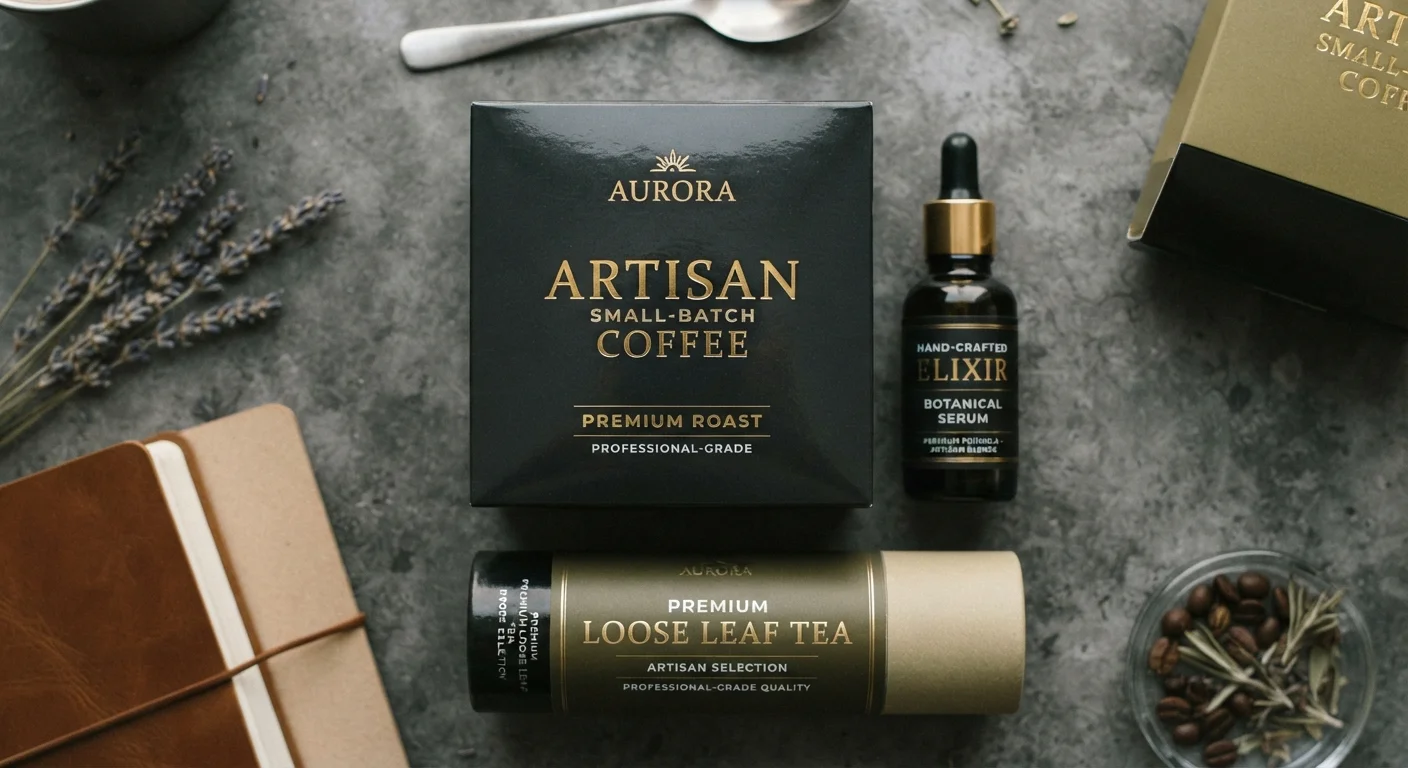
Photo credit: SnippetColumns.com | Easy Search, Reliable Information
In this article
Words like 'premium,' 'artisan,' and 'professional-grade' are rarely regulated. Learn to separate genuine quality claims from noise.
Key Takeaways
- Most marketing buzzwords like 'premium' and 'artisan' have no legal or industry-standard definition.
- Price alone is a weak and often misleading indicator of actual product quality.
- Regulated certifications and material disclosures are more reliable quality signals than label language.
- Emotional associations — craftsmanship, authenticity, exclusivity — are deliberately engineered into branding.
- Objective quality assessment requires looking past the label to verifiable specifications and independent testing.
Why Buzzwords Dominate Product Packaging
Walk down any grocery or hardware store aisle and you'll see the same words repeated across competing products: premium, artisan, professional-grade, pure, authentic. These terms feel meaningful. They trigger associations with craftsmanship, expertise, and care. That's entirely by design.
Marketers use these descriptors because they work — not because they describe something measurable. Consumer psychology research has repeatedly shown that labeling alone can shift perceived quality, even when the product itself is identical. In a well-documented category of studies on expectation and taste, participants consistently rate the same item higher when it carries a prestige label versus a generic one.
The core problem is that there's no gatekeeper. Unlike a nutrition facts panel — which is federally regulated and must reflect actual content — terms like 'artisan' and 'premium' require no certification, no third-party audit, and no minimum standard. A mass-produced item on an automated assembly line can legally carry the word 'handcrafted.' Understanding this gap is the first step toward evaluating products more objectively.
When Regulated Terms Do Apply
Some product categories carry more tightly defined labeling rules. USDA Organic certification requires third-party verification and limits allowable inputs. 'UL Listed' on electrical products means the item passed specific safety testing by Underwriters Laboratories. When you see certification marks from recognized independent bodies — as opposed to vague adjectives — that's a qualitatively different kind of claim. The presence of a specific certifying organization is the key distinguishing feature.
The Psychology Behind Persuasive Labeling
Marketing language exploits several well-established cognitive tendencies. The halo effect is one of the most powerful: when a product is described with one positive-sounding attribute, consumers tend to assume other positive qualities follow. Call something 'small-batch,' and buyers may infer it's also fresher, more carefully made, and worth more money — none of which are guaranteed by the term.
Similarly, anchoring plays a role in price-quality perception. When a product is positioned alongside higher-priced alternatives, its own price begins to feel like evidence of quality. This is why premium-positioned items are often displayed near even more expensive options.
These aren't character flaws in shoppers — they're predictable features of human cognition that sophisticated marketing actively leverages. Recognizing them doesn't make you immune, but it does create useful pause before a purchase decision. For a deeper look at how these patterns show up, see common traps that fool even careful shoppers.
Ask: What Does This Term Actually Guarantee?
When you see a word like 'premium' or 'artisan,' mentally replace it with the question: 'What would have to be true for this claim to be verifiable?' If no specific standard, certification, or measurable attribute comes to mind, the word is doing emotional work, not informational work. That's your cue to look for the spec sheet instead.
What to Look for Instead
Replacing marketing language with verifiable quality signals takes some practice, but the framework is straightforward:
- Certifications from recognized bodies — look for marks from established third-party organizations (e.g., UL for safety, USDA Organic, OEKO-TEX for textiles). These require actual testing and ongoing compliance.
- Material and ingredient disclosures — a product that lists specific materials (e.g., "100% merino wool," "18/8 stainless steel") gives you something to evaluate. Vague descriptors like "premium materials" give you nothing.
- Quantified specifications — thread count, motor wattage, tensile strength, lens aperture. Numbers are harder to fake than adjectives.
- Country of origin and manufacturing transparency — not a guarantee, but context that helps frame expectations.
Quality signals hiding in plain sight on every product label goes further into how to decode these markers across different product types. And because quality benchmarks vary significantly by category, it's also worth reviewing how quality standards differ across product categories before making comparisons.
~80%
Shoppers who associate higher price with higher quality
Research in consumer psychology, including studies published in the Journal of Consumer Research, consistently finds that the majority of shoppers use price as a primary quality proxy — even when product content is identical.
0
Federal agencies regulating the word 'premium' on most U.S. products
In most non-food consumer product categories in the United States, no regulatory body defines or enforces the use of terms like 'premium,' 'artisan,' or 'professional-grade' on packaging.
2x
Perceived quality boost from prestige label alone
Multiple expectation-and-perception studies have found that identical products rated under prestige versus generic labels can receive quality ratings roughly twice as high, purely based on label framing.
Building a More Reliable Evaluation Habit
Skepticism toward marketing language isn't about cynicism — it's about calibration. The goal is to separate genuine product attributes from the story being told about them. A few practical habits help:
- Separate the label from the spec sheet. Before deciding what something is worth, find its actual specifications — materials, dimensions, performance ratings — not just its marketing copy.
- Seek independent testing when available. Consumer testing organizations evaluate products against measurable criteria without financial ties to manufacturers. This is especially useful for appliances, tools, and personal care items.
- Read reviews for specifics, not sentiment. Five-star reviews that describe concrete experiences are more useful than those that echo the marketing language. See how to separate signal from noise in customer reviews for a structured approach.
- Notice when a want is being reframed as a need. Marketing language often works by making desire feel like necessity. The wants-versus-needs distinction is worth revisiting when you feel a strong pull toward a 'premium' product.
None of these habits eliminate the influence of good marketing — that would require more cognitive effort than any purchase warrants. But they do shift the balance toward decisions you're less likely to regret.
“The language of quality is one of the most powerful tools in marketing, precisely because it's almost entirely unregulated. Consumers are left to do the verification work that the system doesn't require of manufacturers.”
— Consumer Reports Policy & Action Team, Consumer advocacy and product testing organization
Frequently Asked Questions

Author
Smart Shopping Editorial Team
Smart Shopping Editorial Team is the collective byline for our editorial team and contributor network. Articles published under this byline or an editorial pen name are researched, written, and reviewed according to our editorial standards for clarity, consistency, and independence before publication.
View all articles →