
How Quality Standards Differ Across Product Categories
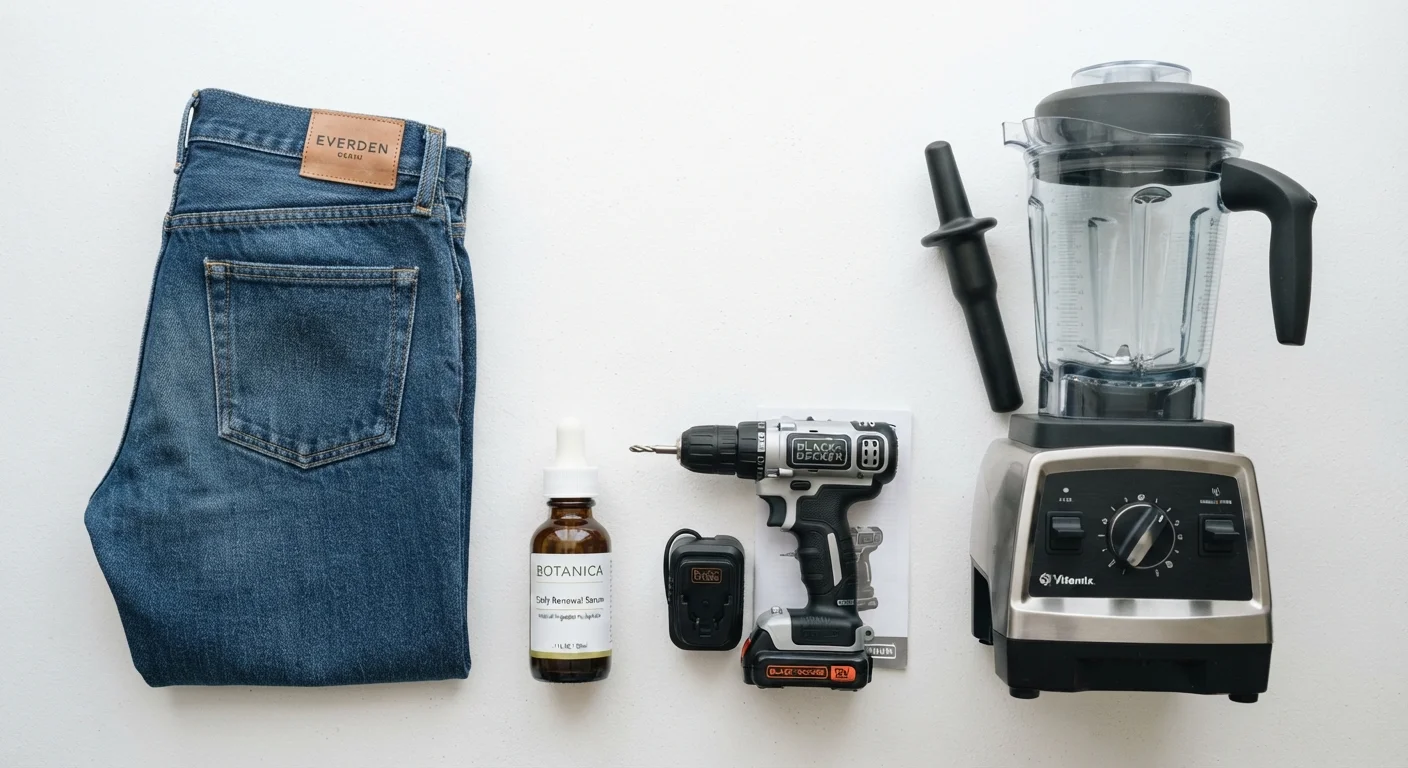
Photo credit: SnippetColumns.com | Easy Search, Reliable Information
In this article
What makes a great pair of jeans is completely different from what makes a great blender. Learn how quality benchmarks shift by product type.
Key Takeaways
- Quality benchmarks are category-specific; a single universal definition doesn't apply across product types.
- For apparel, construction details like stitching density and fabric composition matter more than brand labels.
- For appliances, motor strength, material grade, and repairability are stronger indicators than cosmetic design.
- Skincare and personal care quality centers on ingredient concentration, stability, and safety testing.
- Understanding the right criteria for each category helps you avoid paying for marketing instead of substance.
Why One Quality Standard Can't Cover Everything
Most shoppers carry a rough mental model of quality: higher price means better product, recognizable brands are safer bets, and five-star reviews confirm a good purchase. Research in consumer behavior consistently shows this model breaks down — and that category-specific knowledge is far more predictive of satisfaction than price alone.
As we explore in what product quality actually means, quality has multiple dimensions — durability, performance, conformance to standards, and perceived value — and different product categories weight those dimensions very differently. A blender that scores high on durability is not evaluated the same way as a pair of jeans that scores high on durability. The criteria, failure modes, and trade-offs are simply not the same.
Learning to shift your evaluation lens by category is one of the most practical skills a shopper can develop.
Apparel and Textiles: Construction Over Branding
In clothing, quality is almost entirely about materials and construction — two factors that marketing language routinely obscures. Terms like 'premium' and 'artisan' are rarely regulated, which means they're poor proxies for actual garment quality.
What actually matters in apparel:
- Fabric composition: Natural fiber content percentages (cotton, wool, linen) or quality synthetic blends affect breathability, drape, and washability. Vague labels like "soft fabric" without fiber percentages are a red flag.
- Stitch density: More stitches per inch generally indicates stronger seams. Loose stitching unravels faster under stress.
- Seam finishing: Bound, flat-felled, or French seams resist fraying far longer than serged edges alone.
- Hardware: On bags and jackets, metal zipper gauge, rivet thickness, and button attachment method all predict lifespan.
Product labels carry more information than most shoppers extract — care instructions and fiber content tags are a starting point, not a finish line.
Check the Seams Before the Label
Turn any garment inside out before buying — in-store or by requesting detailed product photos online. The quality of interior finishing (bound edges, reinforced stress points, even stitch lines) tells you more about construction standards than the brand tag or price point ever will. Consistent seam finishing throughout a garment signals manufacturing discipline that tends to correlate with overall durability.
Appliances: Performance Specs and Repairability
For kitchen and home appliances, quality divides into two zones: how well it performs its intended task, and how long it can sustain that performance. These don't always correlate. A blender may deliver excellent results for two years and then fail due to a motor bearing that isn't user-serviceable — a quality dimension called repairability that rarely appears in marketing copy.
Key criteria for appliances:
- Motor and component grade: Wattage is a rough indicator of power, but thermal protection, bearing quality, and housing material matter more for longevity.
- Material contact surfaces: Food-contact materials should meet relevant FDA or NSF standards. Stainless steel internals generally outlast plastic equivalents.
- Parts availability: Appliances with widely available spare parts have longer practical lifespans. Proprietary assemblies often become landfill when one component fails.
- Warranty terms: Motor warranties separate from general warranties signal how confident manufacturers are in different subsystems.
| Apparel | Appliances | Skincare & Personal Care | |
|---|---|---|---|
| Primary quality indicator | Fabric composition & seam construction | Motor grade & materials | Ingredient transparency & concentration |
| Common marketing distortion | 'Premium' / 'artisan' labeling | Wattage figures without context | Vague claims like 'clinically proven' |
| Longevity factor | Stitch density & seam finishing | Repairability & parts availability | Formulation stability & packaging |
| Key label to check | Fiber content & care instructions | Warranty terms by component | Ingredient list order (INCI) |
| Failure mode to watch for | Seam unraveling, pilling, shrinkage | Non-serviceable motor failure | Active ingredient degradation |
For shoppers who can't physically inspect products before buying, an online quality evaluation framework can substitute for hands-on assessment using specs, teardown reviews, and verified user data.
Skincare and Personal Care: Ingredient Transparency First
Personal care quality is perhaps the most marketing-saturated category of all. Packaging, fragrance, and texture are frequently optimized for purchase appeal — not product efficacy or safety. Objective quality here depends almost entirely on formulation transparency and evidence of safety testing.
What to evaluate:
- Ingredient list order: Ingredients are listed by concentration. Active ingredients appearing near the bottom of a long list are present in amounts too small to be clinically meaningful.
- Stability and preservation: Effective active ingredients (like vitamin C derivatives or retinoids) degrade without proper stabilization. Packaging that limits air and light exposure is a functional quality signal.
- Dermatologically tested vs. clinically tested: These phrases have different meanings. "Dermatologically tested" typically means a patch test was completed; "clinically tested" implies a structured efficacy study — though neither term is globally standardized.
- Regulatory compliance: In the U.S., cosmetics are regulated by the FDA, though less stringently than drugs. Products making drug-adjacent claims (e.g., "reduces wrinkles by 40%") are subject to different standards.
This category also intersects with the longevity vs. performance distinction — a product may perform visibly well short-term while causing long-term skin sensitivity through harsh preservatives or irritants.
This article is for general informational purposes only and does not constitute medical, dermatological, or professional advice. Consult a qualified healthcare professional for questions about skin conditions or personal care needs.

Author
Smart Shopping Editorial Team
Smart Shopping Editorial Team is the collective byline for our editorial team and contributor network. Articles published under this byline or an editorial pen name are researched, written, and reviewed according to our editorial standards for clarity, consistency, and independence before publication.
View all articles →