
The Overlooked Role of Tolerances, Fit, and Finish in Judging Manufactured Goods
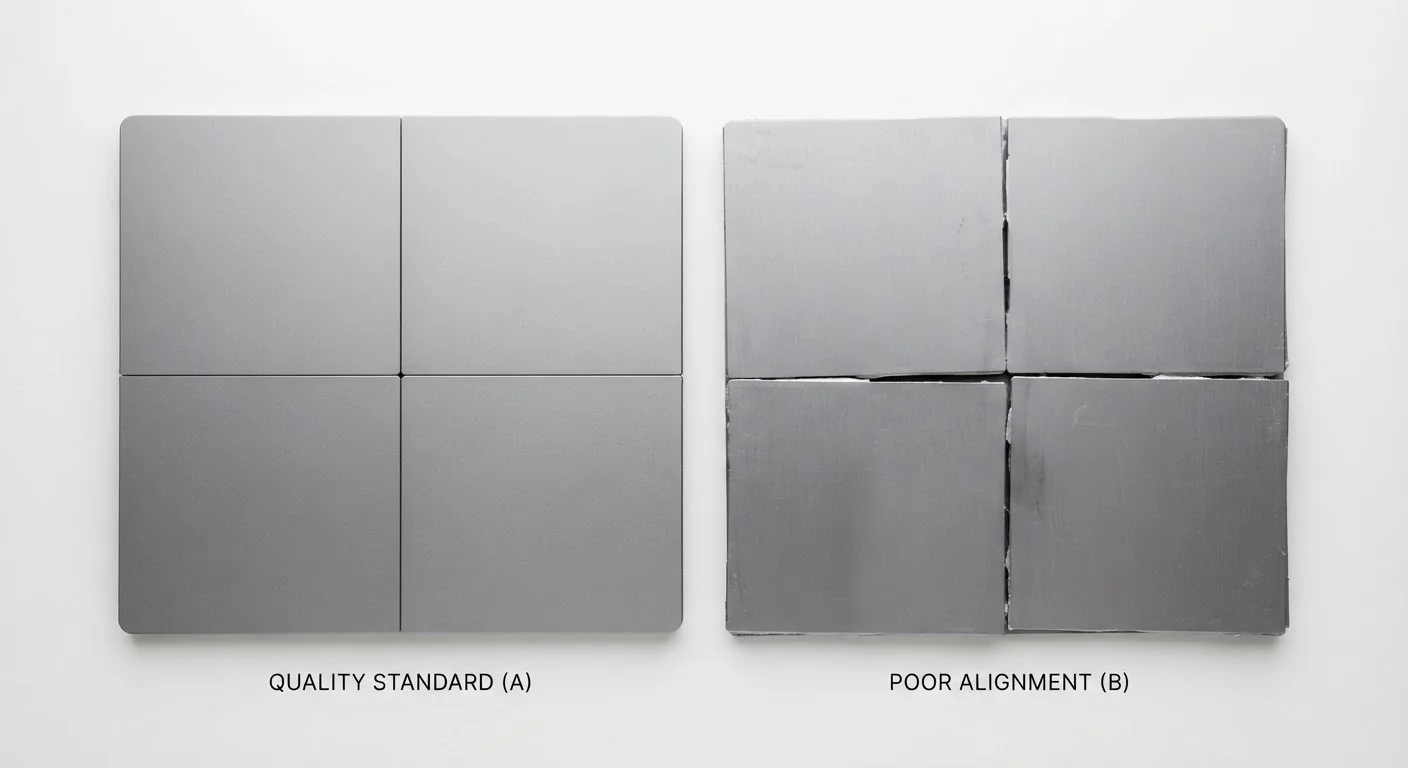
Photo credit: SnippetColumns.com | Easy Search, Reliable Information
In this article
Small gaps, uneven seams, and inconsistent finishes are more than cosmetic flaws — they often signal deeper manufacturing quality problems.
Key Takeaways
- Visible gaps, misaligned panels, and uneven surfaces are objective quality signals, not just cosmetic annoyances.
- Tight tolerances indicate disciplined manufacturing processes and better long-term durability.
- Finish inconsistencies often reveal where a manufacturer cuts corners under cost pressure.
- These cues apply across product categories — from clothing seams to gadget bezels to cabinetry joints.
- Price alone is not a reliable proxy for manufacturing precision — inspection matters.
Why These Three Factors Matter More Than They Look
Most shoppers evaluate products through two lenses: price and brand reputation. Both are blunt instruments. A more precise tool is right in front of you — literally. The way a product is physically assembled tells you a great deal about the standards the manufacturer holds itself to.
Tolerances, fit, and finish aren't just engineering vocabulary. They're observable, measurable evidence of process discipline. When a manufacturer consistently hits tight dimensional tolerances across thousands of units, it means they've invested in quality control infrastructure — better tooling, more frequent inspections, tighter supplier requirements. The same discipline that closes a panel gap flush also keeps internal components properly seated, wiring correctly routed, and structural elements properly supported.
In contrast, loose tolerances and sloppy finishes often signal a cost-cutting culture that doesn't stop at the surface. If a company accepts visible misalignment on the outside, it's reasonable to wonder what they accept where you can't see. This logic applies across categories — from everyday fashion to everyday gadgets.
~30%
Product returns attributed to quality defects
Industry estimates from retail logistics research consistently place quality-related returns at roughly a quarter to a third of all consumer product returns across categories.
3–5×
Lifespan difference between tight and loose tolerance manufacturing
Engineering and reliability studies in product design literature suggest that precision-manufactured components can last several times longer under equivalent use conditions compared to loosely toleranced counterparts.
Reading Fit: What Panel Gaps and Seam Alignment Actually Signal
"Fit" in a manufactured product is about how parts relate to each other at their boundaries. On a jacket, that's how the collar sits against the body panel and whether left and right seams mirror each other. On a laptop, it's whether the lid closes flush with the base, with consistent gaps on all sides.
Uneven gaps are one of the clearest red flags a shopper can spot without tools. A gap that varies — wider on one side, narrower on the other — means parts weren't made to consistent dimensions or weren't assembled with adequate precision. That inconsistency has downstream effects: in electronics, it means the casing doesn't seal properly against dust or moisture. In clothing, it means the garment will distort under normal stress. In furniture, it means the joint will loosen faster.
When you're evaluating a product in person, run your finger along seam lines and panel edges. Assess whether gaps are uniform. Open and close any moving parts — doors, lids, drawers — and notice whether they travel smoothly or require adjustment to align. These small observations are reliable quality data. For a broader look at physical construction signals, see how to read materials, stitching, and finish.
Check Multiple Units When Possible
If you're shopping in a physical store and more than one unit is available, compare them directly. Variation in fit or finish between identical units on the same shelf is a reliable sign of loose manufacturing tolerances or inconsistent quality control. A consistent product should look and feel the same regardless of which unit you pick up.
Reading Finish: Surface Quality as a Process Indicator
Finish is the final layer — literally and figuratively — of the manufacturing process. Paint, powder coating, plating, stitching, and surface textures all reveal something about how the product was made and inspected before it left the factory.
Look for consistency first. A uniform matte surface should be uniformly matte everywhere — not glossier in one corner, not visibly thinner over a raised edge. Stitching on fabric goods should run in straight, even lines with consistent stitch density. Any deviation isn't just aesthetic; it indicates the process wasn't controlled tightly enough to produce the same result across every unit.
Finish defects to note specifically: paint runs or drips, cloudy patches on lacquered surfaces, pilling or loose threads on textiles, uneven plating, or scratches from handling that weren't caught in quality inspection. Each of these suggests a manufacturer that either doesn't inspect final output carefully or accepts a higher defect rate as tolerable. Neither is reassuring.
Finish quality is also one area where well-filtered customer reviews add genuine signal — users frequently photograph and describe surface defects that don't appear in product listings.
Building Tolerance Awareness Into Your Buying Process
You don't need engineering training to use these concepts practically. The core skill is shifting from a passive to an active inspection posture — looking at a product rather than simply looking for a product.
In-store, handle the item before committing. Flex it gently to feel for structural rigidity. Run your hands across surfaces for texture uniformity. Check multiple units if the display allows — variation between units on the shelf is itself a quality signal. Be aware that marketing tactics and premium packaging can create impressions that don't survive close physical inspection, a dynamic explored further in common quality judgment traps.
When buying online, prioritize sellers or listings that include multiple angle photographs, and weight user-submitted photos heavily. Check whether the manufacturer offers a meaningful warranty — a long warranty on structural or mechanical issues is a signal that the company stands behind its assembly quality. Our guide on how to read warranties as quality indicators covers this in detail.
Tolerance awareness fits naturally into a broader quality evaluation habit. If you're building a more complete framework, building your own quality evaluation framework walks through every layer of the assessment process from materials to long-term value.
“Quality is never an accident; it is always the result of intelligent effort. There must be the will to produce a superior thing.”
— John Ruskin, 19th-century art critic and commentator on craftsmanship and manufacture
Frequently Asked Questions

Author
Smart Shopping Editorial Team
Smart Shopping Editorial Team is the collective byline for our editorial team and contributor network. Articles published under this byline or an editorial pen name are researched, written, and reviewed according to our editorial standards for clarity, consistency, and independence before publication.
View all articles →