
Natural Fibers vs. Synthetic Fabrics: What the Difference Actually Means for Your Clothes
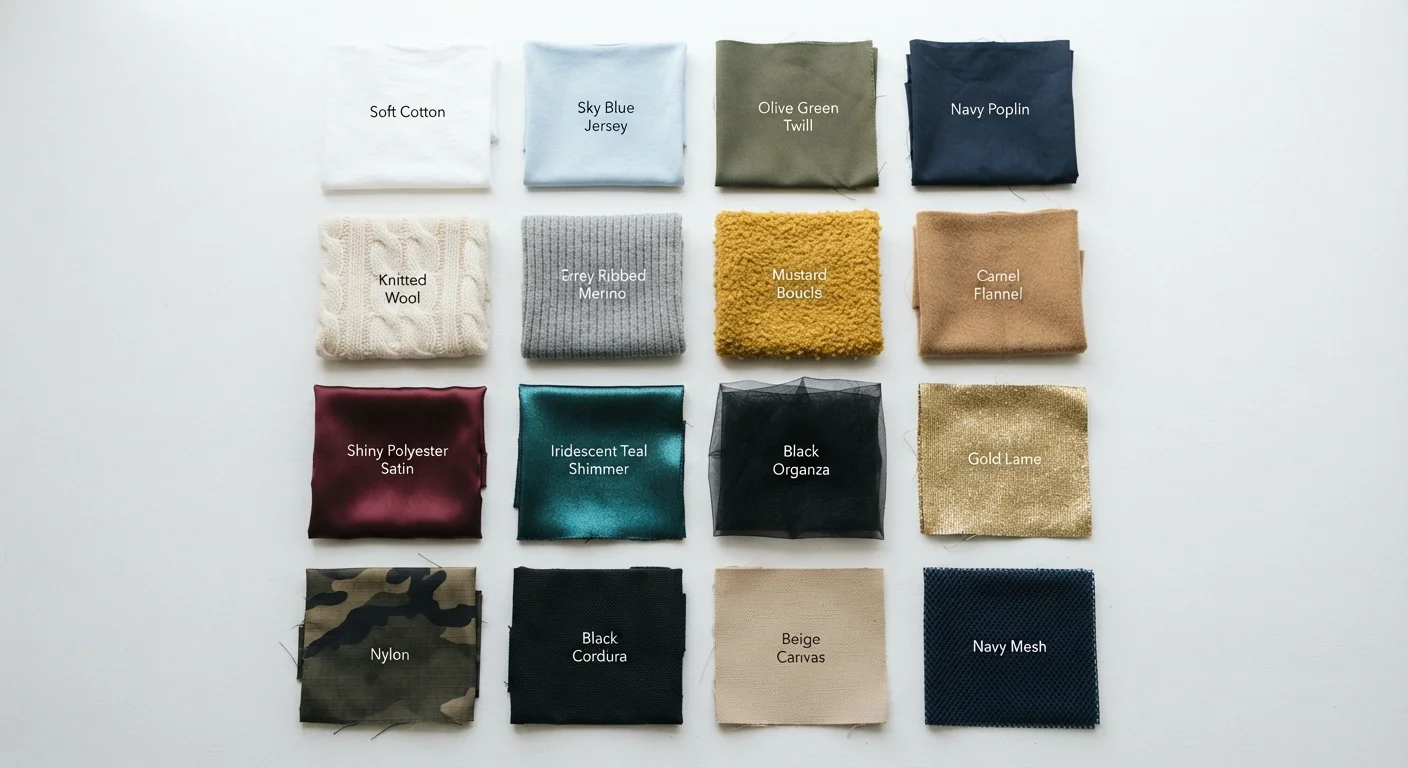
Photo credit: SnippetColumns.com | Easy Search, Reliable Information
In this article
Cotton, wool, polyester, nylon — fabric choice affects comfort, durability, and care. Here's a plain-language breakdown of what each offers.
Key Takeaways
- Natural fibers like cotton and wool offer breathability and comfort but often require more careful laundering.
- Synthetic fabrics such as polyester and nylon resist moisture and hold their shape, but can trap heat and odor.
- Blended fabrics combine traits of both — often striking a balance between comfort and practicality.
- Fabric choice affects care requirements, longevity, and how a garment performs in different climates.
- Neither fiber type is universally superior — the right choice depends on the garment's intended use.
What Separates Natural from Synthetic
The distinction starts at the source. Natural fibers come from plants or animals — cotton from the cotton plant's seed pods, wool from sheep fleece, linen from the flax plant, and silk from silkworm cocoons. Synthetic fabrics are manufactured through chemical processes, typically derived from petroleum-based polymers. Polyester, nylon, acrylic, and spandex all fall into this category.
This origin difference drives nearly every practical variation you'll notice in wear, care, and durability. Natural fibers have an inherent cellular structure that interacts with moisture and air in ways synthetics simply don't replicate. Synthetics, in turn, can be engineered with specific properties — stretch, water repellency, or tensile strength — that natural fibers rarely achieve on their own.
It's also worth noting that blended fabrics — a cotton-polyester mix being the most common — are designed to borrow strengths from both camps. Understanding each type individually helps you read a blended fabric's behavior more accurately. The physical signals of a well-made garment often start with the fiber content label.
How Each Fabric Performs Day to Day
Breathability is where natural fibers consistently lead. Cotton and linen absorb moisture and allow airflow, helping regulate body temperature. Wool is more nuanced — it insulates even when damp, making it a reliable cold-weather choice, though it can feel heavy. Silk is naturally temperature-regulating and lightweight but requires delicate handling.
Synthetics perform differently. Polyester repels water rather than absorbing it, which can feel clammy in warm weather but is ideal for moisture-wicking athletic wear. Nylon is exceptionally durable and abrasion-resistant — a reason it dominates outerwear and hosiery. Spandex adds stretch but is almost always blended rather than used alone.
One consistent trade-off with synthetics: they tend to hold onto odor more readily than natural fibers because bacteria-producing sweat isn't absorbed and dispersed in the same way. For everyday wear in warmer months, this is a real practical consideration.
| Criterion | Natural Fibers | Synthetic Fabrics |
|---|---|---|
| Breathability | High — absorbs moisture, allows airflow | Lower — repels moisture, can trap heat |
| Durability | Moderate — varies by fiber and care | High — resistant to abrasion and wear |
| Shape retention | Can stretch or shrink without proper care | Holds shape well through repeated washing |
| Odor resistance | Better — moisture disperses naturally | Lower — odor can build up over time |
| Care requirements | Often more delicate; some require special handling | Generally machine-washable and low-maintenance |
| Typical cost | Often higher, especially wool and silk | Generally lower and widely accessible |
| Performance in moisture | Absorbs and can stay damp longer | Wicks or repels — dries quickly |
For garments intended to last, how you care for the fabric matters as much as its fiber content. Our guide on caring for clothes so they actually last covers the washing and storage habits that preserve both natural and synthetic fabrics.
Making Fabric Work for Your Wardrobe
The practical takeaway isn't to choose a side — it's to match fiber to function. A linen shirt for summer weekends makes more sense than a polyester one. A nylon shell jacket outperforms a cotton one in wind and rain. Wool trousers hold a crease and resist pilling in ways that most synthetics don't.
Budget is also a real factor. Natural fiber garments — particularly wool, silk, and linen — tend to cost more upfront. Synthetics are generally less expensive and more accessible at most price points. But cost-per-wear matters: a well-constructed natural fiber piece that lasts a decade may represent better value than a cheaper synthetic that degrades in two years. This is worth considering alongside the broader trade-offs explored in our look at secondhand vs. fast fashion.
A Note on Fabric Blends
Many garments combine natural and synthetic fibers to balance competing needs — a cotton-polyester shirt, for example, retains cotton's softness while reducing shrinkage and wrinkle potential. When reading a label, the fiber listed first is present in the greatest proportion. A garment labeled '60% cotton, 40% polyester' will behave more like cotton in feel and breathability, but with improved durability and easier care. Blends aren't a compromise so much as a deliberate design choice.
When shopping, check the care label before you buy — not after. Dry-clean-only wool or hand-wash-only silk requires a real time and cost commitment. If your lifestyle calls for machine-washable everything, a cotton-polyester blend or a treated synthetic may be the more realistic long-term choice, regardless of what sounds more premium on paper.

Author
Style & Beauty Editorial Team
Style & Beauty Editorial Team is the collective byline for our editorial team and contributor network. Articles published under this byline or an editorial pen name are researched, written, and reviewed according to our editorial standards for clarity, consistency, and independence before publication.
View all articles →