
Why Your Outfits Stop Working — and How Proportion Fixes Them
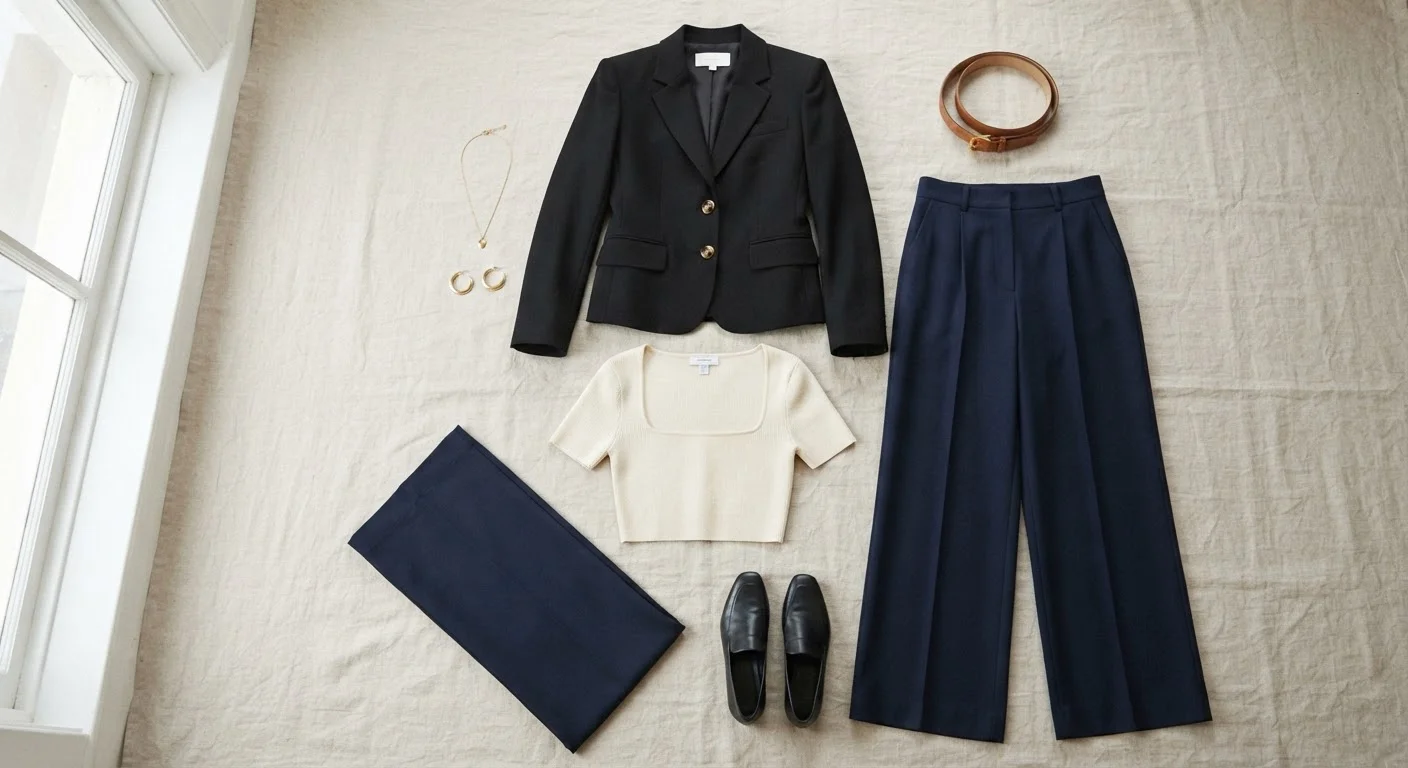
Photo credit: SnippetColumns.com | Easy Search, Reliable Information
In this article
Most outfit frustrations trace back to proportion, not price. Learn how balance between fit, volume, and length changes how clothes look on real bodies.
Key Takeaways
- Most outfit failures come from proportion imbalance, not poor taste or wrong budget.
- Volume, length, and fit work together — fixing one element often improves the whole look.
- Tucking, hemming, and layering are low-cost tools that shift proportion instantly.
- Matching the scale of clothing details to your frame makes outfits feel intentional.
- Understanding proportion reduces the impulse to keep buying pieces that "don't work."
The Real Reason Outfits Feel Off
When an outfit doesn't land, most people assume something is wrong with the garment — wrong color, wrong brand, wrong size. But the more common culprit is proportion: the relationship between volume, length, and fit across the pieces you're combining. A shirt that looks great on its own can create visual chaos next to the wrong pants. A coat that feels expensive in isolation can swamp a look when paired poorly.
Proportion is the invisible architecture of how clothes work together. It isn't about following rigid style rules or buying expensive pieces — it's about understanding how the eye reads a silhouette and making deliberate adjustments. The good news: proportion problems are almost always fixable without spending anything. Most corrections take thirty seconds.
Understanding why these errors happen is the first step. The mistakes below cover the most frequent proportion problems, why they occur, and what to do instead.
Proportion Applies to Every Body
The principles here are not size- or shape-dependent. Proportion is about visual balance between garment elements, not about conforming to a particular silhouette ideal. Anyone wearing clothes can use these adjustments. For a deeper look at body-shape advice — including what holds up and what to ignore — see our guide on dressing for your body shape.
Common Proportion Mistakes — and How to Correct Them
Wearing the same volume on top and bottom simultaneously.
Why it happens: Oversized pieces feel comfortable and forgiving, so people pair a loose top with wide-leg trousers thinking the relaxed combination will work. It often creates visual bulk with no clear waistline.
Ignoring how hemline length interacts with leg visibility.
Why it happens: Shoppers focus on how a skirt or coat looks hanging on a rack or laid flat, not how it cuts across the leg when worn — particularly in relation to shoe height.
Wearing tops that end precisely at the hip rather than above or below it.
Why it happens: Standard sizing places many shirt hems right at hip level, and most people wear them untucked without adjusting.
Scaling accessories and details to the wrong size for your frame.
Why it happens: Trend coverage often shows statement accessories on editorial models without accounting for how scale shifts on different frames. Readers replicate the look without adjusting scale.
Layering pieces of similar length so they blend together rather than build depth.
Why it happens: People layer for warmth or texture without considering how the hemlines of each layer read against one another.
Building a reliable outfit formula helps you apply proportion principles consistently without overthinking each combination. See how a repeatable approach works in our guide to the everyday uniform.
Don't Chase Proportion Through More Shopping
Buying new pieces to fix a proportion problem rarely works if you haven't identified the root imbalance. Before purchasing anything new, try adjustments with what you already own — tucking, rolling, or switching shoes can resolve most issues. If budget is a concern, our article on wardrobe strategies that don't require sacrifice covers practical approaches.
Putting Proportion Into Practice
~60%
Wardrobe pieces rarely or never worn
Consumer research consistently finds that most people wear only a fraction of what they own, often because pieces don't combine well — a proportion problem, not a quantity problem.
1 tuck
Simple fix that changes silhouette instantly
Stylists frequently cite a front or half-tuck as one of the fastest proportion corrections available, requiring no alteration or cost.
The goal isn't perfection — it's awareness. Once you recognize the volume-on-volume problem or the mid-hip hem issue, you start seeing it everywhere: in your own closet, in editorial images, in what looks considered versus accidental on other people. That awareness builds a practical eye faster than any trend guide can.
Before dismissing a garment as unwearable, run through the proportion checklist: Is one piece fighting the other for volume? Does the hemline land in an unflattering position relative to your shoe? Are layers bleeding into each other? A small adjustment — a tuck, a cuff, a swap of footwear — often resolves what seemed like a fundamental problem with the clothes themselves.
If you're evaluating which pieces in your wardrobe actually earn their keep, the cost-per-wear formula gives you a practical framework for deciding what stays and what goes — and proportion plays a real role in whether a piece actually gets worn.

Author
Style & Beauty Editorial Team
Style & Beauty Editorial Team is the collective byline for our editorial team and contributor network. Articles published under this byline or an editorial pen name are researched, written, and reviewed according to our editorial standards for clarity, consistency, and independence before publication.
View all articles →