
The Pros and Cons of a Minimalist Grooming Kit
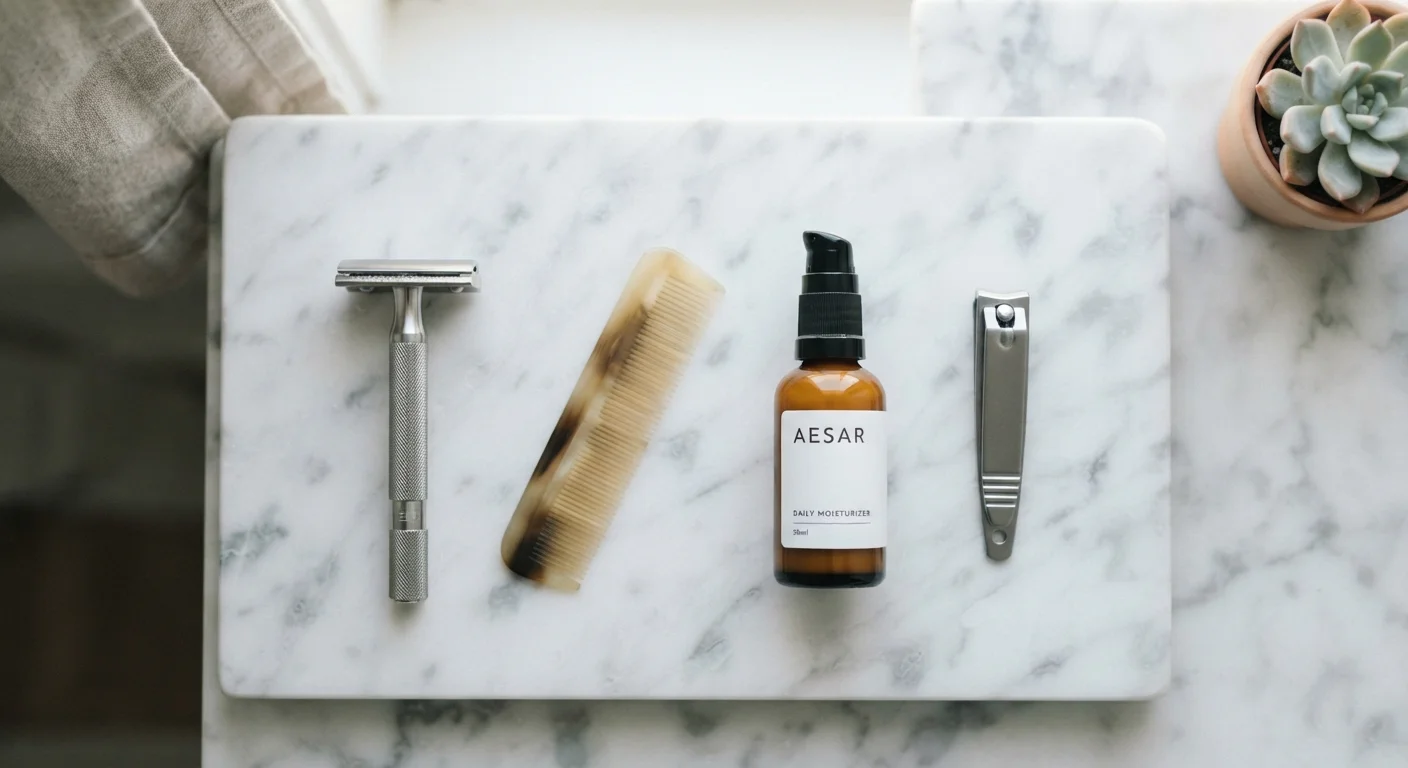
Photo credit: SnippetColumns.com | Easy Search, Reliable Information
In this article
Paring your routine down to the essentials saves time and money — but there are trade-offs. Here's an honest look at what you gain and lose.
Key Takeaways
- A minimalist grooming kit typically includes only four to six core tools covering daily essentials.
- Simplifying your kit saves money and reduces decision fatigue without sacrificing a polished appearance.
- The trade-off is reduced flexibility — specialized needs may require additional products outside the core kit.
- Minimalism works best when you know your skin type, hair texture, and grooming priorities in advance.
Saves money by eliminating redundant products
Maintaining four to six core items rather than fifteen reduces recurring spend significantly. Multi-functional products — such as a moisturizer with built-in SPF — reduce both cost and cabinet clutter.
Cuts morning routine time substantially
Fewer steps mean less time in front of the mirror. A pared-back routine can realistically be completed in under five minutes, freeing up time without sacrificing a polished result.
Reduces decision fatigue every day
When your kit contains only essentials, there's no choice paralysis about what to reach for. Routine becomes automatic, which research in behavioral psychology associates with stronger habit formation.
Easier to maintain consistent habits
Simpler routines have lower barriers to entry, making it easier to follow through daily. Consistency, not complexity, drives most of the visible results in grooming and skincare.
Ideal for travel and on-the-go lifestyles
A minimal kit fits into a small dopp bag and passes carry-on liquid restrictions with ease. There's no need to curate a separate travel kit when your everyday kit is already compact.
Limited flexibility for specific skin or hair concerns
Targeted concerns — such as hyperpigmentation, persistent dryness, or scalp issues — typically require dedicated products. A generic moisturizer or shampoo may not address them effectively.
Multi-purpose products can underperform specialists
An all-in-one cleanser-moisturizer rarely performs as well as dedicated formulations for each step. Compromising on product performance to reduce item count can produce underwhelming results.
Requires accurate self-knowledge to set up correctly
Choosing the right minimal items demands a clear understanding of your skin type, hair texture, and grooming priorities — knowledge that takes time and sometimes trial and error to develop.
May not suit those with active skincare goals
If you're working toward a specific outcome — such as reducing acne or addressing razor bumps — you'll likely need more than the basics. Minimalism can conflict with goal-oriented skincare plans.
What a Minimalist Grooming Kit Actually Looks Like
A minimalist grooming kit isn't about deprivation — it's about intention. Instead of a shelf crowded with single-use products, you distill your routine down to a handful of multi-functional essentials: typically a gentle cleanser, a moisturizer with SPF, a reliable razor or trimmer, a comb or brush suited to your hair type, and a nail clipper. That's roughly five items covering the most visible grooming needs.
The philosophy borrows from the broader minimalist movement — eliminate what doesn't serve a clear purpose. Applied to grooming, it means every item earns its place by doing real work daily. If you're building a routine from scratch, see our foundational grooming guide for a step-by-step starting point.
Saves money by eliminating redundant products
Maintaining four to six core items rather than fifteen reduces recurring spend significantly. Multi-functional products — such as a moisturizer with built-in SPF — reduce both cost and cabinet clutter.
Cuts morning routine time substantially
Fewer steps mean less time in front of the mirror. A pared-back routine can realistically be completed in under five minutes, freeing up time without sacrificing a polished result.
Reduces decision fatigue every day
When your kit contains only essentials, there's no choice paralysis about what to reach for. Routine becomes automatic, which research in behavioral psychology associates with stronger habit formation.
Easier to maintain consistent habits
Simpler routines have lower barriers to entry, making it easier to follow through daily. Consistency, not complexity, drives most of the visible results in grooming and skincare.
Ideal for travel and on-the-go lifestyles
A minimal kit fits into a small dopp bag and passes carry-on liquid restrictions with ease. There's no need to curate a separate travel kit when your everyday kit is already compact.
The Real Advantages of Going Minimal
Stripping back your kit isn't just tidier — it produces concrete practical benefits that compound over time.
5 min
Average daily routine with a minimal kit
Grooming professionals generally estimate a pared-back daily routine — cleanse, moisturize, and groom — can be completed in under five minutes when products are pre-selected.
~60%
Reduction in product count vs. full routine
Moving from a typical 10–15 product setup to a curated 5-item kit represents roughly a 60% reduction in the number of decisions and purchases required each month.
Fewer products mean a faster morning routine, a lighter travel bag, and a smaller recurring spend. Decision fatigue — the mental drain of choosing between too many options — is a real phenomenon, and a streamlined kit eliminates it entirely. You reach for the same reliable tools each day without second-guessing yourself. For those juggling packed schedules, this consistency is itself a form of self-care. Time-smart grooming habits and a minimal kit pair particularly well together.
Where the Minimalist Approach Falls Short
Honest minimalism means acknowledging what the approach can't do. Not every grooming need fits neatly into five products, and forcing it can mean under-serving real skin or hair concerns.
Limited flexibility for specific skin or hair concerns
Targeted concerns — such as hyperpigmentation, persistent dryness, or scalp issues — typically require dedicated products. A generic moisturizer or shampoo may not address them effectively.
Multi-purpose products can underperform specialists
An all-in-one cleanser-moisturizer rarely performs as well as dedicated formulations for each step. Compromising on product performance to reduce item count can produce underwhelming results.
Requires accurate self-knowledge to set up correctly
Choosing the right minimal items demands a clear understanding of your skin type, hair texture, and grooming priorities — knowledge that takes time and sometimes trial and error to develop.
May not suit those with active skincare goals
If you're working toward a specific outcome — such as reducing acne or addressing razor bumps — you'll likely need more than the basics. Minimalism can conflict with goal-oriented skincare plans.
If you deal with oily skin, dandruff, or coarse beard growth, a purely generic kit may not address those conditions adequately. A single all-purpose moisturizer, for example, isn't a substitute for a targeted treatment when one is genuinely needed. Similarly, hair removal choices — whether shaving, waxing, or trimming — each have distinct tool and aftercare requirements that a bare-bones kit may not fully support. Our hair removal comparison can help you figure out which method fits your needs before deciding how minimal you can realistically go.
Minimalism Isn't One-Size-Fits-All
What counts as 'minimal' varies by individual. Someone with a shaved head and clear skin may need just three products; someone managing a beard and oily skin may need seven. The principle is eliminating what's genuinely unnecessary — not hitting a specific product count. Review beauty basics for guidance on building a routine matched to your actual needs.
Making a Minimalist Kit Work Long-Term
The durability of a minimalist grooming kit depends on honest self-assessment upfront. Audit your actual routine — not the aspirational one — and identify which steps you complete every single day versus which products you've used twice and forgotten. That's your true baseline.
A weekly grooming reset is a useful habit alongside a minimal kit: a brief Sunday check-in to replenish supplies, clean tools, and catch anything the daily routine missed. Over time, you'll refine the kit to exactly what your lifestyle requires — no more, no less. For a deeper look at what each daily step actually accomplishes, the anatomy of a daily grooming routine breaks it down clearly. The goal isn't the fewest possible items — it's the right items, used consistently.

Author
Style & Beauty Editorial Team
Style & Beauty Editorial Team is the collective byline for our editorial team and contributor network. Articles published under this byline or an editorial pen name are researched, written, and reviewed according to our editorial standards for clarity, consistency, and independence before publication.
View all articles →