
What SPF Numbers Actually Tell You (And What They Don't)
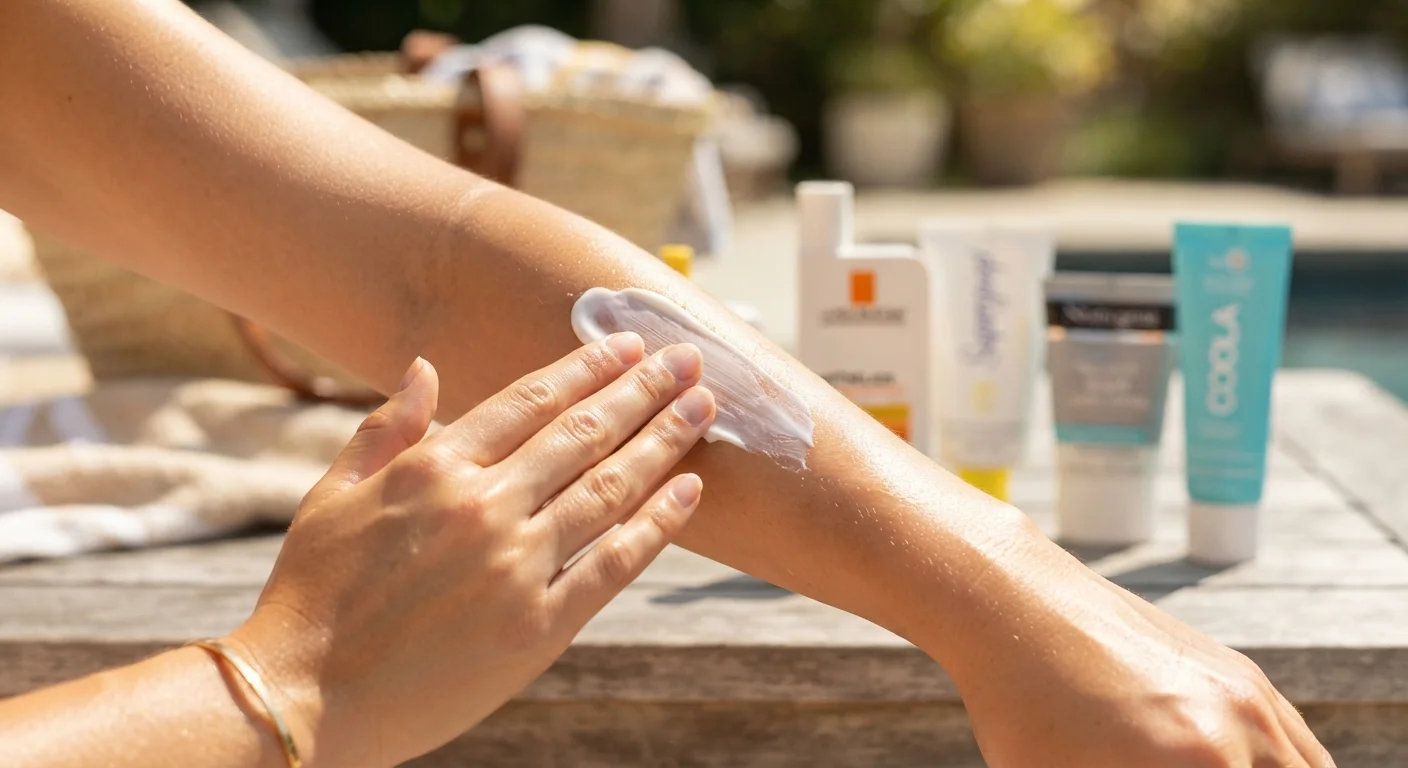
Photo credit: SnippetColumns.com | Easy Search, Reliable Information
In this article
SPF 50 isn't twice as protective as SPF 25. Understand what sunscreen ratings mean, how to apply correctly, and what the labels don't explain.
Key Takeaways
- SPF measures UVB protection only — not UVA rays, which also damage skin.
- SPF 50 blocks about 98% of UVB rays; SPF 100 blocks roughly 99% — a small real-world difference.
- Applying too little sunscreen is the most common reason it underperforms, regardless of SPF rating.
- No sunscreen is truly waterproof — 'water resistant' ratings have defined time limits.
- Broad-spectrum labeling is required for a product to claim UVA protection.
The Math Behind the Number
The SPF (Sun Protection Factor) number on a sunscreen label measures how much longer it takes for UVB radiation to redden treated skin compared to unprotected skin — under controlled lab conditions. SPF 30 doesn't mean you get 30 times more time outdoors unharmed; it means the filter theoretically blocks about 97% of UVB rays. SPF 50 blocks approximately 98%. SPF 100 reaches around 99%.
That gap between 97% and 99% sounds trivial, but for people with fair skin, certain skin conditions, or prolonged outdoor exposure, those extra filtered rays can matter. Still, no sunscreen blocks 100% of UV radiation, and lab results don't automatically translate to field performance — which is where understanding application becomes just as important as choosing a number.
For a deeper look at how UV exposure accumulates over time, see what daily SPF use does for your skin long-term.
Myth
SPF 50 is twice as protective as SPF 25, so doubling the number doubles your protection.
Fact
SPF protection increases logarithmically, not linearly. SPF 25 blocks about 96% of UVB; SPF 50 blocks about 98% — a modest real-world difference.
The SPF scale is not linear. Moving from SPF 15 (93% UVB blocked) to SPF 30 (97%) is a meaningful jump; moving from SPF 50 to SPF 100 adds only about 1 percentage point of additional UVB filtration. Marketing that implies proportional doubling of protection misrepresents how the rating system actually works.
Myth
A high SPF means you're fully protected and can stay in the sun all day without reapplying.
Fact
No SPF rating extends indefinitely. Sunscreen degrades with UV exposure, sweat, and contact — reapplication every two hours is the standard recommendation.
SPF is measured under static lab conditions, not across a full day of outdoor activity. UV filters break down over time, and physical activity removes product through sweat and contact. The American Academy of Dermatology recommends reapplying every two hours, or immediately after swimming or toweling off, regardless of SPF level.
Myth
SPF protects against all types of UV radiation.
Fact
SPF measures UVB protection only. UVA protection requires a separate "broad-spectrum" designation, which must meet FDA testing standards.
UVB rays are the primary cause of sunburn and are strongly linked to skin cancer. UVA rays penetrate more deeply, accelerate visible skin aging, and are also associated with cancer risk. A high SPF number provides no information about UVA filtration — only the broad-spectrum label addresses that gap.
Myth
"Water resistant" sunscreen doesn't need to be reapplied after swimming.
Fact
Water resistance is time-limited — 40 or 80 minutes depending on the product — after which protection degrades and reapplication is required.
The FDA defines water resistance strictly: products must maintain their labeled SPF after 40 or 80 minutes of water exposure, and the label must state which. After that window — or after towel-drying, which physically removes product — protection is significantly reduced. "Waterproof" is not a permitted claim under current U.S. FDA regulations because no sunscreen is permanent.
Myth
Applying a higher SPF compensates for using less product.
Fact
Applying too little sunscreen reduces effective protection regardless of SPF. The amount matters as much as the number on the label.
SPF ratings are determined using 2 mg of product per square centimeter of skin. Research suggests most people apply between 0.5 and 1 mg per square centimeter — roughly a quarter to half the test amount. Under-application can reduce a product's effective SPF dramatically. A general guideline often cited by dermatologists is about one ounce (a shot glass worth) for full-body coverage, and a nickel-sized amount for the face alone.
What SPF Doesn't Cover
The most important thing SPF doesn't measure: UVA rays. UVB rays cause sunburn and are directly linked to some skin cancers. UVA rays penetrate deeper, contribute to photoaging, and are also associated with skin cancer risk. An SPF 50 product with no UVA protection leaves a significant gap.
In the U.S., the FDA requires a product to earn a "broad-spectrum" designation before it can claim UVA protection on the label. That designation requires a specific test showing the UVA protection is proportional to UVB protection. When shopping, look for "broad-spectrum" alongside the SPF number — it's not implied by the number alone.
Don't Rely on SPF in Makeup Alone
Many foundations and moisturizers include an SPF rating, but they're typically applied in much smaller quantities than dedicated sunscreen — meaning the actual protection delivered is well below the stated number. Dermatologists generally recommend using a standalone broad-spectrum sunscreen underneath SPF-containing cosmetics rather than relying on makeup as your primary UV defense.
Understanding the ingredients behind that protection is equally useful. Our guide on decoding skincare ingredient labels explains how to read what's actually in your sunscreen. And if you're weighing formulation types, physical vs. chemical sunscreen differences breaks down how each type works at the skin level.
Application Is Where Most Protection Is Lost
Lab SPF testing uses 2 milligrams of product per square centimeter of skin. Most people apply closer to half that amount. The practical result: an SPF 50 product applied too thinly may perform closer to SPF 15 in real conditions. The solution isn't necessarily a higher SPF number — it's applying a sufficient, even layer and reapplying every two hours during sun exposure.
~50%
How much sunscreen most people actually apply
Research indicates the average person applies roughly half the amount of sunscreen used in SPF laboratory testing, significantly reducing real-world protection.
97%
UVB rays blocked by SPF 30
SPF 30 filters approximately 97% of UVB radiation under controlled conditions, while SPF 50 filters about 98% — a difference of one percentage point.
"Water resistant" labels are another common source of confusion. The FDA permits this claim only when a product maintains its SPF after 40 or 80 minutes of water immersion (the label must specify which). No sunscreen is permanently waterproof. After swimming or heavy sweating, reapplication is necessary regardless of the rating on the bottle.
This article is for general informational and educational purposes only and is not a substitute for professional medical or dermatological advice. Consult a qualified healthcare provider for guidance specific to your skin type, health conditions, or concerns.

Author
Style & Beauty Editorial Team
Style & Beauty Editorial Team is the collective byline for our editorial team and contributor network. Articles published under this byline or an editorial pen name are researched, written, and reviewed according to our editorial standards for clarity, consistency, and independence before publication.
View all articles →