
Scenic Routes vs. Interstates: Choosing the Right Road for Your Journey
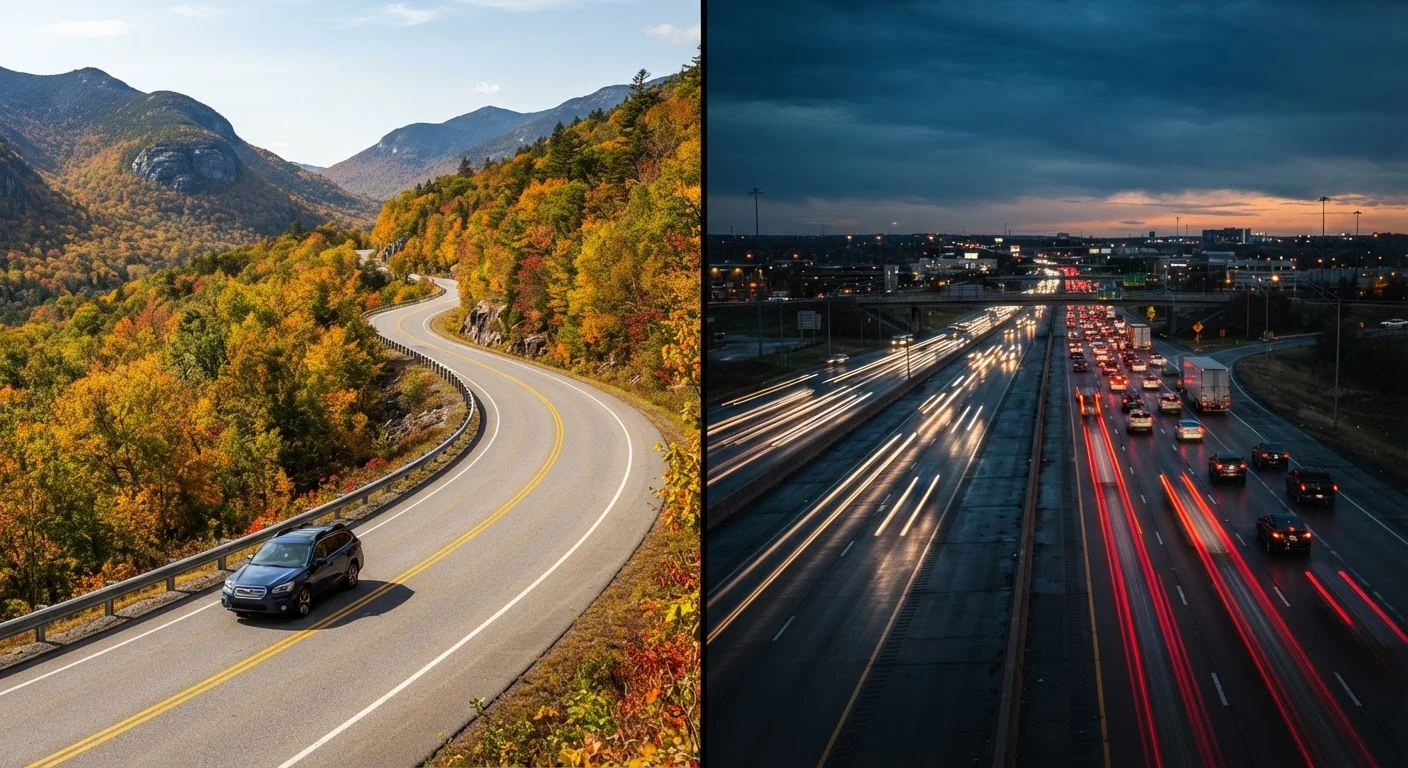
Photo credit: SnippetColumns.com | Easy Search, Reliable Information
In this article
Weighing time, fuel, safety, and experience — here's how to decide between taking the highway or the road less traveled on your next trip.
Key Takeaways
- Interstates are faster and more fuel-predictable; scenic routes add time but often add meaningful experience.
- Scenic roads can be harder on vehicles — narrower lanes, sharper grades, and fewer service options demand more preparation.
- Interstate infrastructure (rest stops, gas stations, emergency services) is denser and more consistent nationwide.
- Mixing both route types is often the most practical strategy for longer trips.
- Your vehicle condition, passenger needs, and schedule tolerance should all influence the decision.
What You're Really Choosing Between
Picking a route isn't just a map decision — it's a statement about what you want from the drive. Interstate highways are engineered for throughput: wide lanes, gentle grades, controlled access, and services spaced at regular intervals. Scenic routes — including designated state and federal byways — prioritize landscape and local character over speed.
Neither is universally better. The right choice depends on your schedule, your passengers, your vehicle's condition, and honestly, your temperament behind the wheel. For a fuller picture of how route choice fits into the bigger planning picture, see the complete road trip planning framework.
| Criterion | Scenic Routes | Interstate Highways |
|---|---|---|
| Average travel speed | 35–55 mph typical | 65–75 mph typical |
| Fuel efficiency | Lower — grades and stops | Higher — steady cruising |
| Service station frequency | Sparse; plan ahead | Dense; every 20–40 miles |
| Emergency response access | Limited in remote areas | Faster; better coverage |
| Toll costs | Usually none | Common in many regions |
| Navigation complexity | Higher; GPS less reliable | Simple; well-signed |
| Experience and scenery | High — core appeal | Minimal; functional |
| Driver fatigue type | Physical — curves, hills | Mental — monotony |
Time, Fuel, and the Real Cost of Going Scenic
The time gap between an interstate and a parallel scenic route can be significant. A route that adds 40 miles of two-lane mountain road doesn't just cost those extra miles — lower average speeds (often 35–50 mph versus 70+ mph on interstates) can double travel time on that segment.
Fuel efficiency also shifts. Stop-and-go through small towns, steep grades, and frequent acceleration from scenic pullouts all affect your miles per gallon. Drivers accustomed to steady highway cruising are sometimes surprised how quickly fuel costs climb on winding routes. The breakdown of road trip costs covers fuel, tolls, and other expenses worth building into your plan before you leave.
~30%
Fuel economy drop on hilly scenic roads
The U.S. Department of Energy notes aggressive grades and frequent speed changes can reduce fuel economy by roughly 15–30% compared to steady highway driving.
2x+
Time increase on parallel scenic segments
Speed limits and road geometry on designated scenic byways often result in travel times more than double that of an adjacent interstate on the same corridor.
Tolls are another variable. Many interstates — especially in the Northeast and Midwest — carry toll fees that scenic alternatives avoid entirely. Factor that in both directions.
Safety, Services, and What Happens When Something Goes Wrong
Interstates are statistically among the safest road types in the U.S. — controlled access eliminates intersections, and breakdown response times are faster due to highway patrol coverage and denser tow infrastructure. Scenic routes, by contrast, can leave a disabled vehicle miles from the nearest town with spotty cell reception.
That doesn't make scenic routes inherently dangerous, but it raises the preparation bar. Before taking a remote byway, confirm your spare tire is in good shape, carry a basic emergency kit, and check whether your roadside assistance plan covers rural areas. The car maintenance hub is a useful reference for pre-trip vehicle checks.
Check Road Conditions Before You Go
Many scenic routes — particularly those through mountains, national parks, or coastal areas — are subject to seasonal closures, weight restrictions, or weather-related hazards. State DOT websites and the National Park Service post current road conditions. Verifying conditions 24–48 hours before departure can prevent a wasted detour or a genuinely hazardous situation. This step is especially important in spring (snow melt, flooding) and late fall (early closures).
Navigation is also more demanding on scenic roads. GPS can misread rural roads or suggest unpaved shortcuts — especially in mountainous or heavily forested areas. A backup plan matters. The comparison of navigation tools explains where apps and devices each fall short.
When to Mix Both — and How to Plan It
Most experienced road trippers don't treat this as either/or. A common strategy: use interstates to cover long, featureless stretches efficiently, then exit onto scenic byways when approaching a destination or during a dedicated exploration day.
This hybrid approach works well for multi-day trips where one day is dedicated to getting somewhere and another is reserved for immersion. It also reduces driver fatigue — interstate monotony is real, and short scenic detours can reset your alertness without sacrificing your overall schedule.
If you're working out overnight stops along your route, the lodging comparison for road trippers and the common planning mistakes to avoid are both worth a read before you finalize your itinerary. Decision fatigue around route choices is real — the strategies for beating decision fatigue hub offers practical frameworks for simplifying complex choices before you hit the road.

Author
Autos & Driving Editorial Team
Autos & Driving Editorial Team is the collective byline for our editorial team and contributor network. Articles published under this byline or an editorial pen name are researched, written, and reviewed according to our editorial standards for clarity, consistency, and independence before publication.
View all articles →