
Overnight Road Trip Lodging: Camping, Motels, and Rest Stops Side by Side
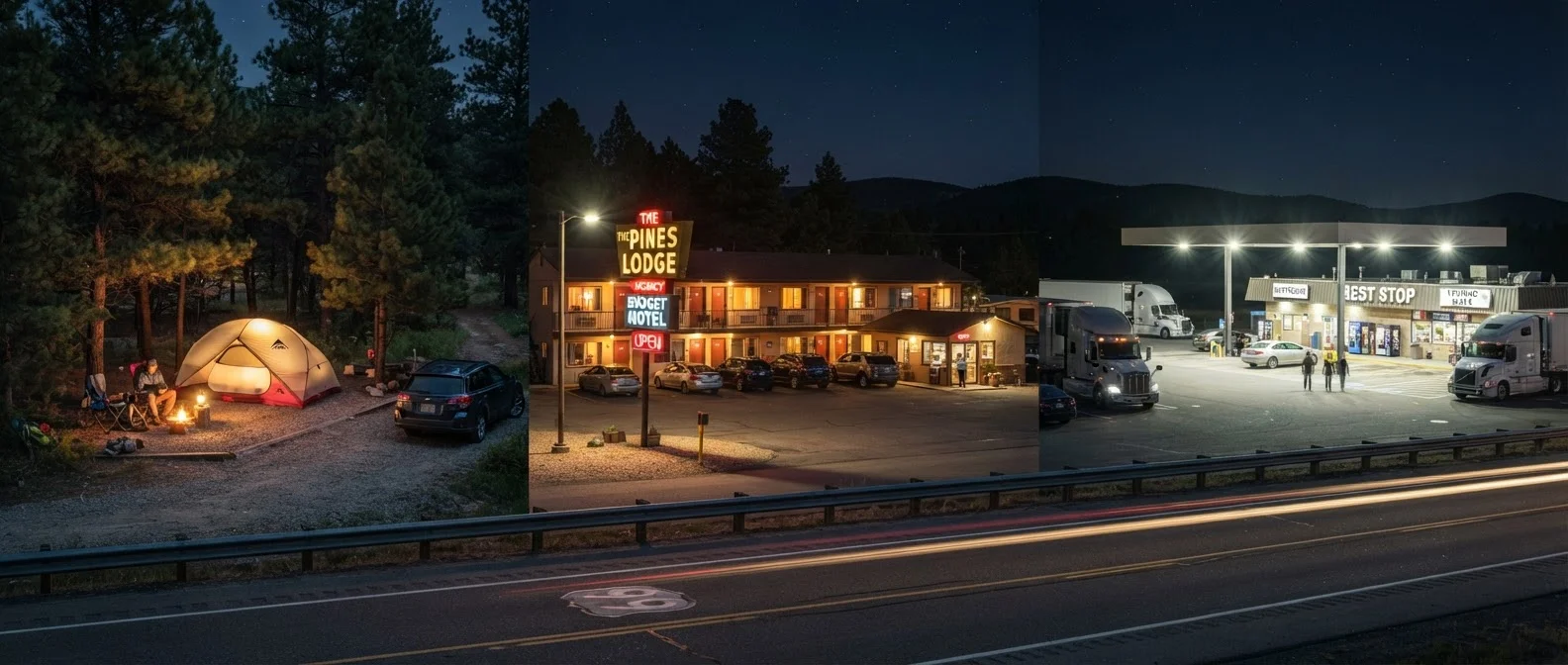
Photo credit: SnippetColumns.com | Easy Search, Reliable Information
In this article
Compare the trade-offs of campgrounds, budget motels, and highway rest areas for overnight stops on a long-distance drive.
Key Takeaways
- Campgrounds offer the lowest nightly cost but require gear, planning, and tolerance for limited amenities.
- Budget motels provide a private bed and shower for moderate cost, though quality varies significantly by location.
- Highway rest stops are free and legal for short naps but are not designed or safe for full overnight stays.
- Families with children and solo drivers each have distinct safety and comfort priorities when choosing where to stop.
- Booking lodging in advance — especially near popular routes — prevents late-night scrambles and inflated walk-in rates.
Why Your Overnight Choice Shapes the Whole Trip
Where you sleep on a long-distance drive is more than a cost line item — it affects how alert you are the next morning, how well your passengers hold up, and whether the trip feels like an adventure or an ordeal. For a fuller framework on building every stage of your journey, see the complete road trip planning framework.
The three most accessible overnight options for everyday American road trippers are campgrounds, budget motels, and highway rest stops. Each occupies a different point on the spectrum of cost, comfort, safety, and logistical effort. Understanding those trade-offs before you leave home — not at 11 p.m. when you're exhausted — is what separates a well-planned trip from a stressful one.
| Campgrounds | Budget Motels | Rest Stops | |
|---|---|---|---|
| Typical nightly cost | $15–$45 (or free) | $60–$120 | Free |
| Advance booking required | Often yes, especially peak season | Recommended; walk-in possible | No reservation needed |
| Privacy | Moderate (shared campground) | High (private room) | Very low (public area) |
| Shower/bathroom access | Varies by site (often shared) | Yes, private | Restrooms only, no shower |
| Gear or equipment needed | Yes — tent, sleeping bag, pad | None | None |
| Overnight stay legality | Yes, within posted rules | Yes | Typically limited to 2–4 hours |
| Safety considerations | Generally safe at developed sites | Varies by motel and location | Variable; assess lighting and traffic |
| Sleep quality | Good with proper gear | Good to very good | Poor for full-night rest |
Campgrounds: Lowest Cost, Highest Preparation
Developed campgrounds — whether in national forests, state parks, or private campground networks — typically run between $15 and $45 per night for a basic tent or RV site, making them the most affordable option for multi-night trips. Some dispersed camping on public land is free, though it demands navigation skills and self-sufficiency.
The catch is upfront investment: a tent, sleeping bags rated for ambient temperatures, a sleeping pad, and cooking supplies add real cost and trunk space. If you already own the gear, campgrounds are hard to beat on value. If you don't, the math shifts quickly.
Reservation systems for popular sites — especially near national parks or along heavily traveled summer corridors — can fill weeks or months in advance. Walk-up availability is increasingly rare at desirable locations. Facilities range from full hookups with showers and laundry to a pit toilet and a fire ring, so verify amenities before you commit.
Book Campground Sites Early on Popular Routes
High-demand campgrounds along routes near national parks or scenic corridors routinely fill weeks in advance, particularly from Memorial Day through Labor Day. Check reservation systems when you plan your route, not the week before you leave. A confirmed site also means you arrive with a clear destination rather than searching for alternatives after dark.
For families managing kids on long drives, a campground with a playground or open space can double as a genuine activity stop, not just a place to sleep. See keeping kids comfortable on multi-day drives for strategies that pair well with outdoor overnight stops.
Budget Motels: Reliable Rest, Variable Quality
A budget motel delivers what campgrounds cannot: a locked door, a real bed, a private bathroom, and climate control. For most travelers, especially those driving consecutive long days, that translates directly into better rest and safer driving the next morning.
Nightly rates at budget-tier highway motels generally range from $60 to $120 depending on region, season, and proximity to interstates. Rates tend to spike near major attractions, during holiday weekends, and along routes with limited competition — all reasons to book ahead rather than walk in.
Quality is the persistent wildcard. A motel that looks fine on a third-party booking site can turn out to be poorly maintained. Reading recent traveler reviews focused on cleanliness and noise level — not just overall score — is a practical filter. Asking for a room away from the highway or ice machine costs nothing and can make a noticeable difference in sleep quality.
Lodging costs are one of the places road trip budgets most often overrun expectations. The breakdown of road trip costs offers a realistic look at where overnight spending tends to exceed projections.
Walk-In Motel Rates Can Spike Unexpectedly
Budget motels along heavily traveled interstates sometimes charge significantly more for walk-in guests than for advance bookings, particularly during holiday weekends or when nearby events drive regional demand. Locking in a rate ahead of time removes one more variable from a long driving day. If your plans are flexible, build a cancellation-friendly booking into your strategy rather than relying on availability when you arrive.
Rest Stops: Free, But Not a Sleep Solution
Highway rest areas serve a legitimate and important purpose: giving drowsy drivers a safe place to pull over and take a short nap. The National Highway Traffic Safety Administration recognizes drowsy driving as a significant crash risk factor, and a 20–30 minute rest can meaningfully improve alertness for the next stretch of road.
What rest stops are not designed for is a full night of sleep. Most rest areas post signs limiting stays to two to four hours. Overnight security is inconsistent — some busy interstate rest stops are well-lit and patrolled; others are isolated and poorly monitored. Solo travelers and families with children should weigh personal safety carefully before planning any extended stop at a rest area after dark.
Facilities are typically limited to restrooms, vending machines, and sometimes a dog walk area. There is no shower, no privacy, and no reliable temperature control in extreme weather. Think of rest stops as a tool for managing fatigue mid-drive, not as a lodging substitute.
Solo drivers, who carry added vulnerability when stopping alone at night, will find additional safety considerations in solo road trip safety considerations.
~100,000
Drowsy driving crashes annually in the U.S.
The NHTSA estimates roughly 100,000 police-reported crashes each year involve drowsy driving, underscoring the importance of genuine rest stops.
20–30 min
Recommended nap length for alertness
Sleep researchers generally suggest a short nap of 20 to 30 minutes improves alertness without causing post-sleep grogginess (sleep inertia).
Making the Call Before You Hit the Road
The best overnight strategy often combines options across a multi-night trip rather than committing to one type throughout. A campground early in the route when you're energetic and the gear is fresh, followed by a motel night when you need guaranteed rest before a demanding driving day, is a common and practical hybrid approach.
A few decision rules worth applying: if you're driving with children or have an early-morning commitment the next day, prioritize the motel — the certainty of a private, quiet room is worth the extra cost. If you're flexible, already have gear loaded, and the weather cooperates, a campground reservation booked in advance cuts your lodging spend significantly over a week-long trip.
Either way, confirm your overnight plan before departure — not on the road. Routes and availability for both campgrounds and budget motels can be mapped during the planning phase alongside your navigation choices. The road trip navigation comparison is a useful companion piece when building your overall route. And for a consolidated view of where overnight spending fits into the full trip budget, the everyday money tips hub offers broader spending context.

Author
Autos & Driving Editorial Team
Autos & Driving Editorial Team is the collective byline for our editorial team and contributor network. Articles published under this byline or an editorial pen name are researched, written, and reviewed according to our editorial standards for clarity, consistency, and independence before publication.
View all articles →