
Whole Foods vs. Processed Foods: What the Difference Really Means
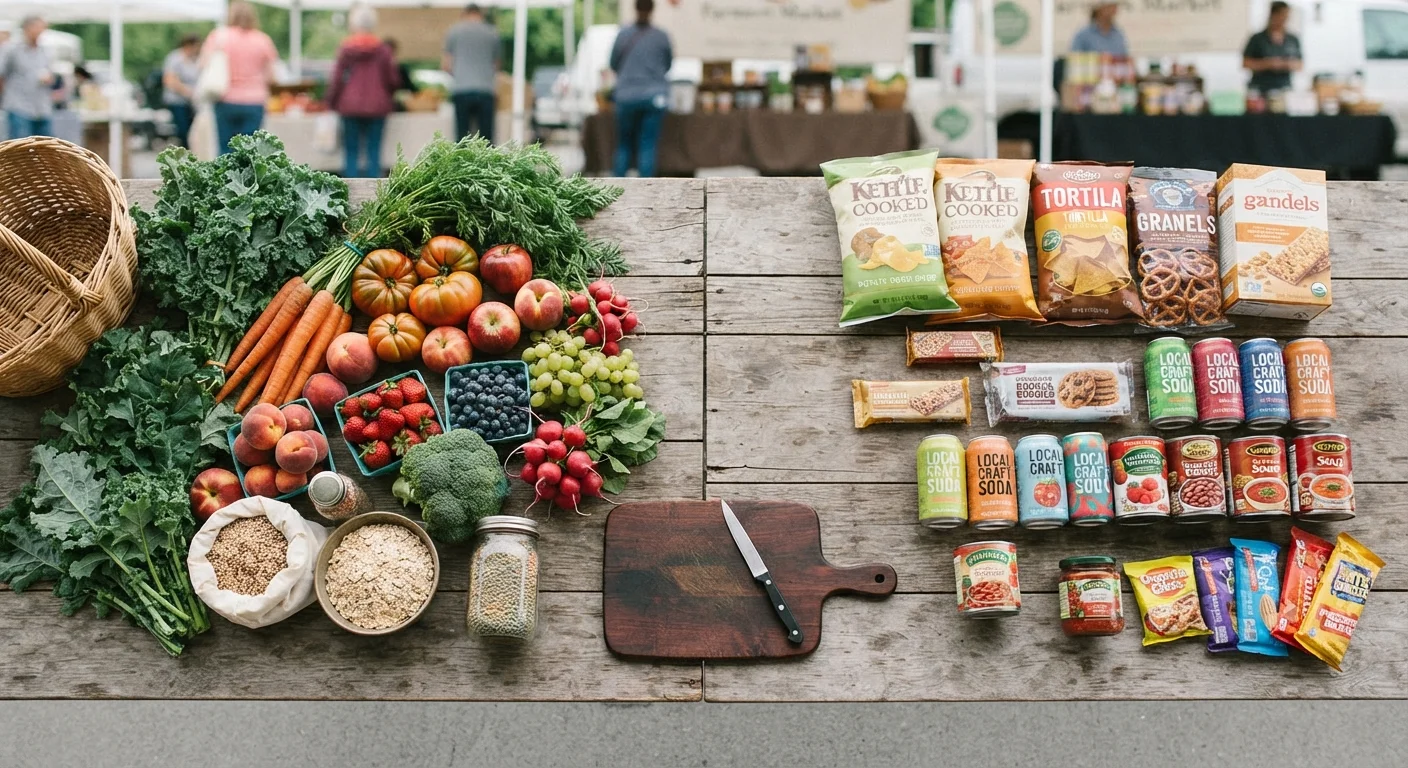
Photo credit: SnippetColumns.com | Easy Search, Reliable Information
In this article
Not all processing is equal, and not all whole foods are superior. A clear-eyed look at what these labels mean and why the line is blurry.
Key Takeaways
- Processing exists on a spectrum; not all processed foods are nutritionally equal.
- Ultra-processed foods — engineered with additives and refined ingredients — are the category most linked to health concerns.
- Many minimally processed foods, like canned beans or frozen vegetables, retain strong nutritional value.
- Whole foods generally provide more fiber, vitamins, and minerals per calorie than heavily processed alternatives.
- Reading ingredient lists is a practical tool for assessing how processed a product really is.
- A sustainable, health-supporting diet can include both whole and some processed foods.
What 'Whole' and 'Processed' Actually Mean
The terms whole foods and processed foods are everywhere in nutrition conversations, but they're often used imprecisely. A whole food is one consumed close to its natural state — think an apple, a handful of oats, or a piece of salmon. Processing, in contrast, refers to any deliberate change made to a food before it reaches your plate: washing, freezing, canning, milling, or adding ingredients.
By that definition, almost every food you buy has been processed in some way. The more useful distinction is how much processing occurred and what was added or removed in the process. Nutrition researchers often use the NOVA classification, which groups foods into four categories ranging from unprocessed or minimally processed (fresh fruit, plain meat) to ultra-processed (packaged snacks, sugary drinks, reconstituted meat products).
Ultra-processed foods are the category most consistently linked to health concerns in the research literature. They typically contain combinations of refined starches, added sugars, industrial fats, and additives — substances rarely found together in a kitchen — and are engineered to be highly palatable and easy to overconsume. That's meaningfully different from a bag of frozen peas, which is also technically processed.
NOVA Is a Research Tool, Not a Label
The NOVA classification system was developed by Brazilian nutrition researchers and is widely used in academic studies. It does not appear on food packaging, and no regulatory body formally mandates its use. It remains a useful framework for thinking about dietary patterns, but it's a starting point for education — not a strict prescription for every food choice.
Head-to-Head: How They Compare Nutritionally
Whole foods tend to deliver more fiber, vitamins, minerals, and phytochemicals per calorie. Because they haven't had nutrients stripped out or diluted by added fillers, they support satiety and provide a broader range of compounds that support overall health. That said, some processing genuinely improves nutrition — tomato paste has higher bioavailable lycopene than raw tomatoes; fortified cereals deliver iron and B vitamins to populations at risk of deficiency.
| Criterion | Whole Foods | Processed Foods |
|---|---|---|
| Fiber content | Generally high and intact | Often reduced or removed |
| Added sugars | None | Varies — absent to very high |
| Sodium | Naturally low | Often elevated, especially in packaged goods |
| Shelf life | Short — requires fresh sourcing | Extended — weeks to years |
| Convenience | Requires prep time | Ready-to-eat or quick to prepare |
| Cost accessibility | Can vary by season and location | Often lower cost per serving |
| Micronutrient density | High — naturally occurring | Variable — sometimes fortified |
The ingredient list is your most practical tool for assessing where a product falls on this spectrum. A short list of recognizable ingredients generally signals less processing; a long list of additives, emulsifiers, and flavor compounds signals more. For a deeper look at how to read those labels confidently, see Reading a Nutrition Label Without the Confusion. A related dynamic plays out on beauty product labels, too — marketing terms rarely match regulatory definitions.
Where the Line Gets Blurry — and What to Do About It
Rigid thinking about whole versus processed foods can make eating unnecessarily stressful. Canned beans, plain Greek yogurt, and frozen broccoli are all processed to some degree — and all remain nutritionally valuable. The goal isn't to eliminate processing but to be selective about which processed foods earn a regular spot in your diet.
A practical framework: favor foods where the processing preserved or enhanced nutrition (freezing, fermenting, plain canning) over foods where processing primarily added sugar, sodium, or refined carbohydrates while stripping fiber and micronutrients. Understanding the difference between natural and added sugars is one concrete skill that helps here — added sugar is one of the clearest signals that a product has moved toward ultra-processed territory.
57%
Share of U.S. calories from ultra-processed foods
Research published in BMJ Open estimated that ultra-processed foods account for more than half of total caloric intake among U.S. adults.
28%
Higher fiber intake among whole-food dieters
Studies comparing dietary patterns consistently find that diets centered on minimally processed foods deliver significantly more dietary fiber than those dominated by ultra-processed products.
If label-reading feels overwhelming, strategies for reducing decision fatigue at the grocery store can help you build simple habits that don't require scrutinizing every product. The broader skill of evaluating product quality applies just as much to food as it does to anything else you buy.
This article provides general nutrition information and education. It is not a substitute for personalized advice from a registered dietitian or qualified healthcare professional. Consult a healthcare provider before making significant changes to your diet, especially if you have a medical condition.

Author
Health & Wellness Editorial Team
Health & Wellness Editorial Team is the collective byline for our editorial team and contributor network. Articles published under this byline or an editorial pen name are researched, written, and reviewed according to our editorial standards for clarity, consistency, and independence before publication.
View all articles →