
Hair Care Stripped Back: What Shampoo and Conditioner Actually Do
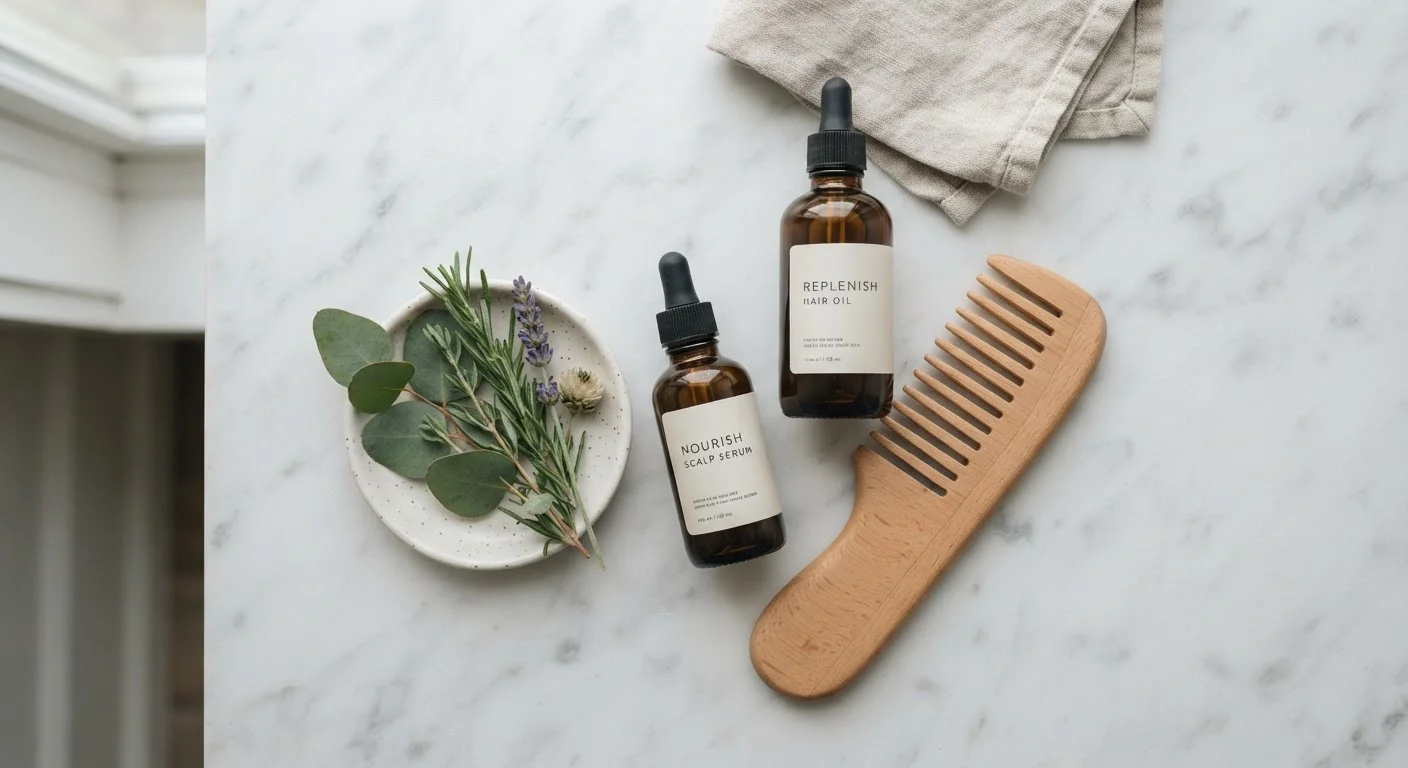
Photo credit: SnippetColumns.com | Easy Search, Reliable Information
In this article
Understanding the basic chemistry behind cleansing and conditioning helps you pick smarter — without being swayed by fancy claims.
Key Takeaways
- Shampoo cleans the scalp and hair by using surfactants to lift oils and debris.
- Conditioner works on the hair shaft, not the scalp — applying it to roots can cause buildup.
- Marketing terms like 'repairing' and 'strengthening' often describe surface-level cosmetic effects, not structural repair.
- Hair type, scalp condition, and wash frequency matter more than premium price points.
- Understanding basic ingredient functions helps you cut through label noise and spend smarter.
What Shampoo Actually Does — And Why It Matters
Strip away the marketing language and shampoo has one primary job: removing sebum, dead skin cells, environmental debris, and product residue from the scalp and hair. It accomplishes this through surfactants — molecules with a water-loving end and an oil-loving end that physically lift oils away from the hair fiber and scalp skin, allowing them to be rinsed out with water.
The lather you see is largely cosmetic. Foam is a byproduct of certain surfactants and does not correlate with cleaning power. Low-lather sulfate-free formulas can cleanse just as effectively for many people — they simply feel different in use.
Where most consumers go wrong is focusing product choice on the strand rather than the scalp. Because shampoo is meant primarily for the scalp, that's where your attention — and the product — should be concentrated. For more on why scalp condition is often the overlooked driver of hair health, see our article on scalp health fundamentals.
Focus Your Shampoo on the Scalp
Apply shampoo primarily to the scalp and roots, where oil and buildup accumulate. Let the lather rinse through the lengths as you wash out — this provides enough cleansing for the mid-shaft and ends without unnecessary stripping. Over-massaging shampoo into already-dry ends can contribute to roughness and breakage over time.
What Conditioner Does — And Where to Actually Apply It
After surfactants cleanse the hair, the outer cuticle layer can be left slightly roughened and the hair fiber carries a mild negative electrical charge. Conditioner addresses both issues. Most formulas rely on cationic (positively charged) conditioning agents — ingredients like cetrimonium chloride or behentrimonium methosulfate — that are electrostatically attracted to the negatively charged hair, depositing a smoothing layer on the shaft.
This is why conditioner belongs on the mid-lengths and ends of hair, not the scalp. The scalp produces its own oils; adding conditioner there leads to buildup and excess oiliness. Older, drier sections of hair — typically the ends — benefit most from the emollients and humectants conditioner provides.
Claims like 'deep repair' and 'bond rebuilding' warrant scrutiny. A conditioner can smooth the cuticle and temporarily fill surface gaps with film-forming polymers, but it cannot restore chemically broken bonds inside the hair cortex. That distinction matters when you're evaluating whether a premium formula justifies its price.
~90%
Of conditioner's benefit delivered in first 30 seconds
Hair scientists note that most conditioning agent deposition occurs rapidly after application, meaning extended processing time offers diminishing returns for standard rinse-out formulas.
2–3x
Price premium for 'repair' labeling vs. standard formulas
Consumer market analyses consistently show significant price premiums for products marketed with repair or bond-rebuilding language, even when core ingredient lists are comparable.
Reading Labels Without Getting Fooled
Hair care labels are dense with terminology that sounds scientific but often reflects marketing priorities rather than clinical evidence. Ingredients are listed in descending order of concentration — the first five or six entries make up the bulk of the formula. If water and a surfactant are items one and two in a shampoo, that's accurate. If a featured botanical extract appears near the bottom, its actual concentration is likely minimal.
Terms like 'natural,' 'clean,' and 'salon-quality' have no standardized legal definitions in the U.S. cosmetics market. They signal brand positioning rather than performance. For a broader breakdown of how to interpret beauty product label language, our guide on reading beauty product labels critically walks through the most common claims worth questioning.
Understanding ingredient order and function gives you a reliable filter — one that works regardless of packaging, price point, or brand narrative. If you want to go deeper on ingredient terminology, skincare ingredients decoded offers a useful parallel framework for personal care products broadly.
Ingredient Lists Follow the Same Rules Across Categories
The FDA requires cosmetic ingredient lists to follow INCI (International Nomenclature of Cosmetic Ingredients) naming conventions and descending order by concentration. This means the same label-reading logic you apply to skincare applies equally to shampoos and conditioners. See our related guide on reading a skincare label for a deeper look at how ingredient order reveals formula priorities.
Matching Products to Your Hair — Without Overcomplicating It
Effective hair care doesn't require a multi-step regimen or specialized products for every concern. A few practical variables should drive your choices: how oily your scalp tends to be, how frequently you wash, and whether your hair has been chemically treated or heat-styled regularly.
Hair porosity — how readily your strands absorb and hold moisture — is another factor worth understanding, particularly if you struggle with persistent dryness, frizz, or product buildup despite trying multiple formulas. Our article on hair porosity explains how this structural characteristic shapes every wash-day outcome.
The goal is a routine that keeps your scalp balanced and your strands manageable — not one that requires constant product cycling or expensive upgrades. A gentle surfactant-based shampoo and a straightforward conditioning formula containing a cationic agent, an emollient, and a humectant will cover most people's needs reliably. Complexity, in this case, is rarely a feature.
This article is for general informational and educational purposes only. It does not constitute professional medical or dermatological advice. Consult a qualified healthcare or dermatology professional for concerns about scalp conditions or hair loss.
Frequently Asked Questions

Author
Style & Beauty Editorial Team
Style & Beauty Editorial Team is the collective byline for our editorial team and contributor network. Articles published under this byline or an editorial pen name are researched, written, and reviewed according to our editorial standards for clarity, consistency, and independence before publication.
View all articles →