
The Morning vs. Night Skincare Routine: What Belongs Where and Why
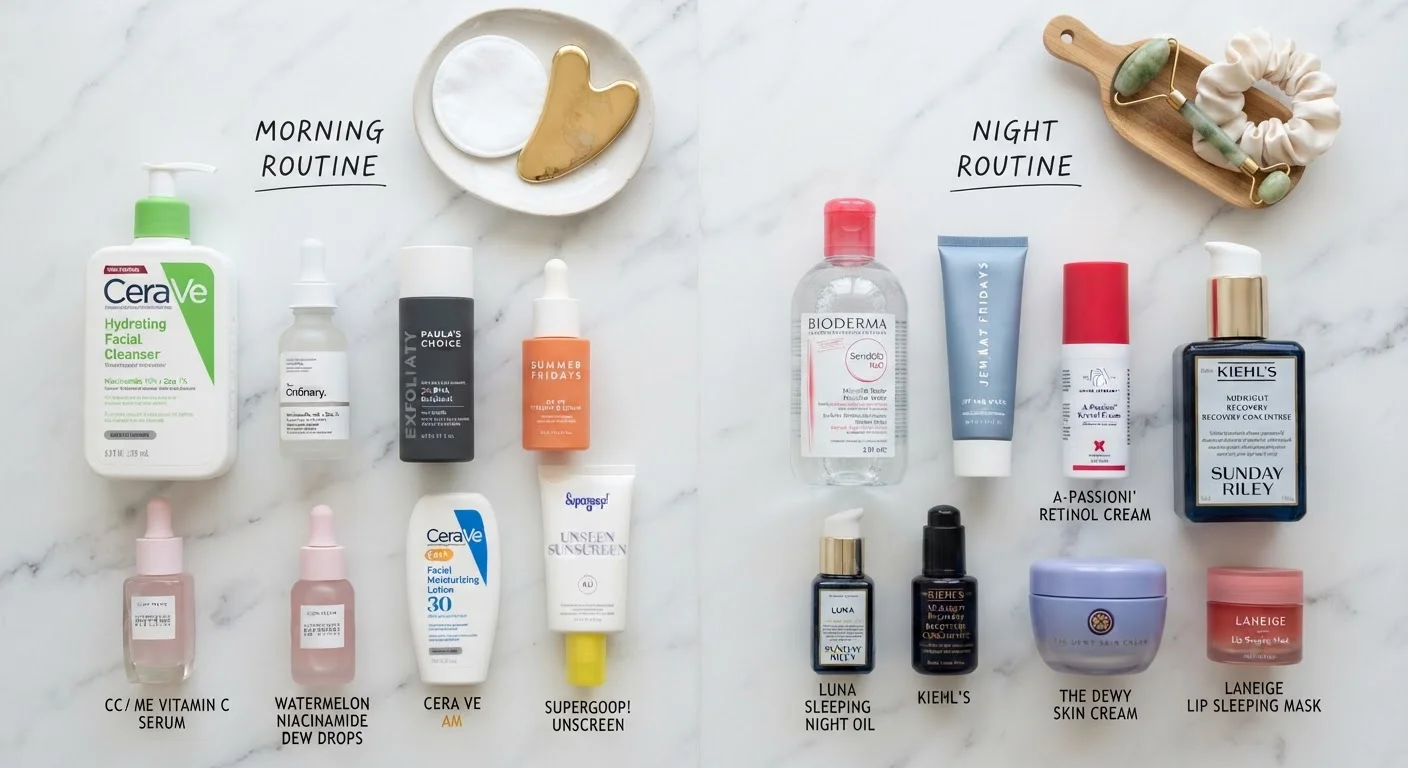
Photo credit: SnippetColumns.com | Easy Search, Reliable Information
In this article
Some ingredients work best at night; others are essential in the morning. This breakdown explains the logic behind AM and PM routines.
Key Takeaways
- Morning routines should prioritize protection from UV rays, pollution, and environmental stress.
- Night routines support repair and renewal — the skin's natural regeneration cycle peaks during sleep.
- Some active ingredients, like retinoids, degrade in sunlight or increase photosensitivity and belong at night.
- Sunscreen is a non-negotiable morning step and should never be swapped to an evening slot.
- Layering order matters as much as ingredient timing — lighter textures go on before heavier ones.
Why Timing Actually Matters in Skincare
Skincare marketing often treats morning and night routines as interchangeable — just wash your face and apply products twice a day. But the skin behaves differently depending on the time of day, and some ingredients can actively work against you if applied at the wrong time. Understanding the science behind AM versus PM application isn't about adding complexity — it's about getting more out of what you're already using.
During the day, skin acts as a barrier, defending against UV radiation, pollution, and oxidative stress. At night, it shifts into repair mode: cell turnover accelerates, collagen synthesis increases, and the skin becomes more permeable. These two states call for different support. For a broader look at how skincare fits into daily habits overall, see the full daily grooming framework.
The Morning Routine: Defense First
The priority in the morning is protection. That means a lightweight cleanse or rinse to remove overnight product residue and sebum, followed by a hydrating serum or moisturizer, and — without exception — a broad-spectrum SPF of at least 30. Sunscreen is the single most evidence-supported step in any daytime routine. Skipping it or pushing it to evening undermines every other product you apply.
Antioxidant serums, particularly those containing vitamin C (ascorbic acid), are well-suited to mornings. Applied before sunscreen, they can help neutralize free radicals that SPF alone doesn't fully address. Keep the morning routine relatively lean: too many actives layered before sun exposure can increase the risk of irritation or sensitization. If you're unsure what a particular ingredient does, this ingredient breakdown is a practical reference before you buy anything new.
Start With One Active, Not Several
If you're new to actives like retinol or exfoliating acids, introduce one at a time and give it four to six weeks before evaluating results. Layering multiple new ingredients at once makes it nearly impossible to identify what's helping — or what's causing irritation. Slow and steady produces clearer, more reliable outcomes.
What to skip in the morning: Retinoids, AHAs (alpha hydroxy acids), and BHAs (beta hydroxy acids) are better reserved for evening. These ingredients increase photosensitivity — meaning your skin becomes more vulnerable to UV damage when they're present. Applying them at night sidesteps that risk entirely.
The Night Routine: Repair and Renewal
Evening is when you can introduce your most potent ingredients. Retinoids — including retinol and prescription-strength retinoids — are the clearest example. They degrade when exposed to UV light and increase photosensitivity, making night the only practical time to use them. Dermatologists widely consider retinoids among the most evidence-backed ingredients for supporting skin cell turnover and addressing fine lines over time.
Exfoliating acids (AHAs like glycolic and lactic acid, BHAs like salicylic acid) also belong at night, for the same UV-sensitivity reason. After actives, a richer moisturizer or facial oil helps lock in hydration while the skin barrier does its overnight work. Those with oilier skin may still prefer a lighter night cream — richer doesn't automatically mean better for every skin type.
| Morning Routine | Night Routine | |
|---|---|---|
| Primary goal | Protection from UV and environmental damage | Repair, renewal, and active treatment |
| Cleanser type | Gentle rinse or mild cleanser | Thorough cleanse to remove sunscreen and buildup |
| Key ingredients | Vitamin C, niacinamide, SPF, light moisturizer | Retinoids, AHAs/BHAs, peptides, richer moisturizer |
| Sunscreen | Essential — final step before going out | Never needed — and counterproductive |
| Actives (retinoids, exfoliating acids) | Avoid — increase photosensitivity | Appropriate — work with skin's repair cycle |
| Routine length | Lean — 3 to 4 steps maximum | Slightly more layered — 3 to 5 steps |
If you're working with a packed schedule and can't commit to a full evening routine every night, these time-efficient grooming habits offer a realistic middle ground without sacrificing the essentials.
Building a Routine That Holds Up Long-Term
The AM/PM framework doesn't require an elaborate product lineup. A focused routine — three or four steps in the morning, three or four at night — outperforms an overcrowded shelf in practice. Consistency matters far more than volume. Rotating too many actives too frequently is one of the most common reasons people see minimal results despite spending money on products.
When reading labels to confirm timing, look for the ingredient's known photosensitivity profile and the recommended use instructions. Understanding how to read a skincare label can help you interpret those instructions without guesswork. If you're just establishing a routine from scratch, this no-fuss starting point walks through the fundamentals without overwhelming you.
This article is for general informational purposes only and does not constitute medical or dermatological advice. Consult a licensed dermatologist or healthcare provider for personalized skincare guidance, especially if you have a skin condition or are using prescription treatments.

Author
Style & Beauty Editorial Team
Style & Beauty Editorial Team is the collective byline for our editorial team and contributor network. Articles published under this byline or an editorial pen name are researched, written, and reviewed according to our editorial standards for clarity, consistency, and independence before publication.
View all articles →