
Exfoliation Explained: Physical vs. Chemical Methods
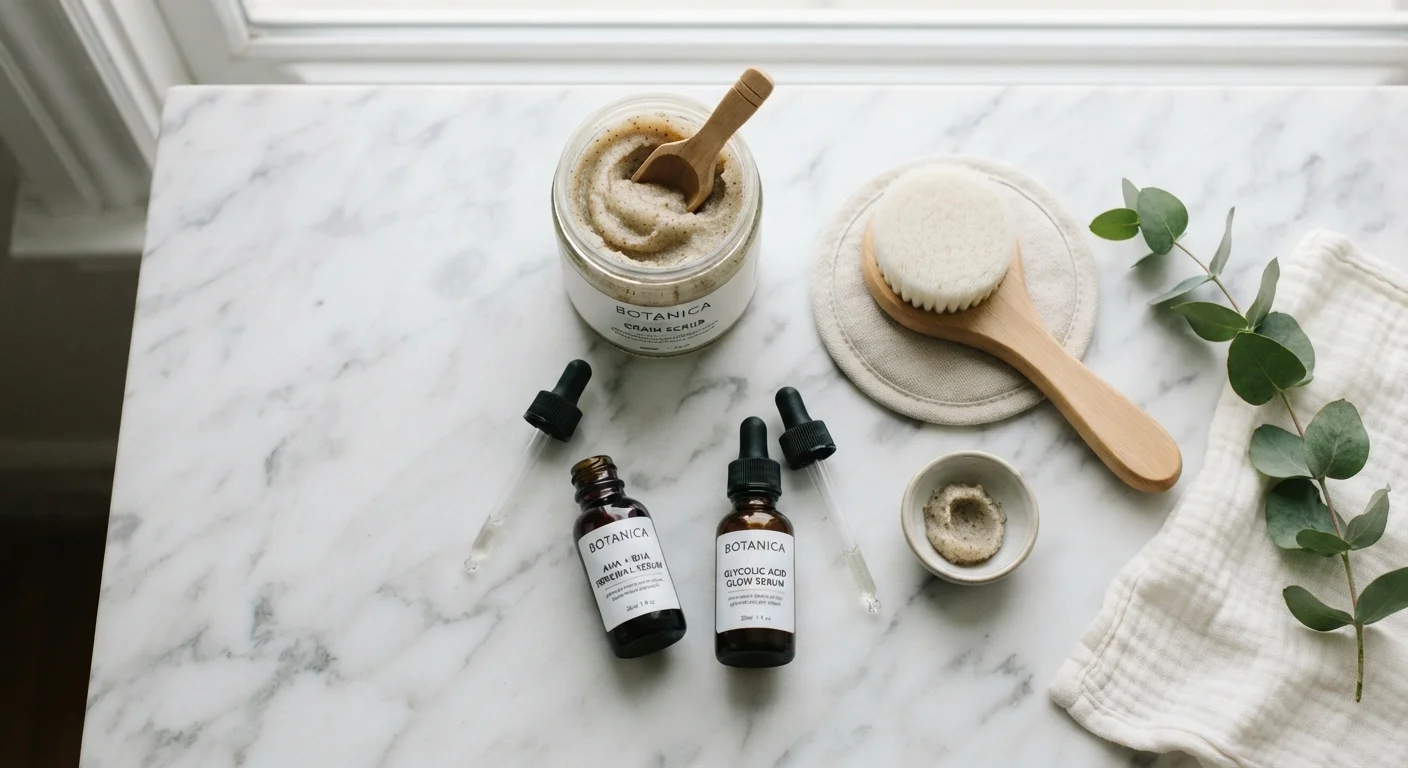
Photo credit: SnippetColumns.com | Easy Search, Reliable Information
In this article
Scrubs, acids, and enzyme peels all exfoliate differently. Learn what each method does to your skin and how to choose the right one safely.
Key Takeaways
- Physical exfoliation removes dead skin cells through manual friction using granules or tools.
- Chemical exfoliation uses acids or enzymes to dissolve the bonds holding dead cells together.
- Neither method is universally superior — skin type and sensitivity determine what works safely.
- Over-exfoliation from either method can damage the skin barrier and cause irritation.
- Chemical exfoliants tend to offer more consistent, targeted results for textural skin concerns.
- Always follow exfoliation with SPF, as freshly exfoliated skin is more vulnerable to UV damage.
What Exfoliation Actually Does
Skin naturally sheds dead cells roughly every 28 to 40 days — a cycle that slows with age. When that turnover lags, dead cells pile up, leaving skin looking dull, feeling rough, or developing uneven texture. Exfoliation speeds that clearing process along, but how it achieves that matters enormously.
The two main approaches — physical and chemical — work through fundamentally different mechanisms. Understanding those differences helps you match the method to your skin's actual needs rather than defaulting to whatever's most familiar. For a broader foundation on why skin type shapes every product decision, see Skin Type Decoded.
| Criterion | Physical Exfoliation | Chemical Exfoliation |
|---|---|---|
| Mechanism | Manual friction removes surface cells | Acids or enzymes dissolve cell bonds |
| Common formats | Scrubs, brushes, sponges | Toners, serums, peels, cleansers |
| Results timing | Immediate smoothness after use | Gradual improvement over days to weeks |
| Depth of action | Surface only | Surface to pore lining (BHAs) |
| Sensitivity risk | Higher if pressure or particles are harsh | Lower with enzymes; higher with strong acids |
| Learning curve | Minimal — intuitive to use | Moderate — concentration and pH matter |
| Best skin type fit | Normal to resilient skin | Oily, acne-prone, uneven tone or texture |
Physical Exfoliation: How It Works
Physical exfoliants rely on friction. That friction comes from abrasive particles — sugar, salt, finely ground seeds, or synthetic microbeads — or from tools like dry brushes, konjac sponges, and cleansing scrubbers. The mechanical action manually dislodges dead cells from the skin's surface.
The appeal is immediacy. Skin feels smoother right after use, which makes physical exfoliation intuitively satisfying. However, that same friction can be a liability. Irregular or jagged particles — walnut shell powder, for instance — can create micro-abrasions in the skin barrier that invite irritation and even increase vulnerability to bacteria.
Pressure matters as much as the product. Rubbing too hard with any physical exfoliant, even a relatively gentle one, can compromise the skin barrier over time. Dermatologists generally recommend light, circular motions and limiting use to once or twice weekly for most skin types.
Chemical Exfoliation: How It Works
Chemical exfoliants use acids or enzymes to dissolve the bonds between dead skin cells, allowing them to shed without physical force. The three main categories are AHAs (alpha hydroxy acids), BHAs (beta hydroxy acids), and enzyme exfoliants.
- AHAs such as glycolic acid and lactic acid are water-soluble and work primarily on the skin's surface. They're widely studied for improving tone, smoothing texture, and addressing hyperpigmentation.
- BHAs like salicylic acid are oil-soluble, which means they can penetrate the pore lining — making them particularly relevant for oily or acne-prone skin.
- Enzyme exfoliants (commonly derived from papaya or pineapple) digest dead skin proteins gently. They're generally considered the mildest chemical option and may suit those who find acids too activating.
Understanding what you're applying matters — reading a skincare label accurately helps you identify concentrations and avoid doubling up on active ingredients without realizing it.
A Note on Combination Routines
Some people alternate physical and chemical exfoliation on different days, but this approach demands caution. Using both methods within a short window significantly increases the chance of barrier disruption. If you want to explore combining methods, introduce one at a time, allow your skin several weeks to adjust, and consider guidance from a dermatologist before layering actives.
Choosing Safely and Avoiding Over-Exfoliation
Both methods carry the same core risk: doing too much. Signs of over-exfoliation include persistent redness, tightness, flakiness, unusual breakouts, or skin that stings when you apply basic moisturizer. These indicate a compromised skin barrier — and at that point, the fix is rest, not more exfoliation.
A few principles guide safe practice regardless of which method you use:
- Start infrequently. Once a week is a reasonable baseline for most people new to exfoliation.
- Don't combine methods without building tolerance first. Using a physical scrub and a chemical exfoliant in the same routine dramatically increases irritation risk.
- Always apply SPF the morning after chemical exfoliation. AHAs in particular increase photosensitivity, making sun protection non-negotiable.
- If you're unsure how your skin will react — particularly if you have a diagnosed skin condition — consult a dermatologist before starting.
For context on how exfoliation fits into the broader conversation about skincare ingredients, understanding common active ingredients is a useful next step. And if you've encountered conflicting advice online, separating skincare fact from myth addresses many of the most persistent misconceptions.
28–40 days
Average skin cell turnover cycle
The natural desquamation cycle slows with age, which is why exfoliation becomes increasingly relevant in maintaining skin texture over time.
2×/week
General maximum exfoliation frequency
Most dermatological guidance suggests limiting exfoliation to one to two times per week to avoid compromising the skin's protective barrier.
This article is for general informational and educational purposes only and is not a substitute for professional medical or dermatological advice. If you have a skin condition or concerns about a new skincare routine, consult a qualified healthcare professional.

Author
Style & Beauty Editorial Team
Style & Beauty Editorial Team is the collective byline for our editorial team and contributor network. Articles published under this byline or an editorial pen name are researched, written, and reviewed according to our editorial standards for clarity, consistency, and independence before publication.
View all articles →