
Wireless Earbuds vs. Wired Headphones for Everyday Use
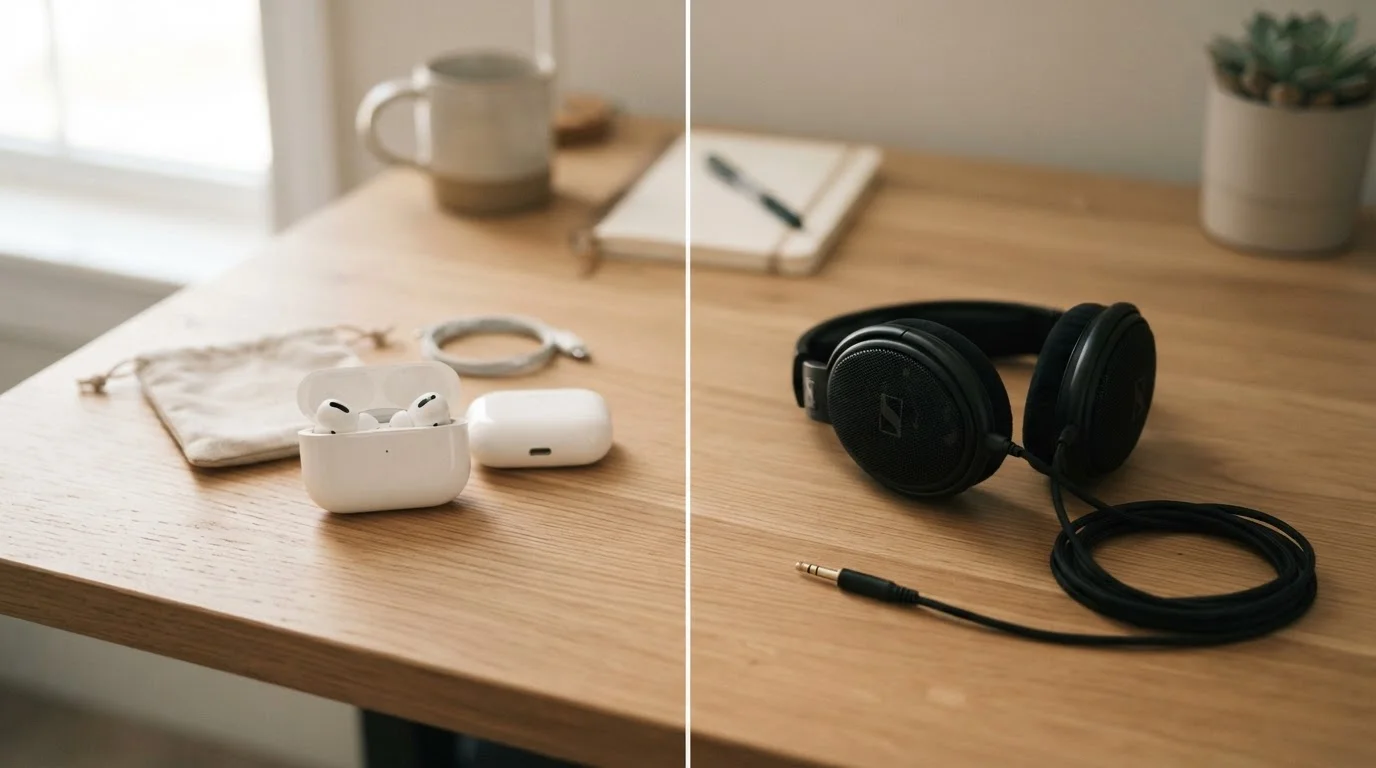
Photo credit: SnippetColumns.com | Easy Search, Reliable Information
In this article
Convenience, sound quality, battery life, and cost — a clear-headed look at which audio format holds up better for daily routines.
Key Takeaways
- Wireless earbuds offer unmatched portability but require regular charging and can lose connection.
- Wired headphones deliver stable, consistent audio without battery concerns but restrict movement.
- Sound quality at comparable price points has largely converged — format matters more than specs.
- Durability often favors wired headphones; earbuds carry a higher risk of being lost or damaged.
- Your daily routine — not marketing claims — should drive the decision between formats.
The Real-World Case for Each Format
Choosing between wireless earbuds and wired headphones isn't really about which technology is superior — it's about which one actually fits how you live. Both formats have matured significantly, and the gap in audio performance between them has narrowed at most price points. What hasn't changed is how differently they behave in daily use.
Wireless earbuds shine when your day keeps you moving. No cable to untangle, no wire catching on a jacket zipper, no cord yanked out mid-song. That freedom is tangible. But it comes with trade-offs: a charging case to remember, Bluetooth connections that occasionally stumble, and small form factors that are easier to misplace or damage.
Wired headphones, on the other hand, are ready the moment you plug them in. There's no pairing process, no battery gauge to check, and no firmware update waiting to interrupt your morning playlist. For anyone who sits at a desk, the physical tether that seems limiting is rarely a real inconvenience. See our practical framework for evaluating any gadget purchase to think through your actual usage patterns before deciding.
| Criterion | Wireless Earbuds | Wired Headphones |
|---|---|---|
| Portability | Highly portable, cord-free | Bulkier, cable required |
| Battery requirement | Needs regular charging | No battery needed |
| Audio consistency | Subject to Bluetooth compression | Direct, uncompressed signal |
| Connectivity reliability | Can drop in crowded environments | Always stable when plugged in |
| Durability | Small parts, easier to lose | Cables replaceable; longer lifespan |
| Typical price range | Wide range; quality varies | Often better value at lower tiers |
| Hands-free calling | Built-in mics, easy controls | Mic not always included |
| Best environment | On-the-go, active use | Desk, home, stationary listening |
Battery Life, Durability, and Long-Term Cost
Battery life is where wireless earbuds extract a real ongoing cost — not just in dollars, but in attention. Most earbuds offer four to eight hours of playback per charge, with the case extending that to 20–30 hours total. That's workable for most people, but it means building a charging habit. Forget the case for a day, and you may be hunting for a cable at the worst moment.
Wired headphones sidestep this entirely. They also tend to last longer in absolute terms: without a battery that degrades over charge cycles, a well-built wired pair can remain fully functional for many years. The cable is the vulnerability — but cables are replaceable on many models, which earbuds' internal components are not.
~2 years
Typical wireless earbud battery lifespan
Consumer electronics research generally finds rechargeable lithium-ion batteries in earbuds begin showing notable capacity loss after approximately 300–500 full charge cycles.
30%
Bluetooth audio data reduction vs. wired
Standard Bluetooth codecs compress audio streams, with some analyses estimating data reduction of 20–50% depending on the codec used, though listener perception varies widely.
~6 hrs
Average earbud playback per charge
Industry product specifications across mainstream wireless earbud models commonly cite 5–8 hours of playback per charge at moderate volume levels.
If long-term value matters to you, the everyday money lens is worth applying here: wired headphones generally cost less to own over time, especially when a wireless earbud's battery capacity starts fading after a year or two of daily use. For situations where you only need audio gear occasionally, it's also worth considering what renting versus owning audio gear looks like in practice.
Sound Quality and Connectivity: What Actually Matters
Bluetooth audio has improved substantially — modern codecs like aptX and AAC reduce the quality gap compared to a direct wired connection. For casual listening — podcasts, playlists, background music — most people won't notice a meaningful difference. Where the distinction becomes audible is in detail-rich recordings or when using higher-end equipment. A wired connection transmits audio without digital compression, which is why professional and audiophile use cases still favor the format.
Connectivity stability is a separate issue. Bluetooth works well in most environments, but wireless interference — crowded apartments, busy commuter trains, office buildings with dense Wi-Fi networks — can cause dropouts. Wired headphones are immune to this entirely. If you've ever had your earbuds cut out mid-conference call, that's a known limitation of wireless audio, not a defect. Unfamiliar with terms like codec, Bluetooth version, or impedance? Our everyday gadget buyer's glossary defines them in plain language.
Bluetooth Version Matters More Than You Think
Newer Bluetooth versions (5.0 and above) offer improved range, more stable connections, and better power efficiency compared to older standards. If you're considering wireless earbuds, checking the Bluetooth version in the specs is one of the few technical details worth a quick look. It won't solve interference problems in extreme environments, but it does meaningfully reduce casual dropouts in everyday use.
Connectivity also intersects with your other devices. How you manage Wi-Fi versus mobile data on your phone, for example, can affect how reliably your earbuds pair and stream — a point explored in our look at when Wi-Fi versus mobile data actually serves you better.

Author
Tech & Gadgets Editorial Team
Tech & Gadgets Editorial Team is the collective byline for our editorial team and contributor network. Articles published under this byline or an editorial pen name are researched, written, and reviewed according to our editorial standards for clarity, consistency, and independence before publication.
View all articles →