
Local Control vs. Cloud-Dependent Smart Home Devices
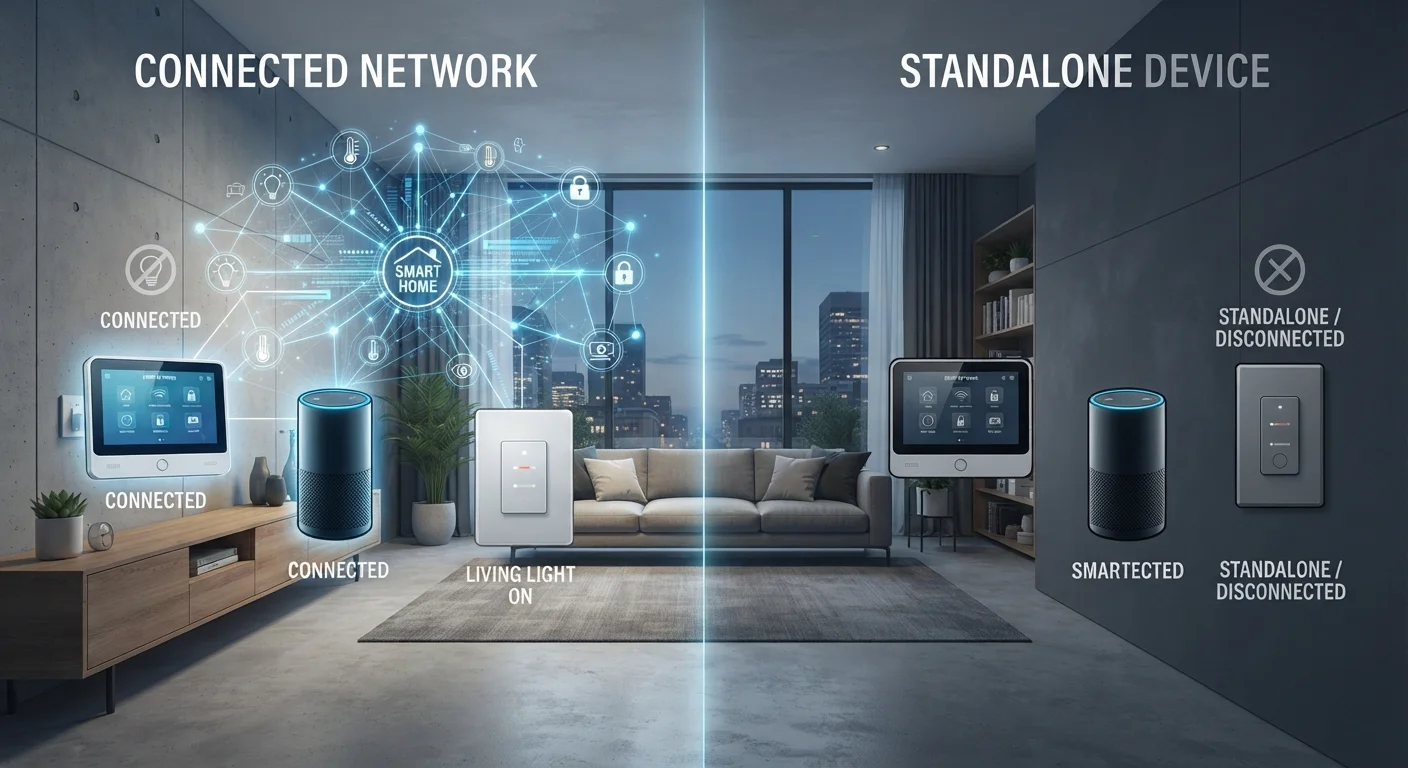
Photo credit: SnippetColumns.com | Easy Search, Reliable Information
In this article
Some smart devices work without an internet connection; others go offline the moment a company's server goes down. Here's what each approach means for you.
Key Takeaways
- Local control devices work without an internet connection and keep functioning if a company's servers go down.
- Cloud-dependent devices may stop responding entirely during outages or if the manufacturer discontinues service.
- Local control generally offers stronger privacy since your usage data stays on your home network.
- Cloud-dependent devices often provide richer remote access features and automatic software updates.
- Understanding which type you're buying helps you avoid frustrating surprises down the road.
What the Difference Actually Means
When a smart device runs on local control, its core logic lives on a hub, router, or the device itself — your home network handles commands without contacting a remote server. When a device is cloud-dependent, every instruction you give it — even tapping a button while standing in the same room — travels out to a company's data center and back before anything happens.
That round trip is usually invisible on a fast connection. It only becomes obvious when your internet is down, the company's servers are overloaded, or — in the most disruptive scenario — the manufacturer shuts down the service entirely. Devices designed around cloud dependency can become non-functional "bricks" in that last case. Local control devices, by contrast, keep working as long as your home network is up. See what actually makes a device smart for broader context on how these systems are marketed versus how they actually function.
| Local Control | Cloud-Dependent | |
|---|---|---|
| Works without internet | Yes — operates on local network | No — requires active connection |
| Affected by server outages | Rarely — minimal external dependency | Yes — fully dependent on provider uptime |
| Risk if company shuts down | Low — device logic stays local | High — device may stop working entirely |
| Data privacy footprint | Smaller — data stays on home network | Larger — usage logged on remote servers |
| Setup complexity | Moderate to high — may need a hub | Low — typically app-based setup |
| Remote access (away from home) | Requires extra configuration | Built in by default |
| Automatic software updates | Often manual or hub-managed | Handled by manufacturer automatically |
Reliability and the Outage Problem
Cloud-dependent devices introduce a dependency you don't fully control. Internet service interruptions, company server maintenance, and unexpected shutdowns all affect whether your devices respond. For a smart bulb, this is an inconvenience. For a smart lock or security system, it can feel like a much bigger problem.
Local control sidesteps most of these failure points. If your home network is working — even without an internet connection to the outside world — locally controlled devices continue to operate. Automations run, schedules trigger, and voice commands (if handled on-device) still work. intermittent disconnects are already one of the most cited smart home frustrations; adding cloud dependency can amplify that pain significantly.
Service Shutdowns Are Real
Several well-known smart home platforms have been discontinued in recent years, rendering compatible devices inoperable overnight. Before investing heavily in any cloud-dependent ecosystem, check whether the manufacturer has a track record of long-term support — and consider what you'd do if the service disappeared.
Privacy: Where Your Usage Data Goes
Every time a cloud-dependent device processes a command remotely, it also logs data — which device, what time, how often, from which location. Aggregated over weeks and months, that data can reveal detailed patterns about your household's daily rhythms. Companies' privacy policies vary widely in how long this data is retained and who may access it.
Local control keeps usage data on your network. A hub-based system like one running open-source home automation software processes commands internally, and only shares data externally if you explicitly configure it to do so. This doesn't make local control perfectly private — your router, ISP, and device firmware all have their own considerations — but the data footprint is meaningfully smaller. For a grounded look at data exposure across always-on devices, see privacy trade-offs in always-on home devices.
Check Before You Buy
Look for explicit mentions of 'local control,' 'works without internet,' or support for protocols like Zigbee, Z-Wave, or Matter in a device's specifications before purchasing. If a product's listing only mentions app control and cloud setup, it's almost certainly cloud-dependent. Spending five minutes researching this can save years of frustration.
Features, Setup, and Practical Trade-Offs
Cloud-dependent devices often win on out-of-the-box ease. Setup typically involves an app, a Wi-Fi password, and a few taps — no separate hub required. Remote access (controlling devices when you're away from home) is usually built in. Firmware updates happen automatically in the background. Broad ecosystem integrations with voice assistants and other platforms tend to be more polished.
Local control can require more upfront configuration. Dedicated hubs, specific communication protocols (like Zigbee or Z-Wave), and some comfort with network settings are often part of the picture. The payoff is long-term resilience: devices you set up today will still function years from now regardless of what happens to any particular company. This kind of durability matters if you're making a meaningful investment in your home setup — something worth thinking through before buying your first smart home device.
The cloud-versus-local split also echoes trade-offs in other areas of tech, similar to how people weigh cloud backup versus local backup for phone data — reliability, privacy, and convenience rarely all point in the same direction at once.
~30%
Smart home devices discontinued within 5 years
Industry analysis has estimated that a significant share of smart home product lines are discontinued or lose cloud support within five years of launch, leaving cloud-dependent devices non-functional.
2–4 sec
Typical cloud command round-trip delay
Under normal conditions, cloud-routed smart home commands can add noticeable latency compared to locally processed commands, which typically respond in under a second.

Author
Tech & Gadgets Editorial Team
Tech & Gadgets Editorial Team is the collective byline for our editorial team and contributor network. Articles published under this byline or an editorial pen name are researched, written, and reviewed according to our editorial standards for clarity, consistency, and independence before publication.
View all articles →