
Privacy Trade-Offs in Always-On Home Devices
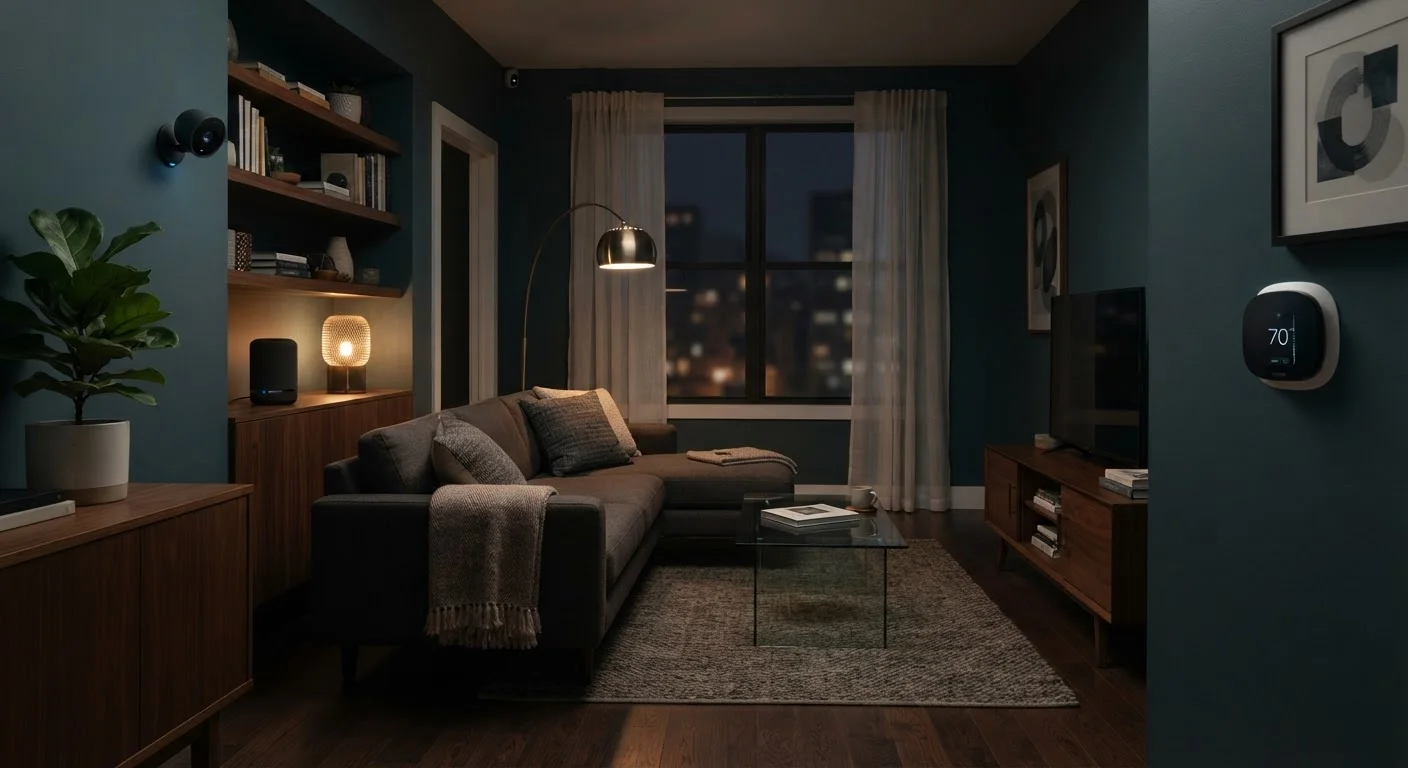
Photo credit: SnippetColumns.com | Easy Search, Reliable Information
In this article
Smart cameras, microphones, and sensors collect data. Here's a grounded look at what that means for household privacy and how to manage your exposure.
Key Takeaways
- Always-on devices continuously collect audio, video, or sensor data, even when you're not actively using them.
- Most data is processed on manufacturer servers, meaning your household activity may be stored remotely.
- Practical steps — like reviewing permissions and disabling voice history — can meaningfully reduce your exposure.
- Local-processing devices offer stronger privacy but often have fewer features than cloud-dependent alternatives.
- Understanding the trade-offs lets you choose which devices belong in your home and which don't.
Hands-free convenience that genuinely saves time
Setting timers, controlling lights, checking weather, or locking doors without stopping what you're doing has measurable daily utility — particularly for people managing households with children or limited mobility.
Passive monitoring for safety and security
Video doorbells and indoor cameras provide a verifiable record of package deliveries, visitor activity, and potential intrusions. Many households report that camera footage has resolved insurance disputes and neighbor disagreements.
Energy management through automated sensing
Smart thermostats and occupancy sensors can reduce energy use by adjusting conditions based on actual household patterns rather than fixed schedules, which can lower utility bills over time — though results vary significantly by home type and usage.
Accessibility features for users with disabilities
Voice-controlled devices remove physical barriers for users with mobility, vision, or dexterity limitations, enabling independent control of lighting, entertainment, and communications.
Microphones and cameras operate continuously
Even with wake-word detection, the device must process ambient sound to detect the trigger phrase. Independent researchers have documented cases where smart speakers recorded and transmitted conversations not intended as commands.
Manufacturer data practices vary and can change
Privacy policies are legal documents that companies can update. Data collected under one policy may be subject to different terms after a company update, acquisition, or platform change — with limited recourse for users.
Third-party data sharing is common
Many devices share anonymized or aggregated usage data with advertising partners or analytics services. 'Anonymized' data has been shown in academic research to be re-identifiable in some circumstances.
Security vulnerabilities expose household networks
Always-on devices with outdated firmware are a documented entry point for network intrusion. Unlike phones or computers, many smart home devices receive infrequent or no security updates after the first year or two.
Device abandonment leaves data in limbo
When a company discontinues a product or shuts down its service, the data previously collected doesn't automatically disappear. Users often have limited ability to request deletion at that point.
What 'Always-On' Actually Means
Smart speakers, video doorbells, indoor cameras, voice-enabled thermostats, and connected baby monitors share one defining characteristic: they're listening, watching, or sensing continuously. That's not a bug — it's the mechanism that makes them work. A smart speaker can't respond to a wake word it didn't hear. A motion-triggered camera has to process every frame to know which ones matter.
What varies significantly is what happens next. Some devices process data locally, on a chip inside the device itself, before deciding what (if anything) to transmit. Others send a constant stream of data to cloud servers for processing. Most fall somewhere in between. Understanding that distinction is a meaningful first step — and our article on local control vs. cloud-dependent smart home devices goes deeper on what each approach costs you in practice.
The key point: data collected by these devices doesn't always stay inside your home. Manufacturer privacy policies govern what's stored, how long, and whether it can be shared with third parties — and those policies vary widely.
The Genuine Advantages
It's worth being honest about why millions of households have adopted these devices. The benefits are real, not just marketing claims.
Hands-free convenience that genuinely saves time
Setting timers, controlling lights, checking weather, or locking doors without stopping what you're doing has measurable daily utility — particularly for people managing households with children or limited mobility.
Passive monitoring for safety and security
Video doorbells and indoor cameras provide a verifiable record of package deliveries, visitor activity, and potential intrusions. Many households report that camera footage has resolved insurance disputes and neighbor disagreements.
Energy management through automated sensing
Smart thermostats and occupancy sensors can reduce energy use by adjusting conditions based on actual household patterns rather than fixed schedules, which can lower utility bills over time — though results vary significantly by home type and usage.
Accessibility features for users with disabilities
Voice-controlled devices remove physical barriers for users with mobility, vision, or dexterity limitations, enabling independent control of lighting, entertainment, and communications.
69%
U.S. adults with at least one smart home device
According to Statista consumer survey data, smart home device adoption in U.S. households has grown steadily through the early 2020s, with voice assistants and smart speakers leading adoption.
1 in 5
Smart speakers that activate unintentionally
Research published by Northeastern University and Imperial College London found that smart speakers activated without an intentional wake word in a meaningful proportion of observed test sessions.
For households thinking carefully about which technology to add, thinking through your first smart home device is a useful framework before committing.
The Privacy Costs Worth Knowing
The disadvantages aren't abstract. They have practical consequences that affect real households.
Microphones and cameras operate continuously
Even with wake-word detection, the device must process ambient sound to detect the trigger phrase. Independent researchers have documented cases where smart speakers recorded and transmitted conversations not intended as commands.
Manufacturer data practices vary and can change
Privacy policies are legal documents that companies can update. Data collected under one policy may be subject to different terms after a company update, acquisition, or platform change — with limited recourse for users.
Third-party data sharing is common
Many devices share anonymized or aggregated usage data with advertising partners or analytics services. 'Anonymized' data has been shown in academic research to be re-identifiable in some circumstances.
Security vulnerabilities expose household networks
Always-on devices with outdated firmware are a documented entry point for network intrusion. Unlike phones or computers, many smart home devices receive infrequent or no security updates after the first year or two.
Device abandonment leaves data in limbo
When a company discontinues a product or shuts down its service, the data previously collected doesn't automatically disappear. Users often have limited ability to request deletion at that point.
These concerns compound as device count grows. The hidden trade-offs of owning more connected devices covers how an expanding smart home changes your maintenance burden and risk surface in ways that aren't obvious at purchase time.
Steps That Actually Reduce Your Exposure
You don't have to choose between full participation and no devices at all. Several practical measures make a meaningful difference:
- Review and restrict app permissions. Most companion apps request more access than the device needs to function. Location data, contact lists, and photo library access are common asks that rarely serve the core product purpose.
- Delete voice and activity history regularly. Major smart speaker platforms allow you to auto-delete history on a rolling basis — often 3 or 18 months. Shorter windows reduce the volume of data held on your behalf.
- Use physical mute switches. Hardware mute buttons — which physically disconnect the microphone circuit — are more reliable than software-level muting.
- Segment your network. Placing smart home devices on a separate Wi-Fi network (a guest network works) limits what those devices can access if compromised. Our piece on Wi-Fi vs. mobile data touches on network security considerations worth understanding.
- Check for local-processing options. Some device categories now offer models that do more processing on-device. These often cost more but send significantly less data off your network.
Your Phone Has Similar Trade-Offs
The privacy considerations for always-on home devices closely mirror those of smartphones, which also carry persistent microphone, location, and sensor access. If you want a fuller picture of how to manage that exposure, the complete picture on smartphone privacy settings covers the settings that matter most. Understanding both together gives you a more complete view of your household's overall data footprint.
For smart speakers specifically, setting up a smart speaker without oversharing walks through the configuration steps that matter most at setup.

Author
Tech & Gadgets Editorial Team
Tech & Gadgets Editorial Team is the collective byline for our editorial team and contributor network. Articles published under this byline or an editorial pen name are researched, written, and reviewed according to our editorial standards for clarity, consistency, and independence before publication.
View all articles →