
The Real Cost of a Purchase: What Sticker Price Leaves Out
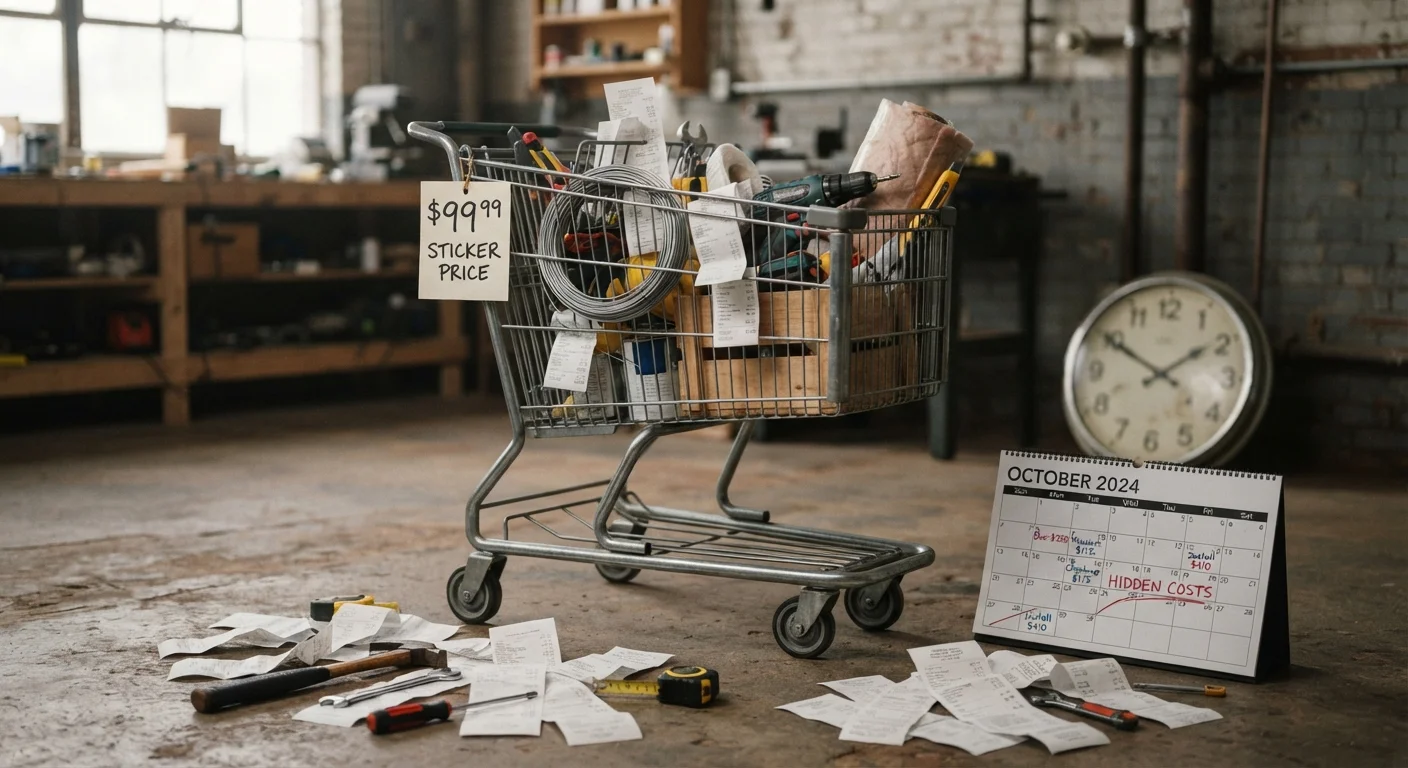
Photo credit: SnippetColumns.com | Easy Search, Reliable Information
In this article
Maintenance, storage, opportunity cost, and time — the full picture of what something costs rarely ends at the checkout total.
Key Takeaways
- The sticker price is only the starting point; ongoing costs often exceed the purchase price over time.
- Opportunity cost — what you give up by spending — is a real financial factor even if it doesn't appear on a receipt.
- Time spent maintaining, learning, or managing a purchase has real monetary value.
- Accounting for total cost before buying reduces impulse purchases and buyer's remorse.
- Some low-priced items carry high long-term costs; some expensive items are cheaper over their lifetime.
Why the Checkout Price Is Just the Beginning
Every price tag answers exactly one question: what does this cost to take home today? It says nothing about what you'll spend to keep it running, where you'll put it, how much time it will demand, or what you're giving up by spending that money at all.
This gap between sticker price and actual cost is where most financial regret originates. A treadmill priced at $600 looks reasonable — until you factor in delivery fees, a required mat, maintenance, and the reality that it becomes an expensive coat rack. The same logic applies across nearly every purchase category, from appliances to subscriptions to cars.
Developing the habit of asking "what will this actually cost me?" before buying is one of the most durable skills a consumer can build. It doesn't require a spreadsheet — it requires a shift in how you frame the question.
~$9,000
Average annual cost to own and operate a car
According to AAA's annual Your Driving Costs study, vehicle ownership costs — including fuel, maintenance, insurance, and depreciation — significantly exceed the purchase price alone.
Over 50%
Share of consumers reporting buyer's remorse
Consumer research consistently finds that a majority of shoppers regret at least some of their non-essential purchases, often citing unmet expectations or unplanned ongoing costs.
3–5×
Lifetime consumable cost vs. device price
For products like printers and razors, industry analyses frequently show that consumable costs over a product's lifetime exceed the original device price by several multiples.
The Hidden Expense Categories Most Shoppers Skip
Several cost categories rarely show up in the buying decision but reliably show up later on your bank statement or in your weekly schedule.
Maintenance and Consumables
Many products require ongoing inputs to keep functioning: printer ink, water filters, replacement blades, specialty cleaning products, software subscriptions. These consumables often cost more annually than the device itself does after a few years. Before buying, search for the actual cost of the supplies the product requires — not the device price alone.
Storage and Space
Physical space has value. A bulky item that sits unused occupies square footage that might otherwise serve a purpose. In smaller homes or apartments, this trade-off is especially acute. If a purchase requires renting a storage unit or reorganizing a room, those costs belong in the calculation.
Insurance and Registration
Vehicles, electronics, and high-value items often carry insurance costs that dwarf the sticker price over a decade of ownership. A car with a low purchase price may carry higher insurance premiums due to its repair cost profile or safety rating. Spending categories most budgets overlook frequently include these annual recurring fees.
Depreciation and Resale Loss
Most purchases lose value over time. The gap between what you pay and what you can eventually sell or trade for is a real cost, even though it's invisible at checkout. Thinking about resale trajectory — particularly for vehicles and electronics — gives you a more complete picture of the total outlay.
Try the 'Two-Year Test' Before Buying
Before committing to a purchase, ask yourself: what will this cost me in total over two years, including supplies, maintenance, and time? Projecting forward even a short horizon reveals costs that the sticker price conceals entirely. If you can't quickly estimate those numbers, that's a signal to research before buying, not after.
Opportunity Cost: The Cost That Never Appears on a Receipt
Opportunity cost is the value of what you give up when you choose to spend money on something. It's not a line item anywhere, but it's arguably the most significant hidden cost of any purchase.
When $300 goes toward a piece of exercise equipment you'll use sporadically, that $300 is no longer available to pay down a high-interest balance, build an emergency fund, or cover an expense you'll regret not having funds for. The purchase didn't just cost $300 — it cost whatever that $300 would have done for your financial position otherwise.
This doesn't mean spending is always wrong. It means every purchase is a trade-off, and making that trade-off consciously — rather than by default — leads to decisions you're more likely to stand behind later.
For everyday micro-purchases, the same principle applies at scale. See how routine small expenses compound into significant monthly totals.
This article provides general financial information for educational purposes and does not constitute personalized financial advice. Consult a qualified financial professional for guidance specific to your situation.
Time Is a Cost Too
Your time has monetary value. A product that requires hours of assembly, a steep learning curve, regular cleaning, or frequent trips for service is drawing on a resource that has real worth — even if it doesn't show up on your credit card statement.
A simple way to make this concrete: estimate how many hours per year a purchase will demand, then multiply by a rough figure for what your time is worth to you. A "cheap" item that requires three hours of monthly maintenance may actually be more expensive in practice than a pricier option that runs without attention.
This is one reason the cost-per-wear framework resonates — it forces a per-use evaluation that naturally accounts for whether a purchase will realistically deliver ongoing value. The same logic scales to any product with variable use frequency.
For service-intensive purchases like vehicles, the time cost of maintenance visits and unexpected repairs adds up fast. Recognizing when routine service costs are inflated is one way to keep that ongoing burden manageable.
Building a Pre-Purchase Habit That Sticks
The goal isn't to make every purchase a lengthy analysis. It's to develop a quick mental checklist that surfaces the most significant hidden costs before the decision is made.
Before buying, ask: What will I need to buy or replace to keep this working? Where will it live? What will I have to give up financially or practically to have it? How much time will it take, and is that worth it given how often I'll use it?
For larger purchases, spend five minutes researching annual maintenance costs and common failure points. Unit price comparisons offer a parallel discipline — evaluating true value per use rather than surface-level price.
Buyers who consistently think in total-cost terms tend to buy less, buy better, and report fewer instances of post-purchase regret. That's not about spending less for its own sake — it's about making sure what you spend actually delivers what you need it to.
Frequently Asked Questions

Author
Smart Shopping Editorial Team
Smart Shopping Editorial Team is the collective byline for our editorial team and contributor network. Articles published under this byline or an editorial pen name are researched, written, and reviewed according to our editorial standards for clarity, consistency, and independence before publication.
View all articles →